Ombrulla — home
London banner

AI-Powered Workplace Safety: Real-Time Monitoring That Protects People and Proves Compliance

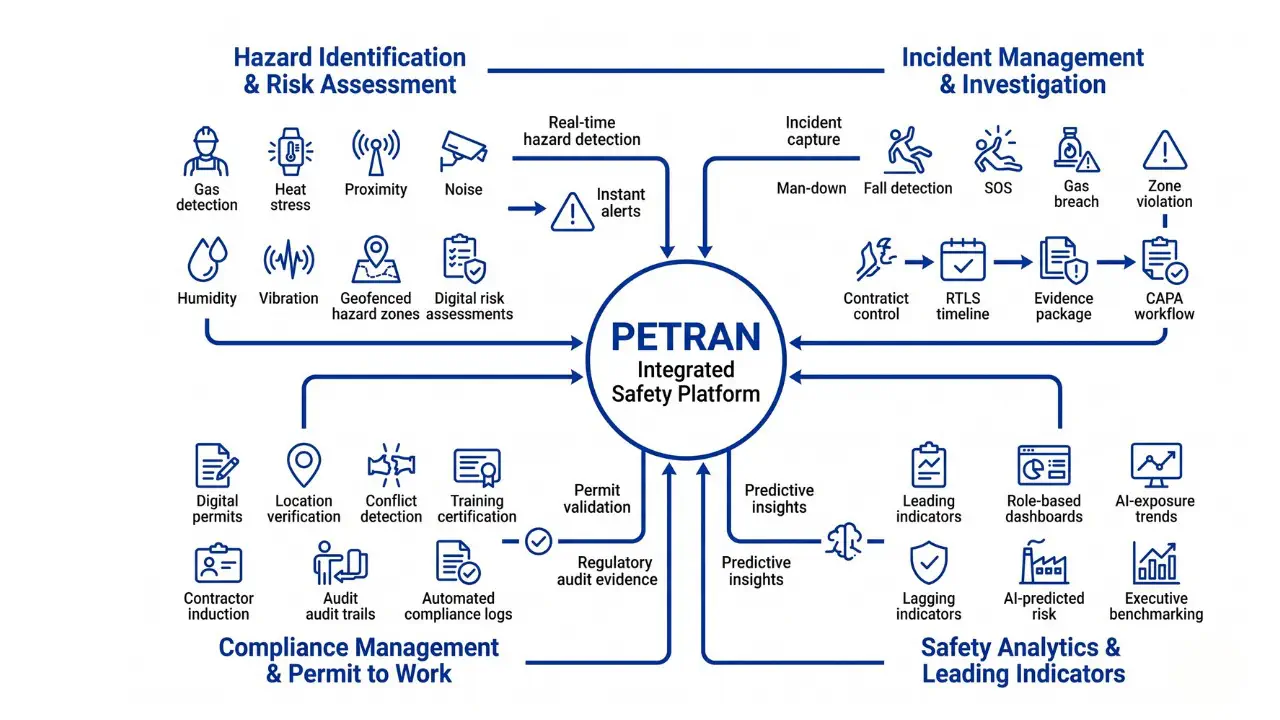
PETRAN unifies RTLS worker tracking, gas monitoring, fall detection, heat stress surveillance, and digital permit-to-work into a single safety command centre - delivering instant alerts, immutable audit trails, and ISO 45001-aligned compliance evidence for industrial operations.

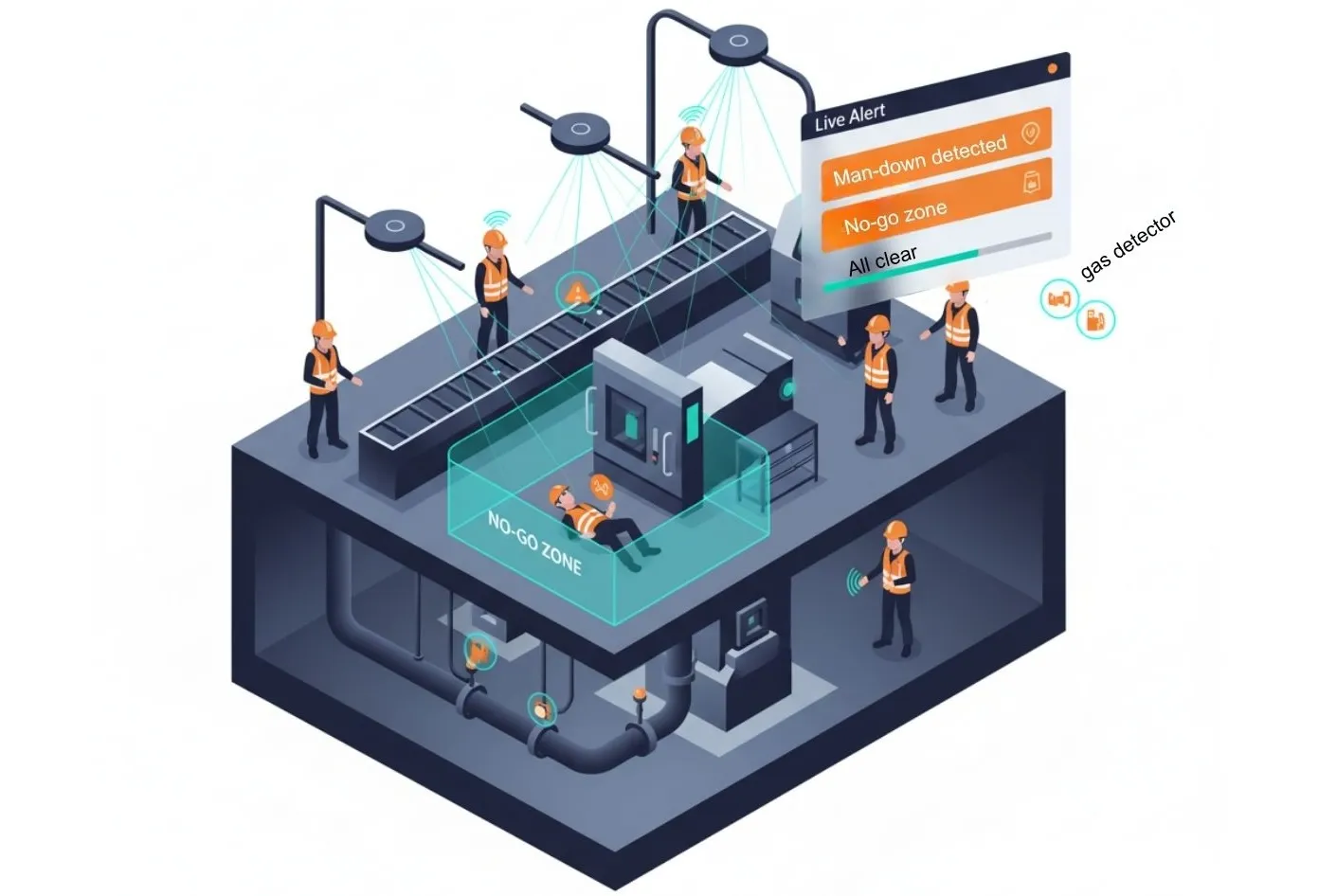
PETRAN AI workplace safety platform showing real-time RTLS worker location tracking, gas exposure monitoring, fall detection alerts, digital permit-to-work dashboard, and muster management for industrial operations

What Is Workplace Safety Software?

  • Workplace safety software is a digital platform that helps organisations identify, track, and reduce health and safety risks in real time, replacing paper-based processes with faster, more consistent, and auditable digital workflows.
  • -Digitises safety operations: Replaces manual checklists, permits, and incident logs with automated workflows and centralised records.
  • -Enables real-time monitoring: Uses AI, IoT sensors, wearables, and cameras to detect hazards such as unsafe movement, gas exposure, heat stress, and falls.
  • -Improves response and visibility: PETRAN combines worker tracking, environmental and physiological monitoring, permit-to-work, SOS alerts, and a command-centre dashboard in one platform.

The Scale of the Problem

  • The human and financial cost of preventable workplace injury remains significant across every industrial sector. These are not edge cases or theoretical risks - they are the daily operational reality that workplace safety platforms are built to address.
~3M

Workers die annually from workplace accidents & diseases

International Labour Organisation (ILO)

680K

Workers sustained non-fatal injuries in UK 2024/25

UK HSE Statistics 2024/25

340M

Occupational accidents occur globally each year

ILO

£22.9bn

Total annual cost of injuries & ill health in UK

UK HSE Statistics 2024/25

5,070

Fatal work injuries in the US in 2024

BLS Census of Fatal Occupational Injuries 2024

40.1M

Working days lost to injury & illness in UK 2024/25

UK HSE Statistics 2024/25

2.5M

Non-fatal injury & illness cases in US private industry 2024

BLS Survey, 2024 (down 3.1% from 2023)

Four Pillars That Define Industrial Safety Excellence

  • Ombrulla’s PETRAN platform is structured around the same four pillars that IBM Maximo’s Health, Safety & Environment module defines as the architecture of enterprise safety management. This framework has been validated across thousands of industrial deployments globally and is the standard against which enterprise HSE buyers evaluate workplace safety platforms.

Identify risks continuously, not just during periodic inspections.

Traditional hazard identification relies on periodic manual inspections: a safety officer walks the floor, completes a JSA or JHA checklist, and files a report. By the next inspection cycle, conditions have changed. PETRAN replaces periodic assessment with continuous real-time hazard monitoring: every connected sensor, wearable, and camera is continuously detecting and quantifying the hazards present in the working environment - gas concentrations, thermal conditions, proximity to vehicles, zone occupancy, and environmental parameters - 24 hours a day, across every shift.

  • -Continuous monitoring: gas (O₂, H₂S, CO, LEL, VOCs), thermal (WBGT heat stress), proximity, ambient (noise, humidity, vibration)
  • -Digital risk assessments: JSA, JHA, HIRA linked to asset records, work permits, and contractor profiles
  • -Geofenced hazard zones: dynamic boundaries that automatically trigger alerts when workers enter restricted areas
Talk to an Expert
Continuous hazard monitoring using sensors and AI

Lower Total Incident Cost

Prevent incidents before they escalate - reducing both direct losses and the hidden operational costs that follow.

Audit-Ready Compliance Evidence

Automate permits, logs, and audit trails so compliance is always documented, searchable, and inspection-ready.

Operational Continuity During Emergencies

Use live RTLS-based accountability to accelerate evacuations, locate missing personnel instantly, and keep emergency response under control.

Data-Driven Safety Culture

Give supervisors and frontline teams real-time safety intelligence that drives proactive action and strengthens trust in workplace safety.

What PETRAN Monitors - Seven Critical Worker Safety Parameters

  • PETRAN continuously monitors key worker safety parameters using AI, IoT sensors, and real-time analytics to prevent incidents before they occur. Each parameter is tracked with precision technologies and aligned with global safety standards to ensure compliance and proactive risk mitigation.
1/0

Technical Capabilities & Functionalities

Hybrid RTLS icon

Hybrid RTLS (UWB Indoors + GPS/RTK Outdoors + BLE)

PETRAN’s Hybrid RTLS combines UWB, GPS/RTK, and BLE to deliver continuous worker location tracking. UWB enables high-precision indoor positioning for safety-critical zones, GPS/RTK supports outdoor tracking, and BLE provides cost-effective zone-level coverage.

Device ingestion icon

Unified Device Ingestion (BLE, UWB, RFID, LoRaWAN, LTE-M/5G, Modbus, OPC-UA)

Industrial sites use mixed safety devices from multiple vendors. PETRAN unifies this ecosystem by ingesting and normalising data across BLE, UWB, RFID, LoRaWAN, LTE-M/5G, Modbus, and OPC-UA into a single, consistent data pipeline.

Worker monitoring icon

Edge AI Safety Analytics

Safety events need instant response. PETRAN’s Edge AI runs fall detection, no-motion alerts, proximity risk scoring, and gas threshold checks directly on-site, enabling sub-second alerts without relying on cloud latency.

Edge AI icon

Real-Time Rules, Permits & Escalations

PETRAN’s rule engine enforces safety procedures digitally through geofences, time-in-zone limits, lone-worker check-ins, and real-time permit validation-triggering alerts and escalations automatically when safety rules are breached.

Rules and permits icon

Integrated SOS/Panic with Two-Way Acknowledgement

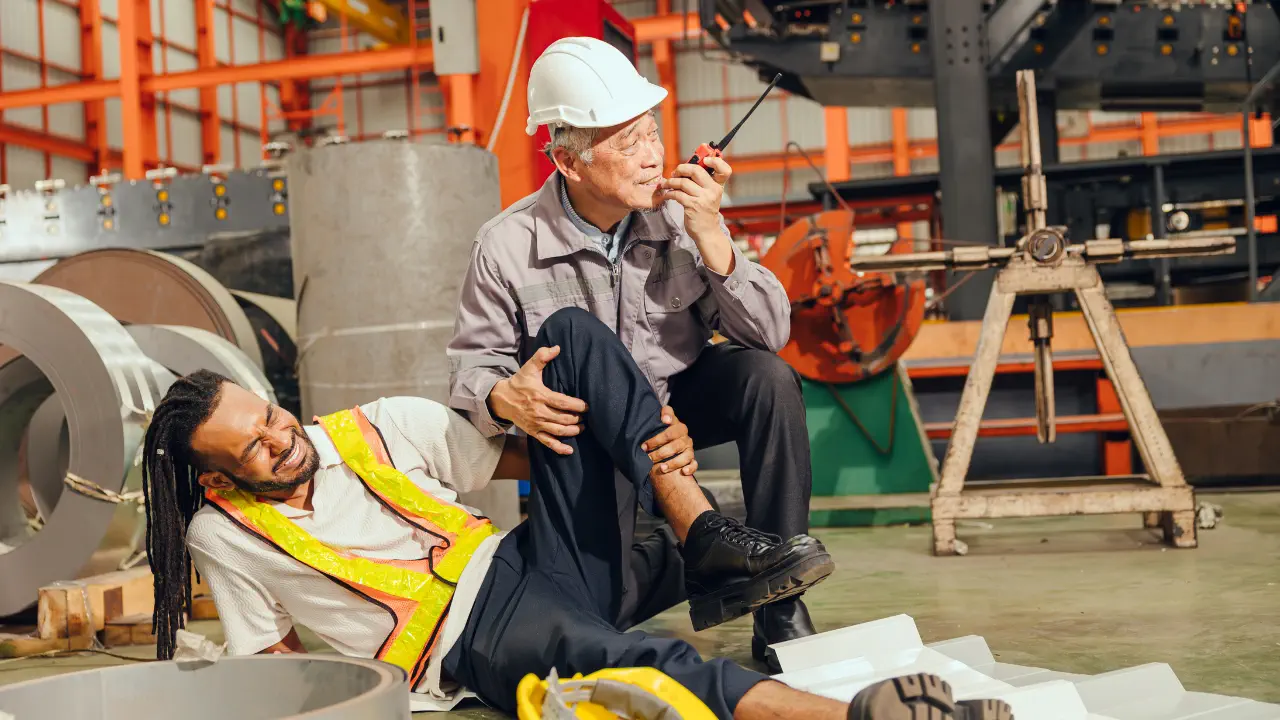
PETRAN’s SOS system enables rapid emergency response with instant alerts, precise worker location, supervisor notifications, acknowledgement confirmation, guided response actions, and real-time tracking to improve outcomes in critical situations.

SOS panic button icon

Command Center & Incident Intelligence

PETRAN’s Command Centre dashboard provides a unified safety view with live worker locations, gas alerts, permit status, device health, and evacuation tracking-giving managers real-time visibility of workers, hazards, and operations in one place.

Command center icon

Open APIs & Enterprise Connectors

PETRAN integrates with CMMS/EAM, EHS, HRIS, and messaging platforms to sync safety data across systems. It enables bidirectional flow-pushing safety events to enterprise tools and validating worker access using training and certification data.

Hardware Supported: Device-Agnostic, Protocol-Agnostic

  • PETRAN abstracts devices and protocols so organisations can combine best-of-breed wearables, tags, gateways, and fixed sensors without lock-in to a single hardware vendor. Existing device investments are protected. ATEX and IECEx certified variants are available for all major device types for deployment in hazardous areas (Zone 1/2, Division 1/2).

RFID - Identity & Access

Passive/active RFID for access control, tool tracking, and permit validation at zone gates. Low cost per tag, long read range for gate-based access systems. Suitable for non-precision zone-level tracking.

RFID icon

UWB - Precision RTLS

10–30 cm indoor accuracy for man-down locating, confined space tracking, and safety-critical zone boundary enforcement. IEEE 802.15.4a standard. ATEX Zone 1 certified variants available.

UWB icon

BLE - Pervasive Sensing

Wearables, beacons, and gas detectors streaming vitals, motion, and proximity data with multi-year battery life. Cost-effective for broad facility coverage. Compatible with Blackline Safety, BW Clip, iGas, and others.

BLE icon

LoRaWAN/LPWAN - Long Range

Multi-kilometre range for remote sites, outdoor yards, and construction projects. Rugged ATEX-certified wearables with LoRaWAN backhaul. Ideal where cellular coverage is unavailable.

LoRaWAN icon

Smart Helmets & Advanced PPE

Integrated IMU, thermal sensors, and BLE/UWB tags. Fall detection, fatigue monitoring, heat stress sensing, and proximity alerts built into standard PPE. No separate wearable required for workers already wearing helmets.

Smart helmet icon

Edge AI Cameras

On-premises vision analytics for PPE compliance monitoring, restricted zone breach detection, and vehicle-pedestrian proximity. TRITVA-powered, RTSP/ONVIF compatible. Sub-100ms inference at edge.

Edge AI camera icon

Satellite/LTE-M Beacons

Always-connected SOS, location breadcrumbing, and two-way communication for workers beyond cellular coverage. Essential for offshore, remote pipeline inspection, and lone workers in rural infrastructure environments.

Satellite beacon icon

Workplace Implementation Roadmap - From Pilot to Enterprise Deployment

  • A structured, stage-wise deployment approach that ensures rapid pilot validation, seamless integration, and scalable rollout across industrial sites while maintaining compliance and operational continuity.

Industries We Serve

Aerial view of an industrial construction site, showcasing large-scale infrastructure where AI inspections detect corrosion, structural issues, and safety hazards.

Oil & Gas

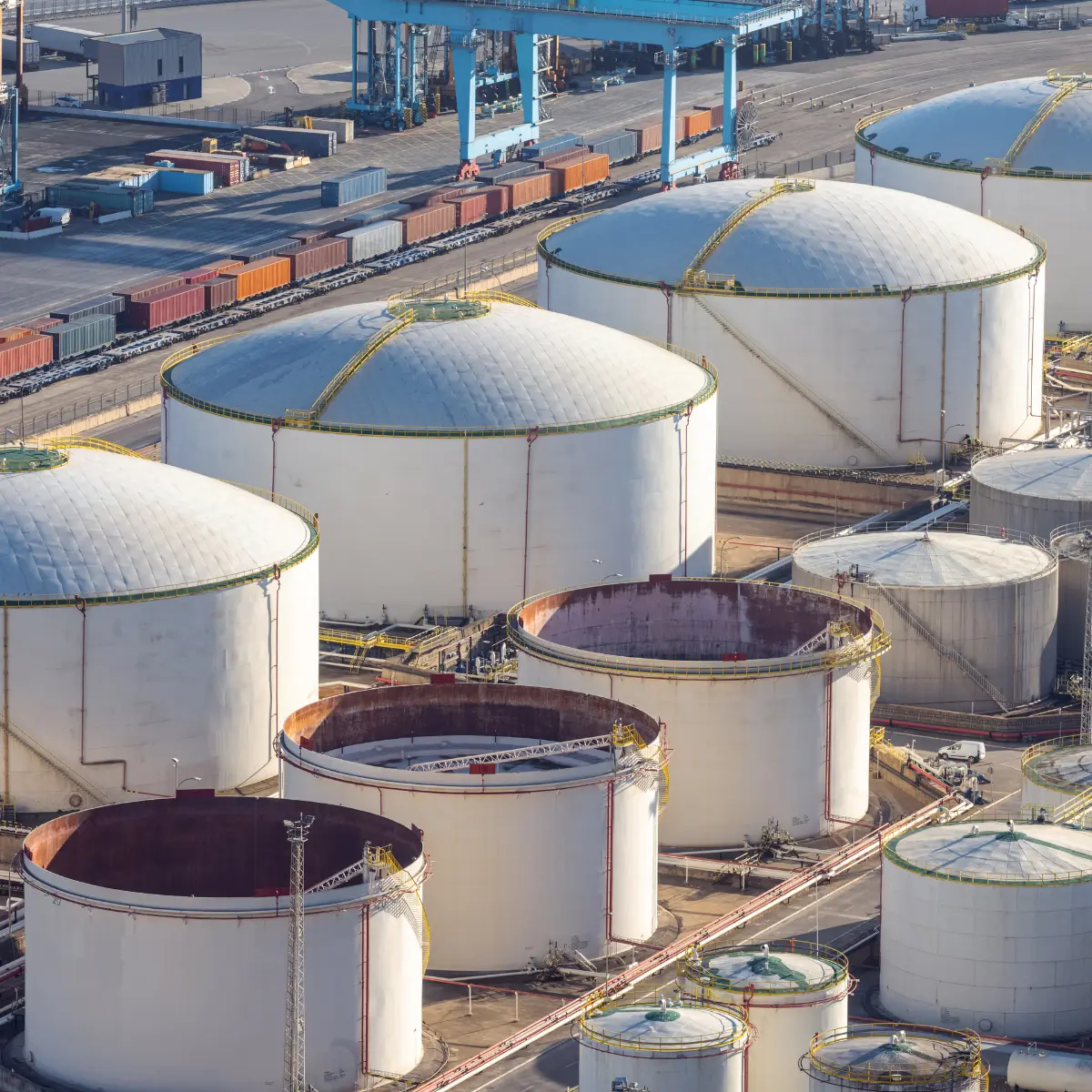
Oil and gas operations involve high-risk conditions including flammable atmospheres, high-pressure systems, remote locations, and real-time proximity hazards. PETRAN is built for these environments with ATEX/IECEx-certified hardware, real-time location-validated digital PTW, and offline-first edge agents that ensure continuous safety coverage even during network outages.
Contact Ombrulla about worker safety for construction
Landscape view of power line corridors with monitoring infrastructure, enabling AI-based inspection of transmission assets.

Construction

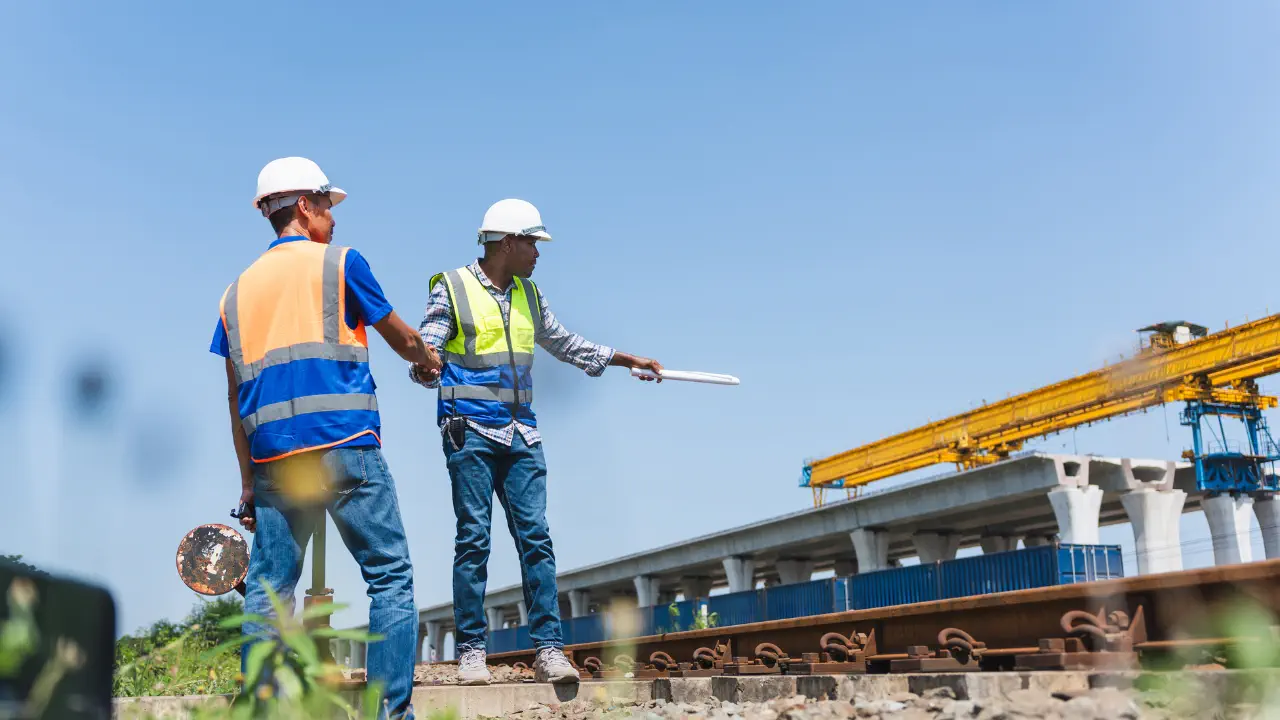
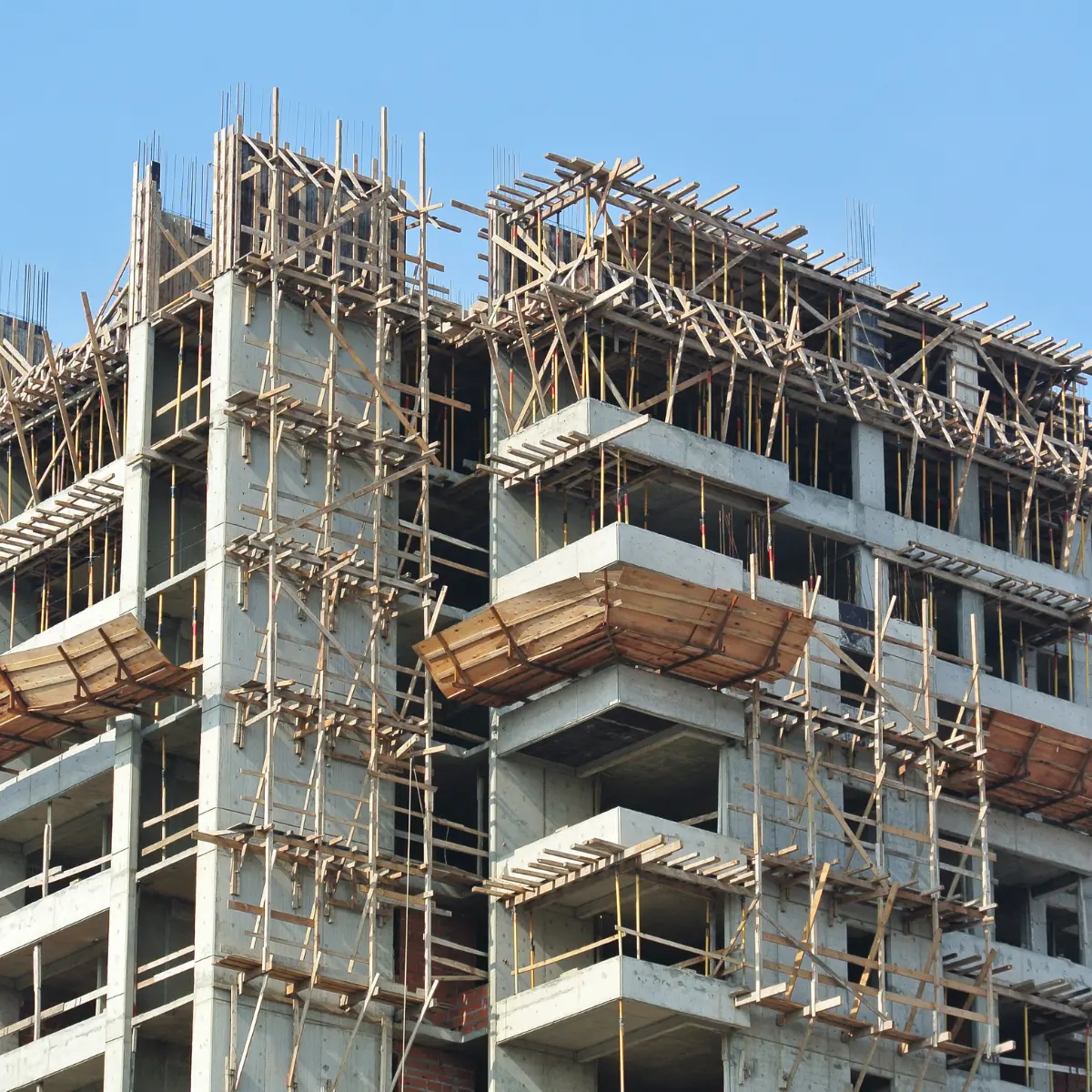
Construction sites face unique safety challenges with a changing workforce, evolving site conditions, and strict regulatory duties like CDM 2015. PETRAN supports principal contractors with real-time worker location tracking, automatic safety induction verification before site access, and immutable, audit-ready compliance records aligned with CDM requirements.
Contact Ombrulla about worker safety for utilities and energy
Drone inspecting a corroded pipe in a refinery, using AI-powered defect detection for energy and utility asset maintenance.

Energy & Utilities

Utilities workers often operate alone in remote substations, overhead lines, underground networks, and treatment facilities, where lone worker risk is high due to isolation and live systems. PETRAN addresses this with a complete safety stack: real-time GPS tracking, automated check-ins with escalation, SOS/panic alerts with fallback, and IMU-based man-down detection.
AI for manufacturing industry
Manufacturing AI inspection for surface defects and quality control

Manufacturing

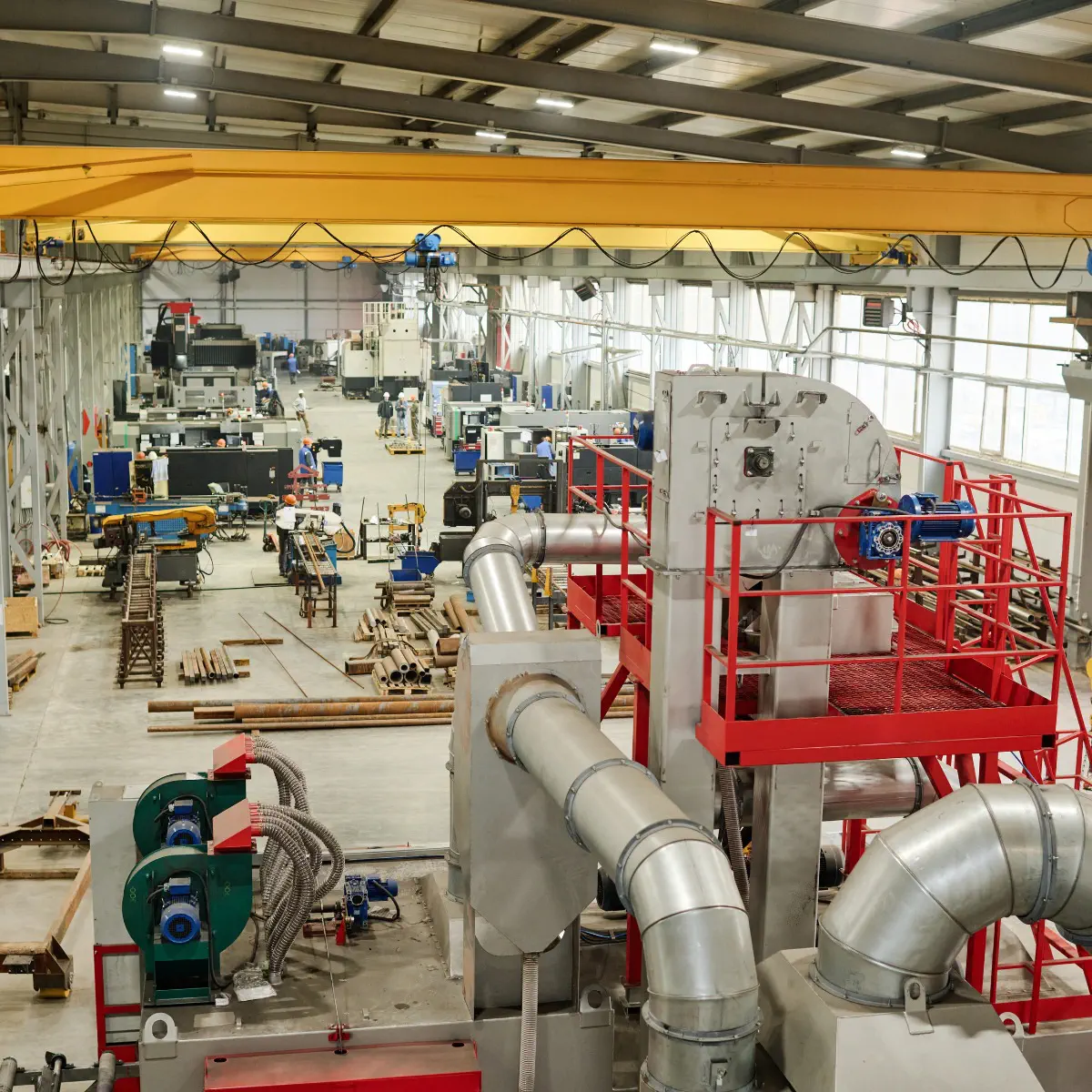
Manufacturing safety hazards include vehicle-pedestrian conflicts, machine guarding breaches, noise exposure, ergonomic strain, and chemical risks. PETRAN addresses these with proximity alerts using UWB/BLE tags on workers and forklifts, noise dosimetry wearables tracking exposure against OSHA limits, and TRITVA edge cameras continuously monitoring PPE compliance across the factory floor.
AI for manufacturing industry

How PETRAN Compares: AI Safety Platform vs Alternatives

How PETRAN Compares: AI Safety Platform vs Alternatives
CapabilityPaper / Spreadsheet BasedLegacy RTLS / Point Safety Devices
Real-time worker locationNone: workers log location manually or at fixed checkpointsZone-level only: RFID-based access control, no continuous tracking
Gas monitoring integrationRequires separate system; no automated safety responseNot typically included; add-on sensor
Fall / man-down detectionNone: reported manually after the factLimited: basic wearable alert, not integrated with location or response
Digital PTWPaper or basic digital form; no RTLS validationPoint solution: not integrated with worker location data
Automatic incident evidenceManual report completion after incident; often incompleteRFID access log only; no environmental or physiological data
Emergency muster managementManual roll call; slow and error-prone during evacuationZone-level only: cannot confirm worker is accounted for precisely
AI-predicted riskNone: reactive onlyNot available: hardware only, no analytics layer
Integration with CMMS/EHS/HRISManual data re-entry requiredLimited: hardware output to proprietary cloud dashboard
Deployment modesOn-premises only; no cloud or hybrid optionHardware vendor cloud only; no on-premises option
Governance & audit trailsNone native: separate safety management system requiredLimited: hardware event log; not enterprise audit format

Frequently Asked Questions

What is workplace safety software and how does it help reduce accidents on the shop floor?

Workplace safety software replaces paper-based safety processes with automated digital workflows that identify hazards, monitor workers in real time, and capture compliance evidence automatically. AI-powered platforms like PETRAN use IoT sensors, RTLS tracking, and computer vision to continuously monitor workers and conditions - triggering alerts, activating response workflows, and building an immutable safety record. This enables earlier hazard detection, faster response, and stronger regulatory compliance.

How can workplace safety management software help comply with OSHA and local safety regulations?

Workplace safety software centralizes compliance evidence including digital risk assessments, work permits, training records, and real-time exposure logs. PETRAN supports OSHA PSM, ISO 45001, CDM 2015, and other standards by logging every safety event with worker identity, location, timestamp, and environmental data. Automated reporting reduces audit preparation time significantly.

Why should manufacturers use workplace safety software instead of paper checklists and Excel?

Paper and Excel fail at scale because they are not real-time, inconsistent across users, lack verifiable evidence, and cannot trigger alerts. Modern platforms provide continuous monitoring, standardized workflows, and sensor-backed compliance data that withstands audits and legal scrutiny.

Can workplace safety software help reduce lost-time injuries (LTIs) and near misses in industrial plants?

Yes. PETRAN enables early intervention through gas alerts, proximity warnings, man-down detection, and leading indicator analytics. These proactive measures reduce incidents by identifying risks before they escalate into injuries.

How does workplace safety software support HSE managers in multi-site organisations?

PETRAN provides a centralized dashboard across all sites, showing TRIR, LTIR, near-miss trends, and leading indicators. Standardized data and instant access to incident evidence enable benchmarking and consistent safety management across locations.

Is workplace safety software suitable for small and mid-size businesses, or only for large enterprises?

PETRAN is scalable for both SMBs and enterprises. Organizations can start with core features and expand over time. Cloud deployment reduces infrastructure costs and allows fast pilot-based implementation.

How does workplace safety software support real-time incident reporting and investigation?

PETRAN automatically captures incident data including location, environmental conditions, worker status, and nearby personnel. This creates a complete evidence package instantly, enabling faster investigations and accurate reporting.

Can workplace safety software integrate with HR, payroll, or existing ERP systems?

Yes. PETRAN integrates with HRIS, ERP, CMMS, and EHS systems to sync employee data, certifications, and workflows. Integration ensures safety processes are aligned across enterprise systems.

How does workplace safety software improve safety culture among frontline employees?

Transparency builds trust. Workers can see their risk levels, receive instant alerts, and track responses to incidents. This visibility shows that safety systems protect employees, encouraging proactive participation.

Can workplace safety software help track and manage safety training and certifications?

Yes. PETRAN tracks training, certifications, and expiry dates, and restricts access to hazardous zones if qualifications are not valid. This ensures compliance without manual checks.

How does workplace safety software support risk assessments and control measures?

Digital risk assessments are linked to permits and assets, and RTLS validates whether control measures are followed in real time. Alerts are triggered if workers deviate from safe zones or conditions.

Is there a mobile app for workplace safety software for field and remote workers?

Yes. PETRAN offers mobile apps for inspections, incident reporting, and permit workflows, with offline capability. Wearables provide simplified safety alerts and status updates where smartphones are not used.

Can workplace safety software provide dashboards and analytics for safety KPIs?

Yes. PETRAN delivers role-based dashboards showing risk scores, exposure trends, TRIR, LTIR, and predictive insights. All KPIs are backed by real-time sensor and location data.

How secure is our safety and employee tracking data in a cloud-based workplace safety platform?

PETRAN uses enterprise-grade security including encryption, SSO, role-based access, and audit logs. Data access is controlled and used strictly for safety and compliance purposes.

How long does it take to implement workplace safety software in a running plant or warehouse?

A pilot deployment can go live in 3–6 weeks, while full-site implementation typically takes 8–16 weeks. Existing devices can often be integrated, speeding up deployment.

What types of inspections can we digitise with workplace safety software?

PETRAN supports PPE checks, equipment inspections, safety audits, fire safety, confined space entry, and more. RTLS verifies that inspections are actually performed in required zones.

Can workplace safety software help manage contractor safety and compliance?

Yes. Contractors are onboarded with profiles, training records, and certifications. RTLS ensures they follow zone access rules and safety standards like internal employees.

How does workplace safety software support ISO 45001 and other safety management standards?

PETRAN provides real-time monitoring, incident tracking, and audit-ready evidence aligned with ISO 45001 and similar standards, ensuring compliance and continuous improvement.

Can we customise workplace safety software to match our workflows and terminology?

Yes. PETRAN allows customization of workflows, alerts, zones, risk matrices, and dashboards to match organizational processes and regulatory requirements.

What ROI can we expect from implementing workplace safety software with Real-Time Employee Tracking?

ROI comes from reduced incidents, faster response times, lower compliance costs, and improved productivity. Automated processes and real-time insights deliver measurable operational and financial benefits.

How do we choose the best workplace safety platform with RTLS and employee tracking for our industry?

Evaluate platforms based on certification support, technology flexibility, gas monitoring integration, compliance alignment, and enterprise integrations. A pilot deployment is the best way to validate suitability.