Ombrulla - home

AI Predictive Maintenance: Asset Health Intelligence Built for Industrial Reliability

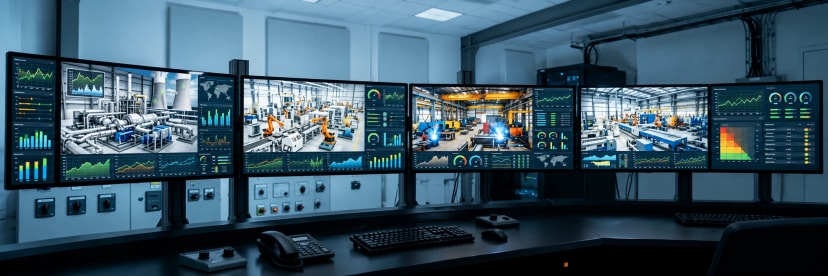
Ombrulla's predictive maintenance capability, delivered through the PETRAN asset performance management platform, turns sensor data, PLC and SCADA signals, and inspection records into clear, prioritised maintenance action. Operators using AI and IoT asset performance management platform typically reduce maintenance cost by 25–30% and lift asset availability by 10–20%.

AI predictive maintenance software built on PETRAN platform, powered by IoT sensors and real-time analytics to prevent equipment failures and reduce operational costs.

What Is AI Predictive Maintenance?

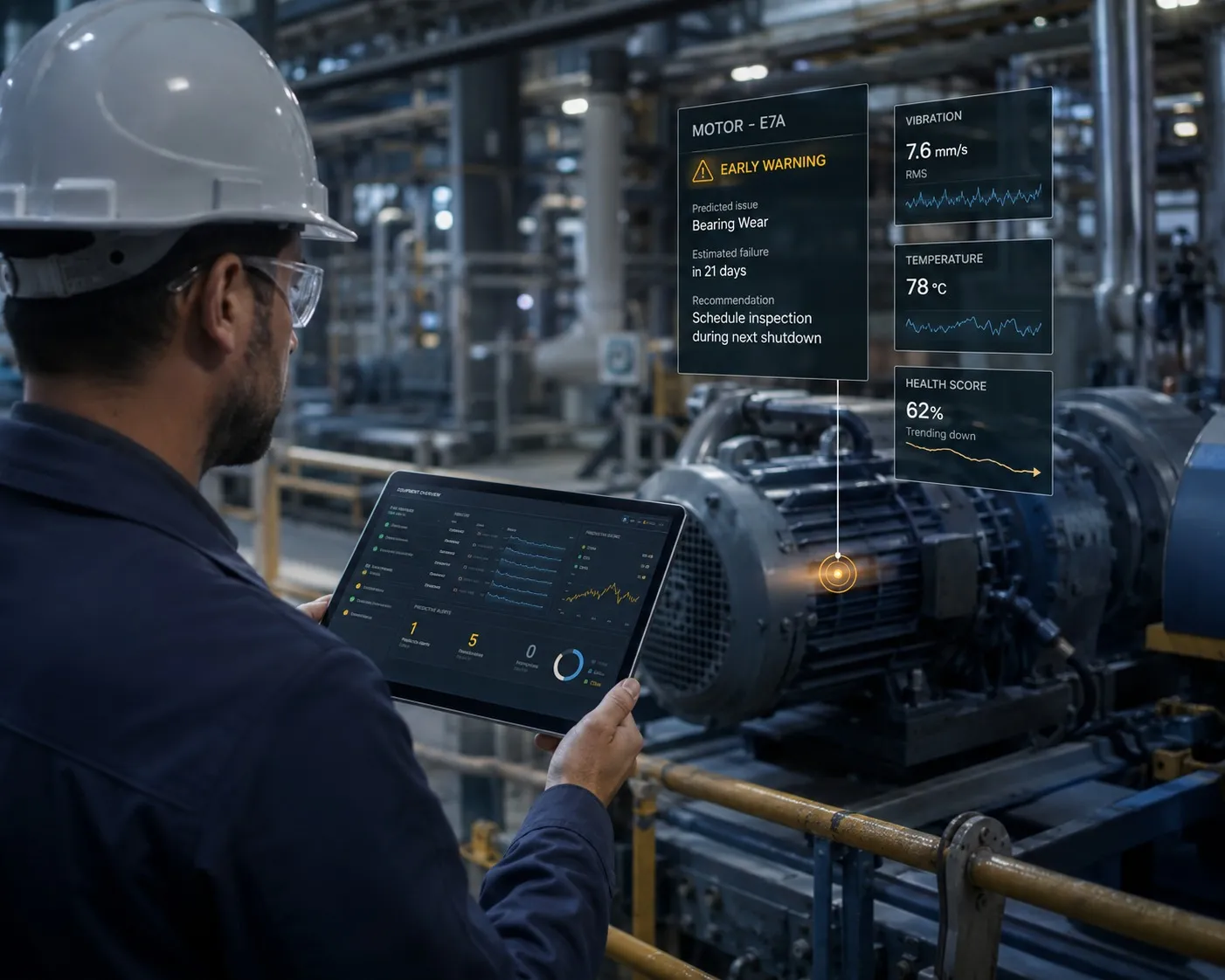
AI predictive maintenance is the intelligence layer within PETRAN's asset performance management platform. It combines continuous condition monitoring, advanced data analytics, and machine learning to forecast when an asset is likely to fail — so that maintenance happens at the optimal moment: late enough to maximise component life, early enough to prevent unplanned downtime.

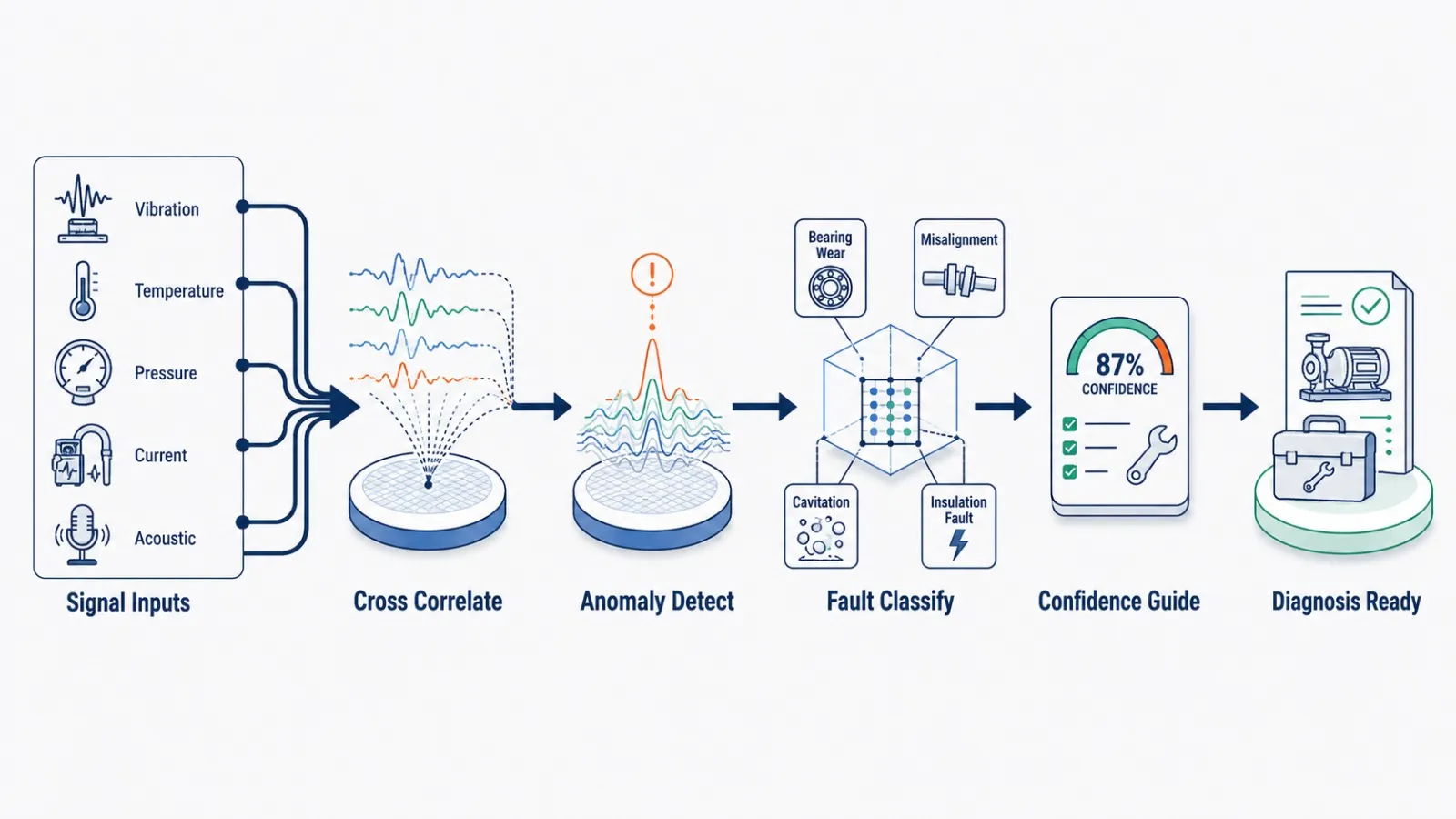
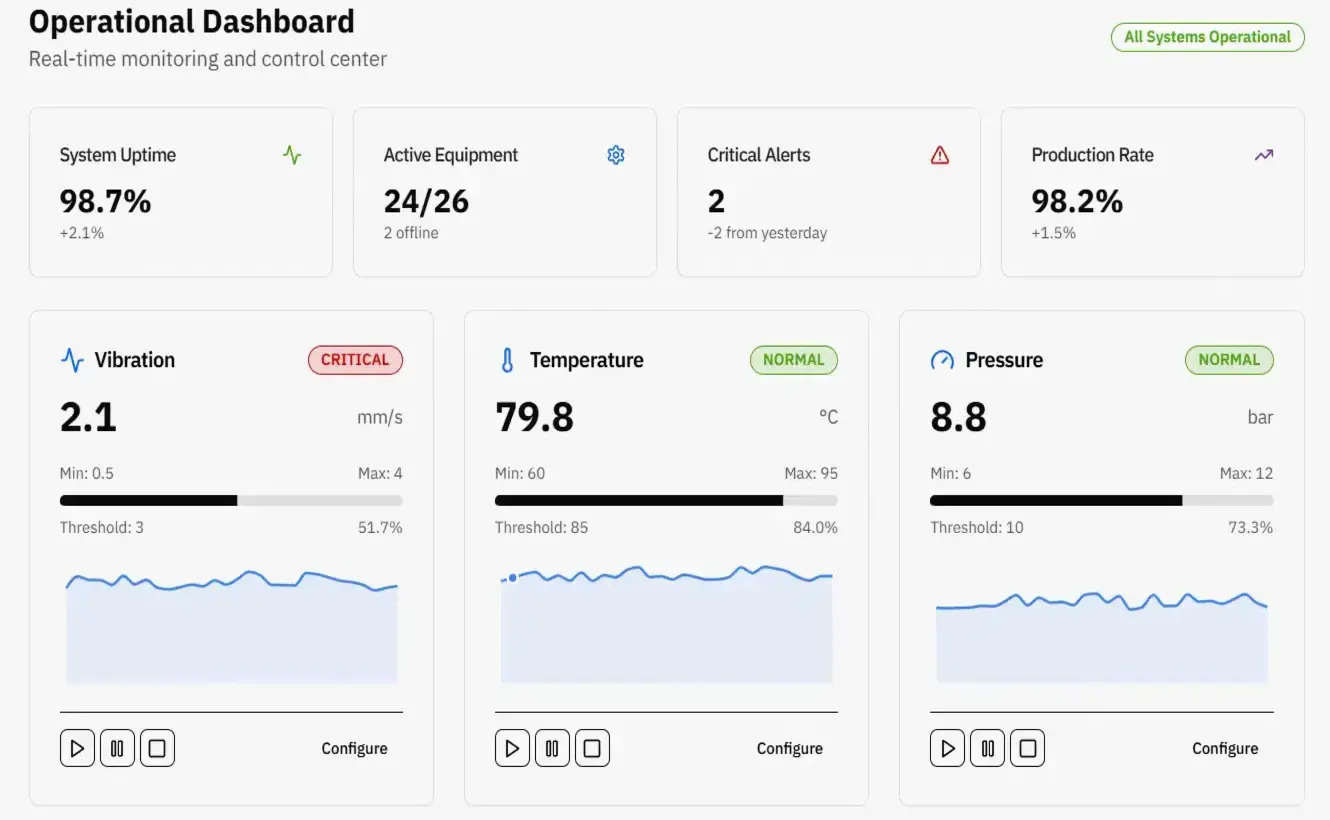
- IoT sensors continuously stream vibration, temperature, pressure, current, and acoustic data from critical equipment.

- Machine learning models analyse those signals against learned behavioural baselines to surface anomalies that indicate developing failure.

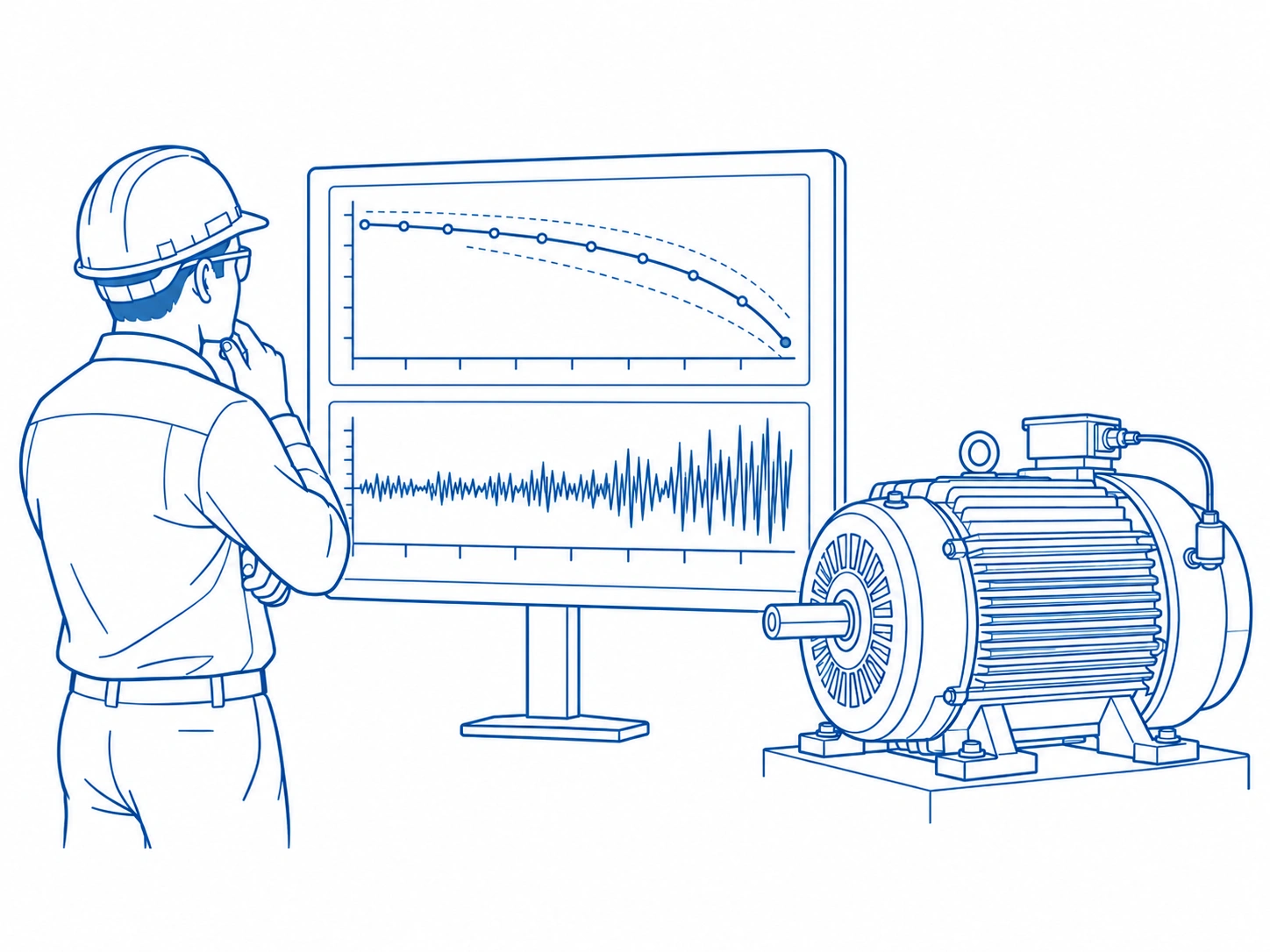
- Remaining Useful Life (RUL) forecasting quantifies how long an asset can operate safely before intervention is required.

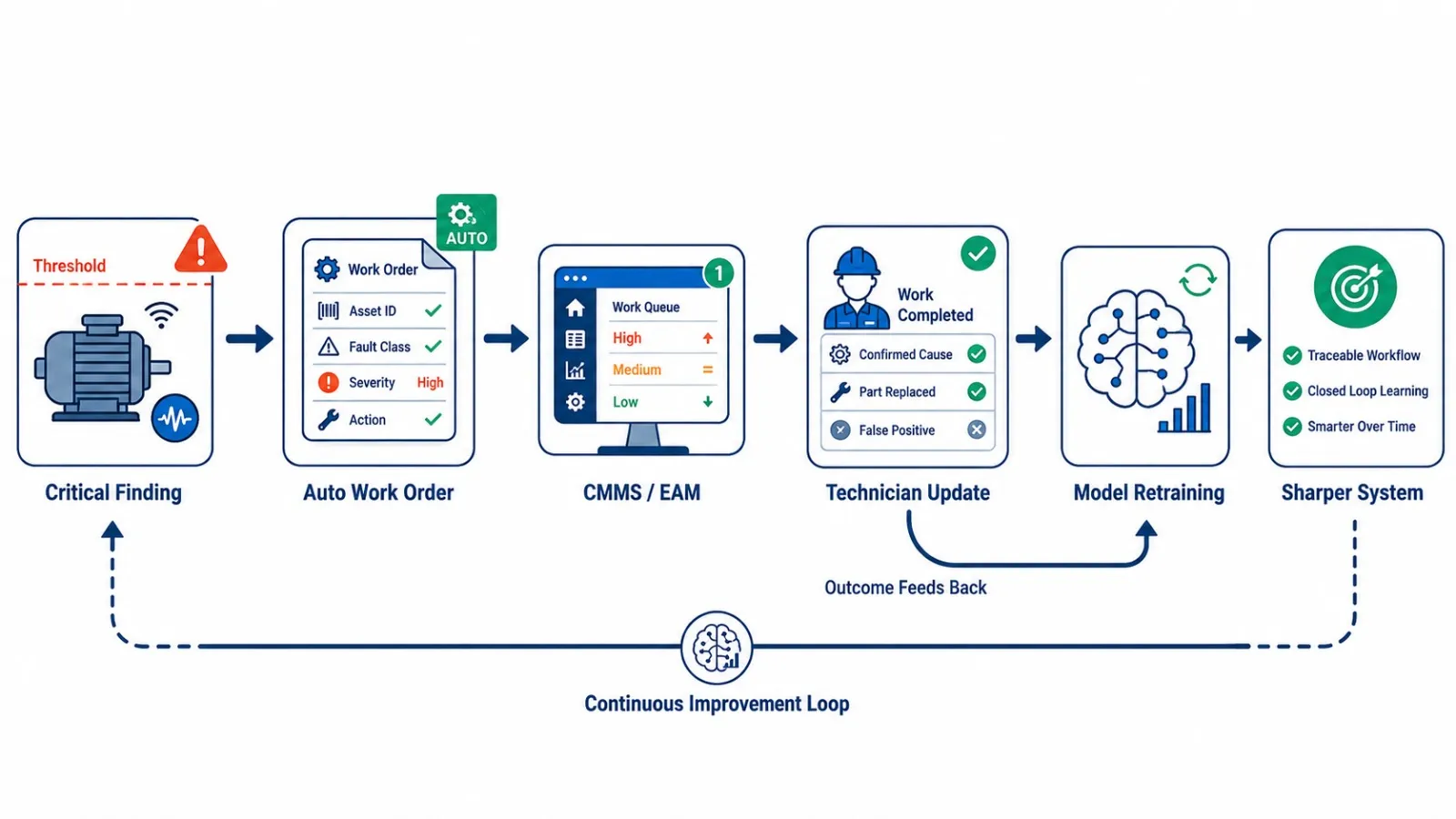
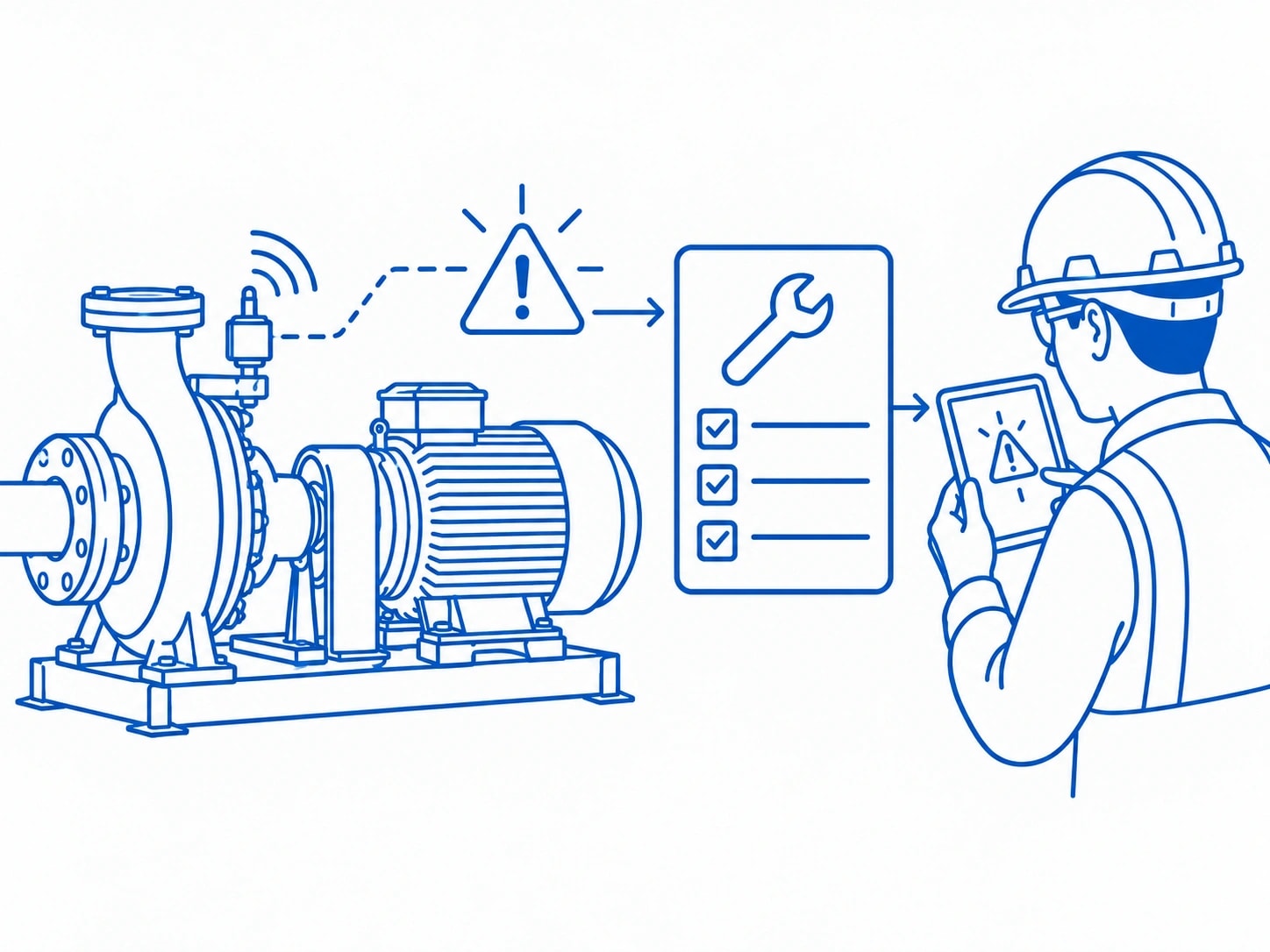
- Integration with PETRAN's APM core automatically generates evidence-backed work orders and tracks maintenance outcomes.

30–50%

Reduction in unplanned downtime

Rotating equipment benchmark

20–30%

Lower maintenance cost

Versus fixed PM schedules

15–20%

Extended asset lifespan

Through early intervention

10–20%

Increase in asset availability

On critical assets

Who Benefits from AI Predictive Maintenance Software

  • PETRAN supports every role in the maintenance and reliability chain, from technicians and reliability engineers managing day-to-day asset health, to executive leaders accountable for portfolio risk, cost, and operational performance.
Maintenance and reliability engineers using predictive maintenance software

Maintenance and Reliability Engineers

Move from reactive firefighting to data-driven action. PETRAN highlights the assets most likely to fail and identifies the probable failure mode, bearing wear, misalignment, cavitation, insulation degradation — before the first inspection begins.

Plant and operations managers monitoring asset performance

Plant and Operations Managers

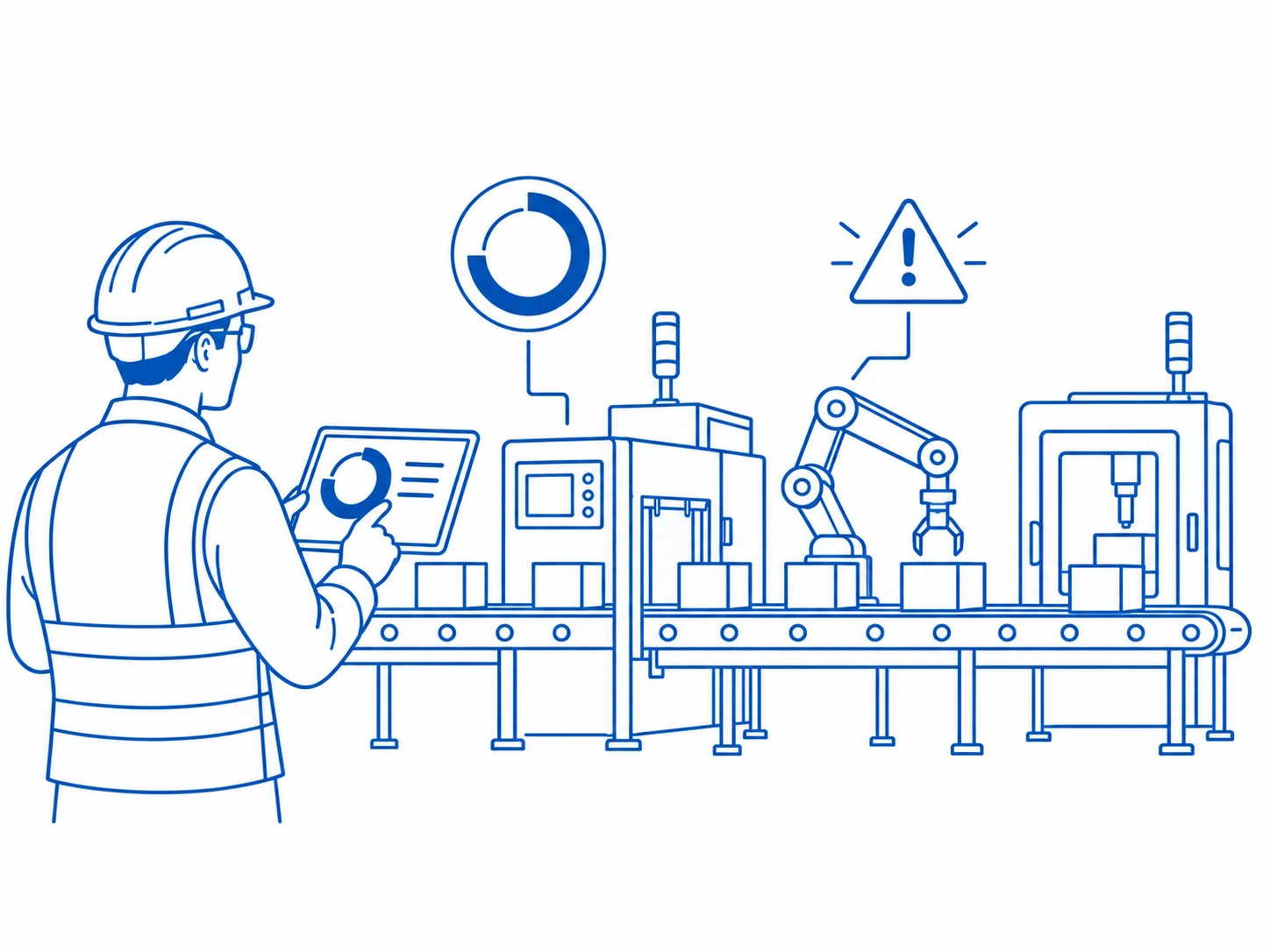
Manufacturing Asset Performance Management with PETRAN helps teams align maintenance with production priorities by avoiding unnecessary work on healthy assets and addressing degrading equipment before it affects throughput, quality, or safety.

Multi-site operations leaders monitoring critical assets across facilities

Multi-Site Operations Leaders

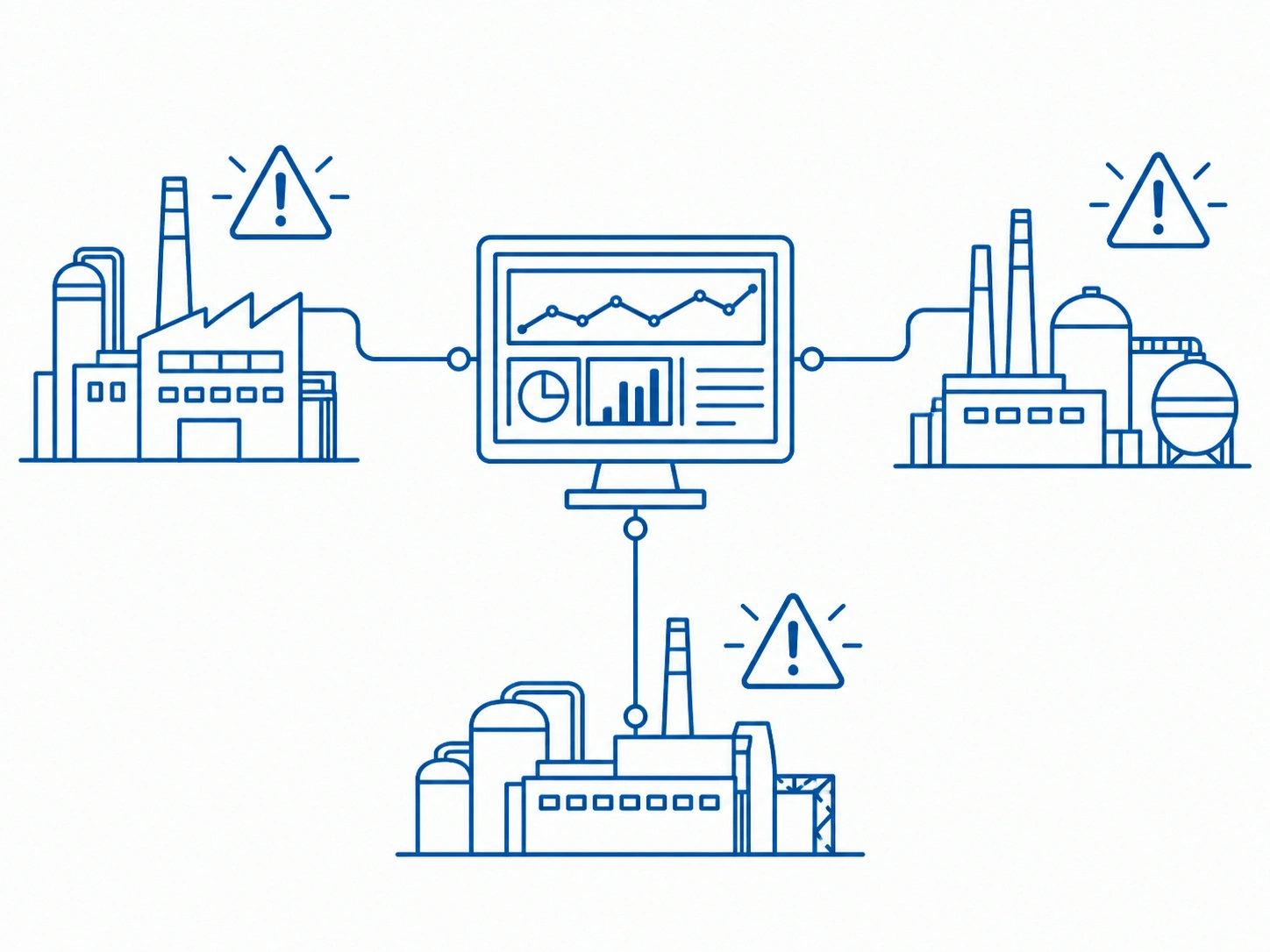
Establish consistency across plants with standardised condition monitoring rules, alert thresholds, and CMMS routing. PETRAN delivers a unified portfolio view of asset risk and reliability performance across the enterprise.

Executive manufacturing overview showing reliability risk and ROI

VP and Director of Manufacturing

Gain portfolio-wide visibility into reliability risk, maintenance cost trends, and programme ROI. PETRAN produces evidence that is ready for regulatory, customer, board, and investor review — turning maintenance into a measurable strategic asset.

Six Operational Problems That AI Predictive Maintenance Solves

  • Most enterprises evaluate predictive maintenance software when one or more of the following conditions is present in their operations. Each problem is mapped to a specific PETRAN capability.
Comparison of time-based vs condition-based maintenance showing predictive maintenance advantage

Preventive Maintenance Is Running, but Failures Still Happen

Preventive maintenance is calendar-driven. Failures are condition-driven. Degradation between PM cycles — bearing wear, seal erosion, insulation creep — remains invisible until the asset fails. PETRAN monitors continuously between PM cycles, catching the patterns that schedules cannot.

Industrial data transformation into actionable maintenance insights

Operational Data Exists but Never Becomes a Maintenance Action

Vibration data sits in the historian. Temperature alarms fire in SCADA. No work order is created. Nothing is prioritised. PETRAN closes the gap from signal to action by raising an evidenced work order in the CMMS automatically when a fault signature is detected.

Risk prioritization interface reducing alarm fatigue in maintenance teams

Alert Fatigue Has Trained Teams to Ignore the Warning System

When every alert is labelled critical, none are acted on. PETRAN uses confidence scoring, asset criticality weighting, and trend-velocity analysis to surface only the alerts that genuinely require action — and routes each to a named owner.

Predictive shutdown planning and spare parts management dashboard

Shutdown Planning and Spare Parts Remain Reactive

Without an RUL forecast, spare parts arrive after the failure and crews are mobilised in emergency conditions. PETRAN's RUL window gives planners days to weeks of advance notice to align labour, parts, and production schedules.

Audit trail and compliance evidence for regulatory and safety investigations

No Audit Trail When Regulators, Customers, or HSE Ask Questions

What was detected? Who approved the work? What was done, and when? PETRAN logs every step with user identity, timestamp, and evidence, exportable for ISO audits, customer quality reviews, and HSE investigations.

MLOps model drift detection and safe rollback for predictive maintenance AI models

AI Models Degrade Silently After Go-Live

A model trained on summer shift data drifts in winter. A product changeover creates new vibration signatures. PETRAN's MLOps layer detects drift, alerts operations, and enables safe rollback — so model accuracy is maintained throughout the asset lifecycle.

AI Predictive Maintenance Use Cases Asset-Specific Deployments on PETRAN

  • PETRAN supports predictive maintenance across rotating equipment, electrical assets, and mechanical systems. The four highest-deployed use cases are detailed below, each with a dedicated implementation page covering technical scope, sensor requirements, integration patterns, and KPIs.
CNC machine predictive maintenance monitoring spindle vibration and bearing health

AI Predictive Maintenance for CNC Machines

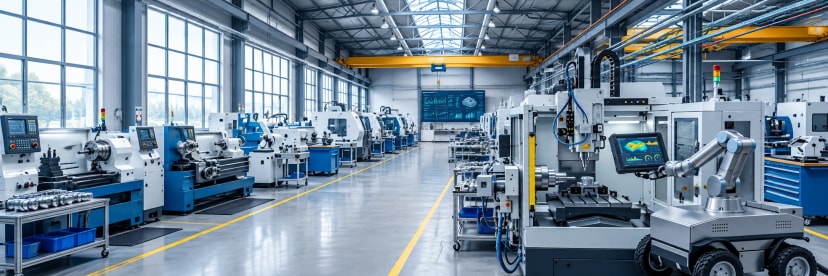
  • Ombrulla deploys PETRAN to monitor spindle vibration, bearing temperature, spindle load current, and cycle time deviation continuously - detecting early degradation patterns including bearing wear, misalignment, and thermal overload typically 2–6 weeks before they cause unplanned stops.
    • -Industries served: precision manufacturing, automotive, aerospace.
View the CNC Use Case
Power transformer predictive maintenance with dissolved gas analysis and thermal monitoring

AI Predictive Maintenance for Power Transformers

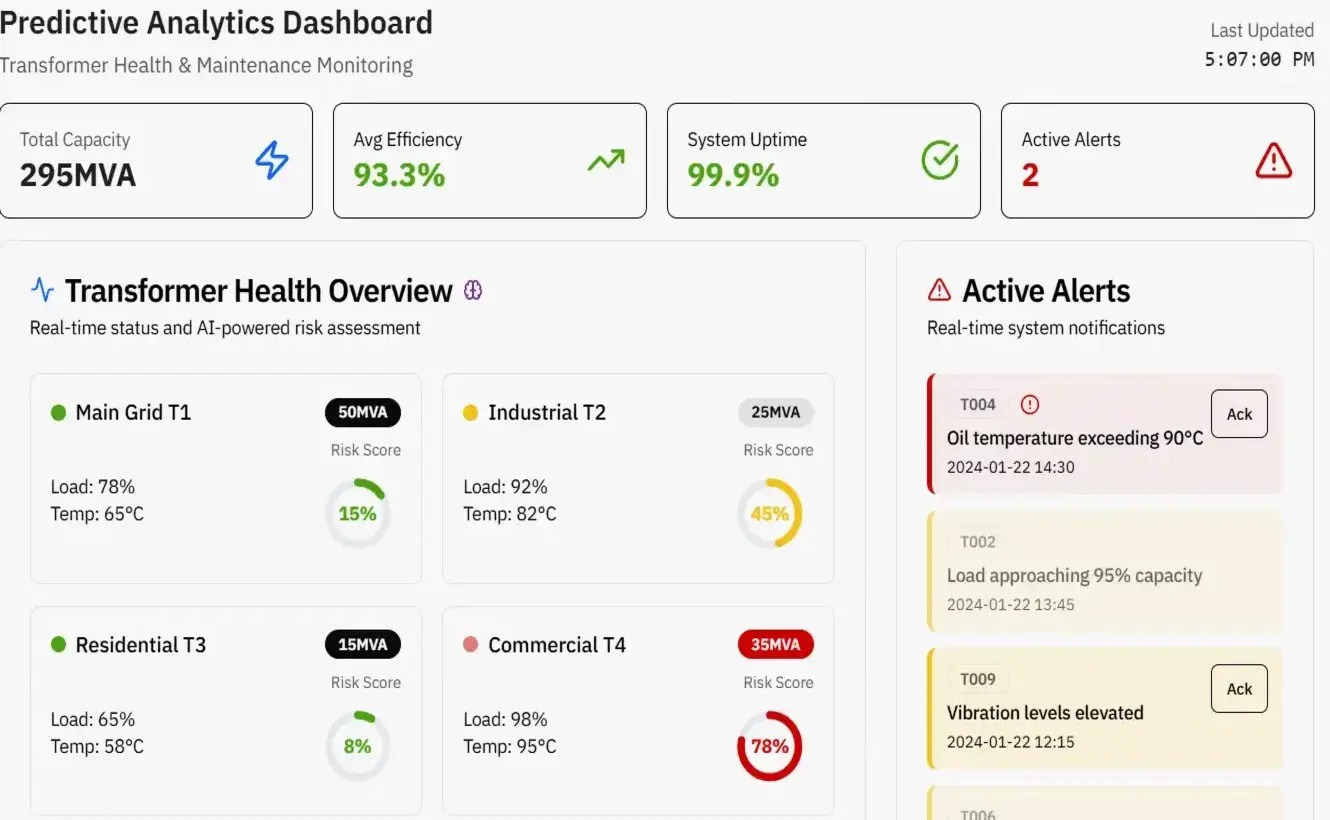
  • Ombrulla deploys PETRAN to monitor oil temperature, winding hot-spot, DGA trends, partial discharge, and moisture levels - detecting early signs of thermal degradation and incipient faults weeks before they reach critical severity, enabling planned outages rather than emergency replacements.
    • -Industries served: power utilities, energy, heavy industry.
View the Transformer Use Case
Pump and compressor predictive maintenance monitoring vibration and pressure differentials

AI Predictive Maintenance for Pumps and Compressors

  • Ombrulla deploys predictive machine learning models that analyse real-time data against historical failure fingerprints to detect wear in seals, bearings, impellers, and valves - generating failure forecasts with specific time windows for critical upstream and downstream oil and gas operations.
    • -Industries served: oil and gas (upstream and downstream), petrochemical, process industries.
View the Pump Use Case
Compressor and generator health monitoring for predictive maintenance

AI Predictive Maintenance for Compressors and Generators

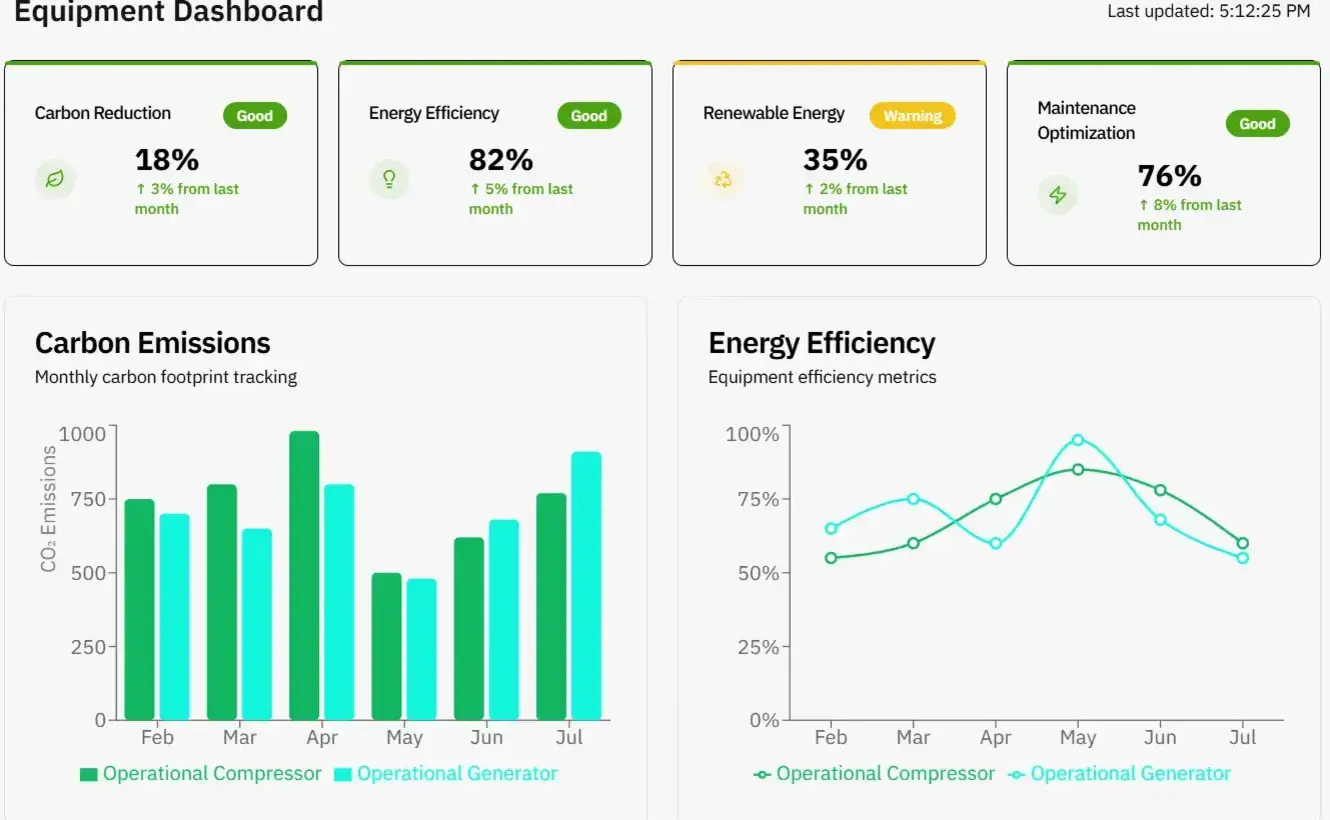
  • Ombrulla deploys PETRAN for early detection of rotor imbalance, valve degradation, piston ring blowby, and cooling system fouling - enabling maintenance interventions during planned turnarounds rather than uncontrolled emergency shutdowns affecting multiple downstream processes.
    • -Industries served: manufacturing, oil and gas, energy, utilities, construction.
View the Compressor Use Case

PETRAN Platform Capabilities for Predictive Maintenance Programmes

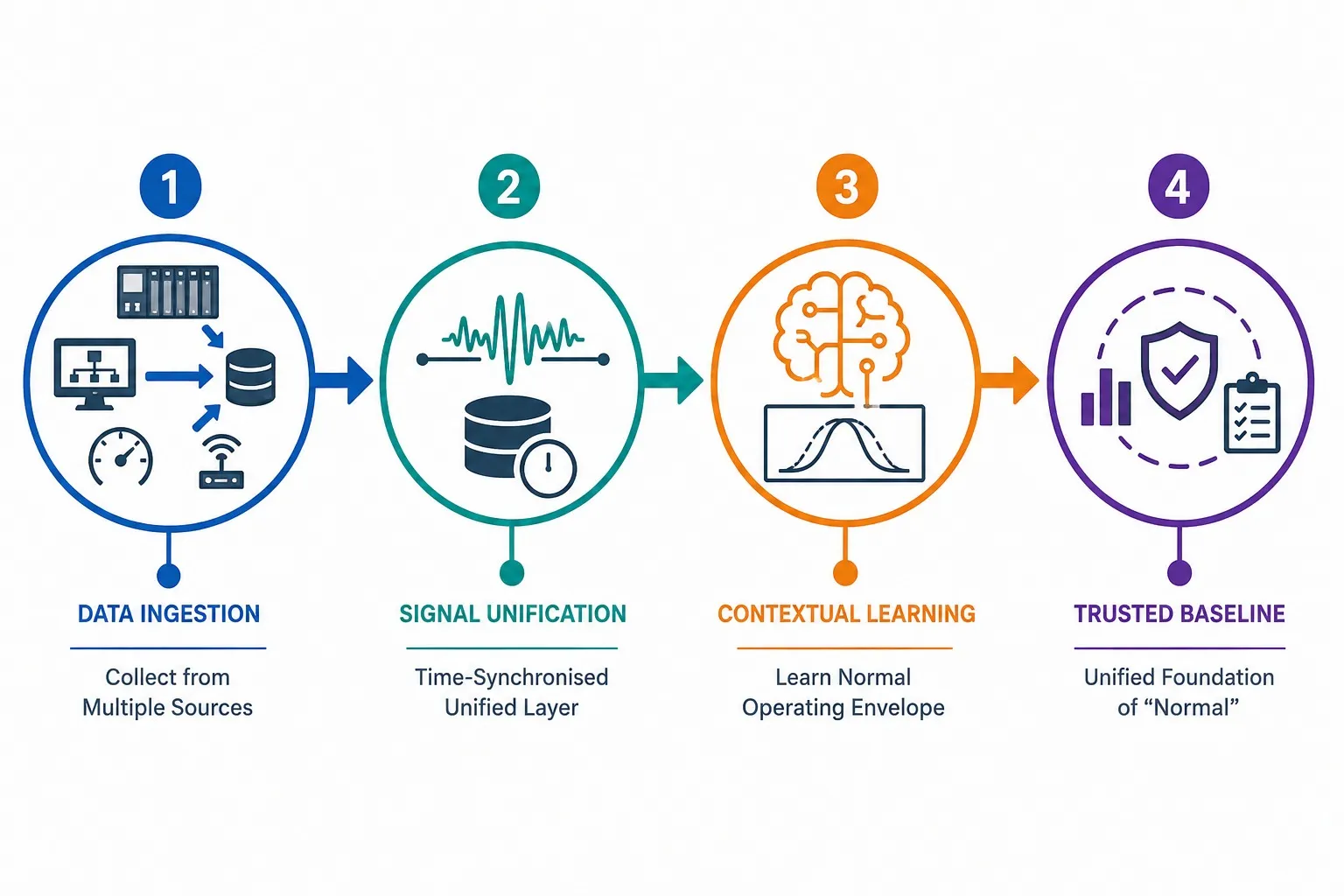
Unified Data Ingestion and Time Synchronisation

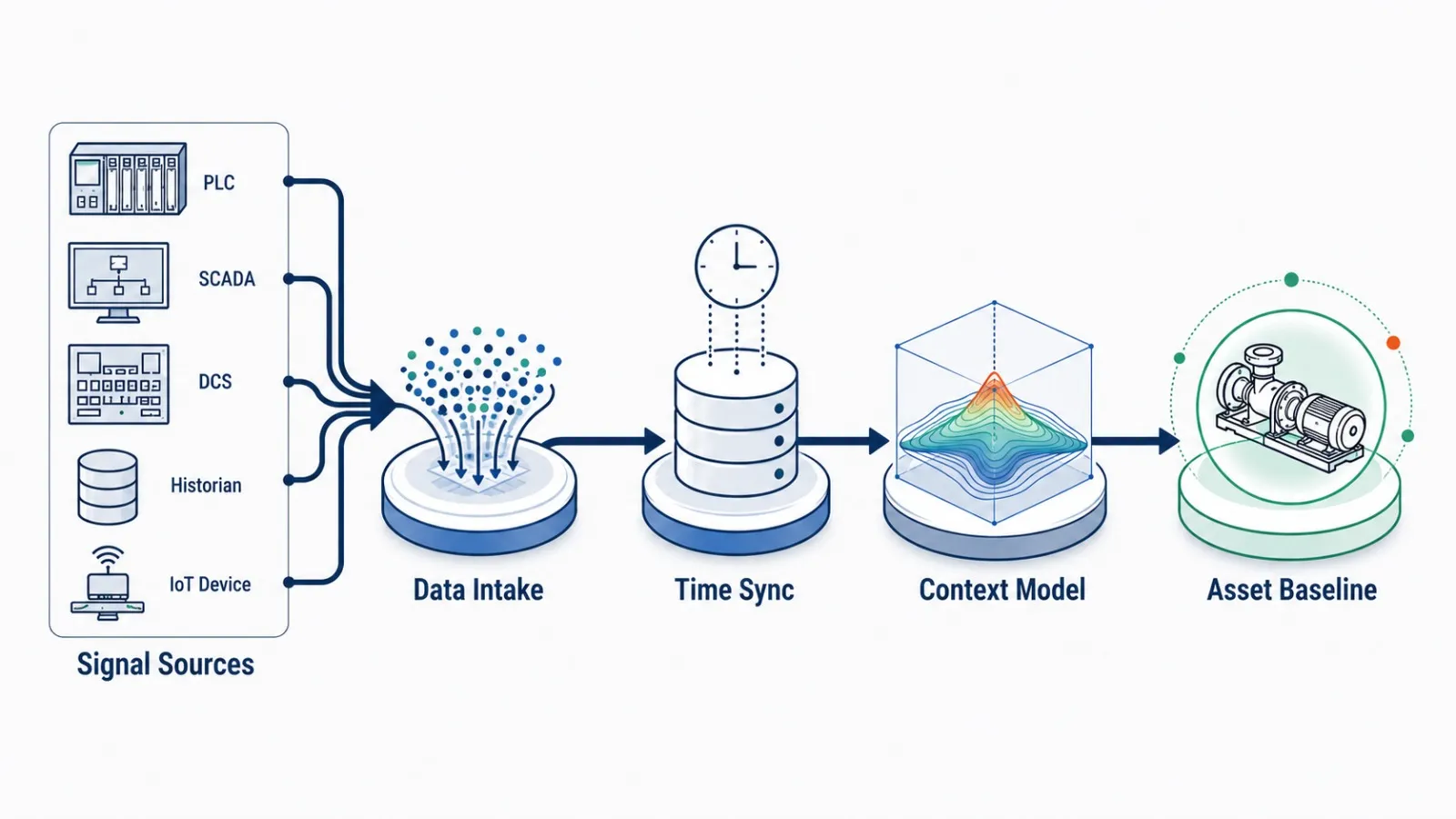
Normalise signals from sensors, PLC/SCADA, historians, and inspection records into a single trusted asset data foundation — multi-source and time-synchronised at millisecond resolution to support high-frequency vibration analysis.

Real-Time Anomaly Detection

Detect subtle deviations from learned multi-mode normal behaviour across vibration, temperature, pressure, current, and acoustic parameters — well before single-sensor threshold alarms would fire.

Asset Health Scoring and Risk Visibility

Convert raw multi-sensor signals into a single health score and risk tier per asset. Configurable thresholds support both operator dashboards and executive portfolio reporting, with trend direction always visible.

Remaining Useful Life (RUL) Forecasting

Estimate remaining useful life as a probability distribution — not a single deterministic date — giving maintenance planners a realistic intervention window to align spare parts, labour, and production.

Failure Mode Classification

Move beyond anomaly detection to failure-mode identification: bearing wear, shaft misalignment, cavitation, seal degradation, insulation breakdown. First-check guidance reduces mean time to detect (MTTD) on critical assets.

Closed-Loop CMMS and EAM Integration

Push AI findings into the CMMS or EAM as prioritised work orders with sensor evidence, anomaly charts, and recommended intervention steps. Completed-work outcomes flow back to PETRAN to continuously improve model accuracy.

MLOps, Drift Monitoring, and Model Governance

Version control for every deployed model, continuous performance monitoring against accuracy baselines, drift detection with configurable sensitivity, and safe rollback to the last validated model — so accuracy never degrades silently after go-live.

Cross-Site Risk Prioritisation

A portfolio-level view of asset health and maintenance risk across all sites. Consistent alert rules, escalation thresholds, and KPIs allow multi-site operations leaders to focus resources on the highest-risk equipment first.

Integrations and data sources

  • PETRAN connects to the systems and signals that already run your plant. It ingests real-time operational, maintenance, and process-context data from industrial control systems, enterprise platforms, and condition-monitoring sources to power accurate, contextual predictive maintenance models.
Integration with PLC, SCADA, and Distributed Control Systems (DCS)

Industrial Control Systems

Connects to PLC, SCADA, and DCS environments to capture live machine states, process variables, alarms, and control signals directly from the plant floor — without disrupting existing automation logic.

Streaming time-series data from historians and tag databases

Historians and Tag Databases

Streams structured time-series data, asset tags, and historical process records from industrial historians and tag databases to support model training, baseline behaviour analysis, and anomaly detection.

Integration with Computerized Maintenance Management Systems (CMMS) and Enterprise Asset Management (EAM)

Maintenance Systems

Integrates with CMMS and EAM platforms to use work orders, failure logs, service records, and full maintenance history for asset-level diagnostics and prioritised predictive recommendations.

Integration with Manufacturing Execution Systems (MES) and Enterprise Resource Planning (ERP)

Production and Business Context

Ingests MES and ERP data — production schedules, downtime codes, batch context, spare-parts usage, and operating conditions — to sharpen prediction quality and improve the prioritisation of maintenance work.

How Ombrulla PETRAN AI Predictive Maintenance Works

Predictive Maintenance Within Asset Performance Management

  • Predictive maintenance is a core capability within PETRAN's broader asset performance management platform. Where APM provides the strategic framework for monitoring and optimising asset health across the full lifecycle, predictive maintenance delivers the specific intelligence required to forecast failures and time maintenance interventions with precision.
  • - Strategic vs Tactical: APM provides the strategic view of overall asset health, OEE, and lifecycle cost. Predictive maintenance delivers the tactical intelligence on when specific maintenance actions should occur.
  • - Holistic vs Specific: APM monitors every dimension of asset performance — financial, operational, and compliance. Predictive maintenance focuses specifically on failure prediction and maintenance optimisation.
  • - Platform vs Module: PETRAN's APM platform is the enterprise system that unifies predictive maintenance, visual inspection, and mobile inspection capabilities into a single intelligence layer for asset operations.

Frequently Asked Questions

What is predictive maintenance software?

Predictive maintenance software is an industrial technology that uses machine learning models, IoT sensor data, and equipment operating history to forecast when a specific asset is likely to fail - enabling maintenance teams to intervene before failure occurs, in a planned window, rather than responding to an unplanned breakdown. It monitors real operating parameters continuously (vibration, temperature, pressure, current, acoustics), detects early degradation patterns, identifies the probable failure mode, estimates remaining useful life (RUL), and automatically routes a prioritised work order with evidence to the CMMS or EAM system. Ombrulla's predictive maintenance software runs on the PETRAN industrial AI and IoT platform.

How is AI predictive maintenance different from preventive maintenance?

Preventive maintenance is calendar-driven: components are serviced or replaced on a fixed schedule regardless of actual condition. This typically over-maintains healthy assets wasting labour and parts while missing failures that develop between service cycles, because failure is condition-driven, not calendar-driven. AI predictive maintenance is condition-driven: it monitors real operating parameters continuously, detects multi-sensor degradation signatures, identifies the failure mode, and forecasts Remaining Useful Life, so maintenance happens precisely when it is needed. Industry data indicates that 30% or more of preventive maintenance tasks are performed on components still within specification, while concurrent failures occur between PM cycles.

How does AI and IoT predictive maintenance work technically?

AI and IoT predictive maintenance works through five technical layers. First, IoT sensors and existing data sources SCADA, historian, CMMS records stream operational data into the platform. Second, machine learning models trained on the asset's historical operating patterns establish a multi-mode baseline of normal behaviour. Third, anomaly detection algorithms identify deviations from that baseline across multiple sensor channels simultaneously. Fourth, failure-mode classification models determine the probable root cause from the anomaly signature for example, a specific vibration frequency pattern indicating bearing inner-race wear rather than misalignment. Fifth, the finding is packaged as a prioritised work order and pushed into the CMMS or EAM, with technician outcomes feeding back into the model continuously.

Which industrial assets should we start predictive maintenance on first?

Start with assets that combine three characteristics: high criticality (a failure stops a production line, creates a safety risk, or triggers regulatory reporting), sufficient sensor data coverage (existing sensors, historian tags, or easy instrumentation), and a documented history of unexpected failures or elevated maintenance cost. In manufacturing, this is typically CNC spindles, critical centrifugal pumps, or plant compressors. In energy and utilities, power transformers and gas turbines are usually the first priority. Ombrulla's Discovery phase typically one to two weeks ranks candidate assets using your existing maintenance records and criticality registers before the pilot begins.

What data is required to start AI predictive maintenance with PETRAN?

At minimum, PETRAN requires time-series sensor data from the target assets - vibration, temperature, or pressure readings at appropriate sampling frequencies for the failure modes being monitored (typically 1–10 kHz for vibration, 1-minute intervals for thermal and process data). Historical maintenance records significantly improve initial model accuracy but are not a prerequisite for starting a pilot. PETRAN also ingests data from historian systems (OSIsoft PI, AVEVA), SCADA tags, and manual inspection logs. The Discovery phase maps all available data sources and identifies any coverage gaps before the pilot begins. In most cases, no new sensor hardware is required to start.

Can AI predictive maintenance work without historical failure data?

Yes. PETRAN can begin with unsupervised anomaly detection when historical failure records are sparse or absent. The system learns what normal operating behaviour looks like across all operating modes and flags statistically significant deviations from that learned baseline providing early warning even without labelled failure events in the training data. Failure-mode classification capability improves progressively as the system accumulates operational data and technician feedback from resolved work orders. Most PETRAN pilots begin in anomaly-detection mode and develop failure-mode-specific prediction capability within three to six months of continuous operation.

Do we need to install new sensors before starting a predictive maintenance pilot?

In most cases, no. PETRAN is designed to work with existing sensor infrastructure historian tags, PLC and SCADA signals, installed condition-monitoring sensors, and manual inspection records. New sensors are recommended only when the available data is insufficient to detect the target failure modes for the specific asset type and operating environment. The Discovery phase assesses current instrumentation coverage across all target assets and provides a gap analysis with specific sensor recommendations and cost estimates before any hardware commitment is required.

How does PETRAN reduce false alerts and alert fatigue?

PETRAN reduces alert fatigue through four mechanisms deployed in combination. Multi-sensor fusion correlates signals across multiple sensors before triggering an alert, rather than alerting on a single threshold breach eliminating the majority of false positives caused by sensor noise. Confidence scoring ensures only alerts above a configurable confidence threshold reach the maintenance queue. Asset criticality weighting promotes alerts from high-criticality assets and suppresses non-critical ones unless severity is high. Trend velocity context distinguishes between a stable anomaly (monitor closely) and a rapidly deteriorating trend (act now). During the pilot phase, thresholds are tuned against live production data before go-live.

Can PETRAN integrate with our CMMS, EAM, historian, SCADA, and ERP systems?

Yes. PETRAN integrates bidirectionally with CMMS and EAM systems SAP PM, IBM Maximo, Infor EAM, and the Maximo Application Suite creating prioritised work orders and capturing completed-work outcomes. It connects to historian systems including OSIsoft PI, AVEVA Historian, and Ignition via their standard APIs for read access. SCADA and PLC integration uses OPC-UA and REST protocols in read-only mode by default. ERP integration for spare-parts cost and labour cost data is available via REST API. All integrations are non-invasive PETRAN reads from existing systems and writes only to designated endpoints such as CMMS work-order queues.

How long does it take to implement AI predictive maintenance on PETRAN?

A standard PETRAN pilot on a single asset class delivers first live insights within two to four weeks from data connection. Full implementation depends on scope: a single-site deployment covering three to five asset types typically takes 8-12 weeks from Discovery to production go-live, covering data integration, baseline learning, threshold tuning, alert routing, and CMMS connection testing. Multi-site rollouts use the same validated deployment playbook with local configuration adjustments, adding two to four weeks per additional site after the first site is stable and in production.

How do we measure ROI from a predictive maintenance programme?

The primary KPIs for predictive maintenance ROI are: Mean Time Between Failures (MTBF) does it increase over the measurement period? Mean Time to Repair (MTTR) does it decrease? Planned-to-reactive work-order ratio does the planned proportion grow? Unplanned downtime hours per asset per period does this decrease? Maintenance cost per asset does this fall versus the prior baseline? PETRAN tracks all five KPIs from the pilot baseline and produces a before-and-after evidence report at pilot completion. This report is the basis for the scale investment decision and is suitable for sharing with finance and executive stakeholders.

What should we prepare before booking a predictive maintenance demo?

Preparation for a productive PETRAN demo takes less than 30 minutes. Useful inputs include: a list of your three to five highest-criticality assets by production impact or maintenance cost; your current CMMS or EAM system name and version; whether you have existing sensor infrastructure or historian data on those assets; approximate unplanned downtime hours or costs per month for those assets (this becomes the pilot baseline); and the names of the key stakeholders maintenance lead, plant manager, IT/OT integration contact who would be involved in a pilot. None of these are required to book the call; the Discovery conversation will establish them together.