


What are the top AI trends for 2026?
Artificial intelligence is no longer experimental. In 2026, AI is becoming the backbone of enterprise architecture-shifting from isolated proofs of concept to production-grade industrial AI and IoT solutions that drive measurable business outcomes across manufacturing, healthcare, energy, logistics, and beyond.
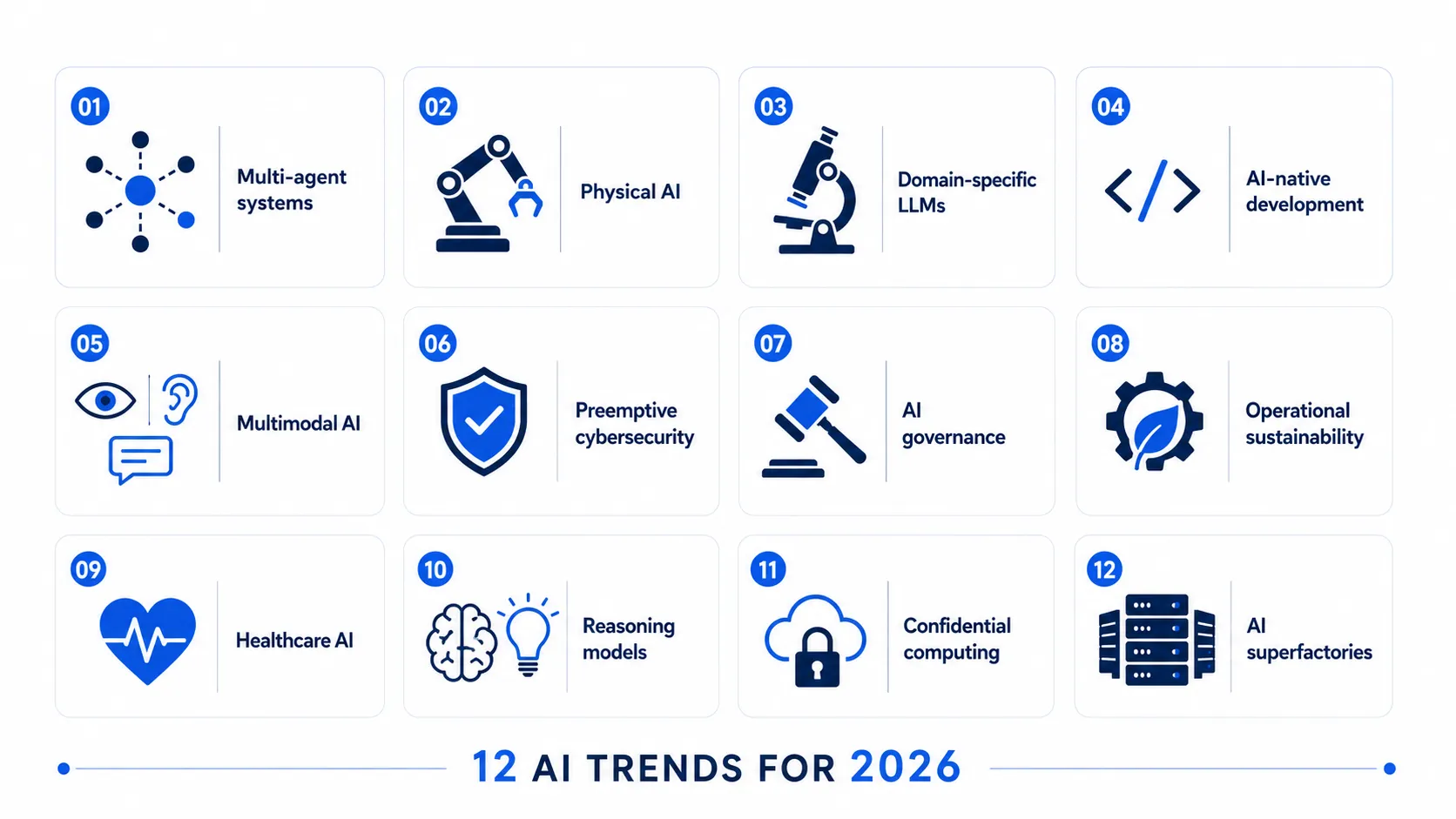
The top AI trends for 2026 include the rise of multi-agent AI systems, physical AI and humanoid robots, smaller domain-specific language models, AI-native software development, multimodal AI, preemptive AI-powered cybersecurity, AI governance and sovereignty, operational sustainability powered by AI, AI in healthcare at scale, reasoning-first models, confidential computing for AI, and the emergence of AI superfactories. These trends reflect AI’s transition from experimentation to enterprise-wide, production-grade deployment.
1. Multi-Agent AI Systems Go Enterprise
In 2025, agentic AI was the buzzword. In 2026, it is becoming operational reality-but with a crucial evolution: multi-agent systems (MAS). Rather than deploying a single AI agent, enterprises are now orchestrating agentic AI for industrial operations-agentic AI for industrial operations-that collaborate to complete complex, multi-step workflows across ERP, CRM, ITSM, and operational technology.
What’s Defining 2026:
- - Agent-to-Agent Protocols:IBM’s ACP, Anthropic’s MCP, and Google’s A2A are establishing interoperability standards for agent communication.
- - Enterprise Orchestration:Gartner predicts 40% of enterprise applications will leverage task-specific AI agents by 2026, up from less than 5% in 2025.
- - Human-in-the-Loop Governance:Approval steps, escalation paths, and full audit trails are now standard requirements for production agent deployments.
- - AgentOps:Logging, tracing, metrics, and evaluation frameworks let teams monitor what agents did, why, and whether it worked.
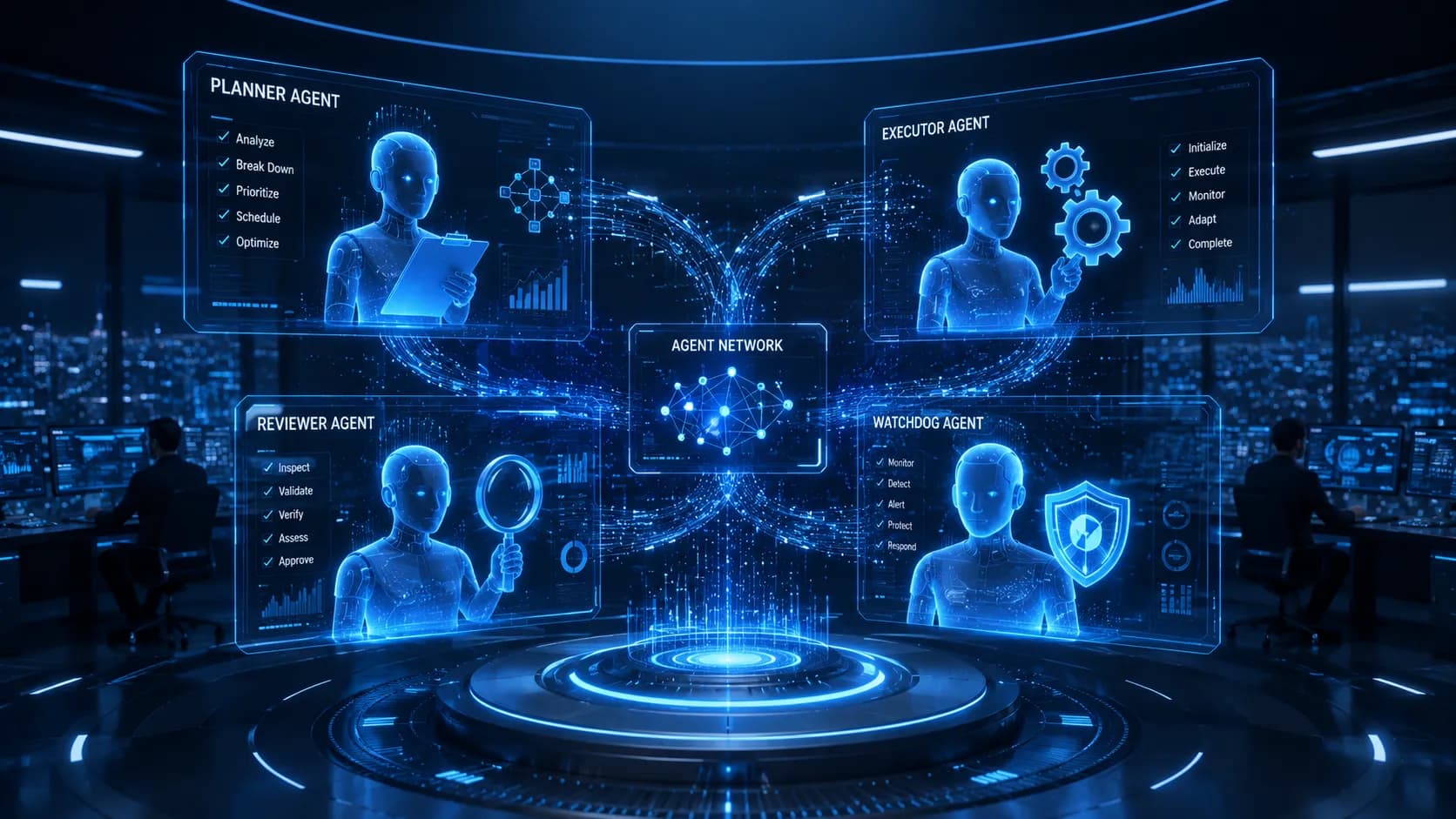
Real-World Impact: Manufacturing firms are deploying multi-agent systems for autonomous permit-to-work management and safety workflow automation, turnaround scheduling, and predictive procurement-compressing cycle times by 20–30% while maintaining auditable compliance trails.
Ombrulla Angle: Ombrulla’s Agentic AI platform deploys multi-agent systems with governed data access, human-in-the-loop approval, and full audit trails for oil & gas, manufacturing, and energy operations.
2. Physical AI and Humanoid Robots Enter Production
2026 marks the year physical AI transitions from CES demos to factory floors. Humanoid robots-powered by multimodal AI models-can now perceive, understand, and navigate unstructured environments designed for humans. Unlike traditional industrial robots programmed for single tasks, AI visual inspection system for defect detection adapt to existing spaces without requiring facility redesign.
What’s Defining 2026:
- - CES 2026 Milestone:Boston Dynamics unveiled its electric Atlas; NVIDIA’s Jensen Huang declared the ‘ChatGPT moment for physical AI is here.’
- - Scale:Goldman Sachs projects 50,000–100,000 humanoid robot shipments in 2026; Deloitte estimates 15,000 industrial units.
- - Automotive Pilots:BMW and Audi are piloting humanoid robots in production lines for assembly and quality inspection tasks.
- - Consumer:1X’s NEO humanoid began customer deliveries in 2026-the first home-use humanoid robot at scale.
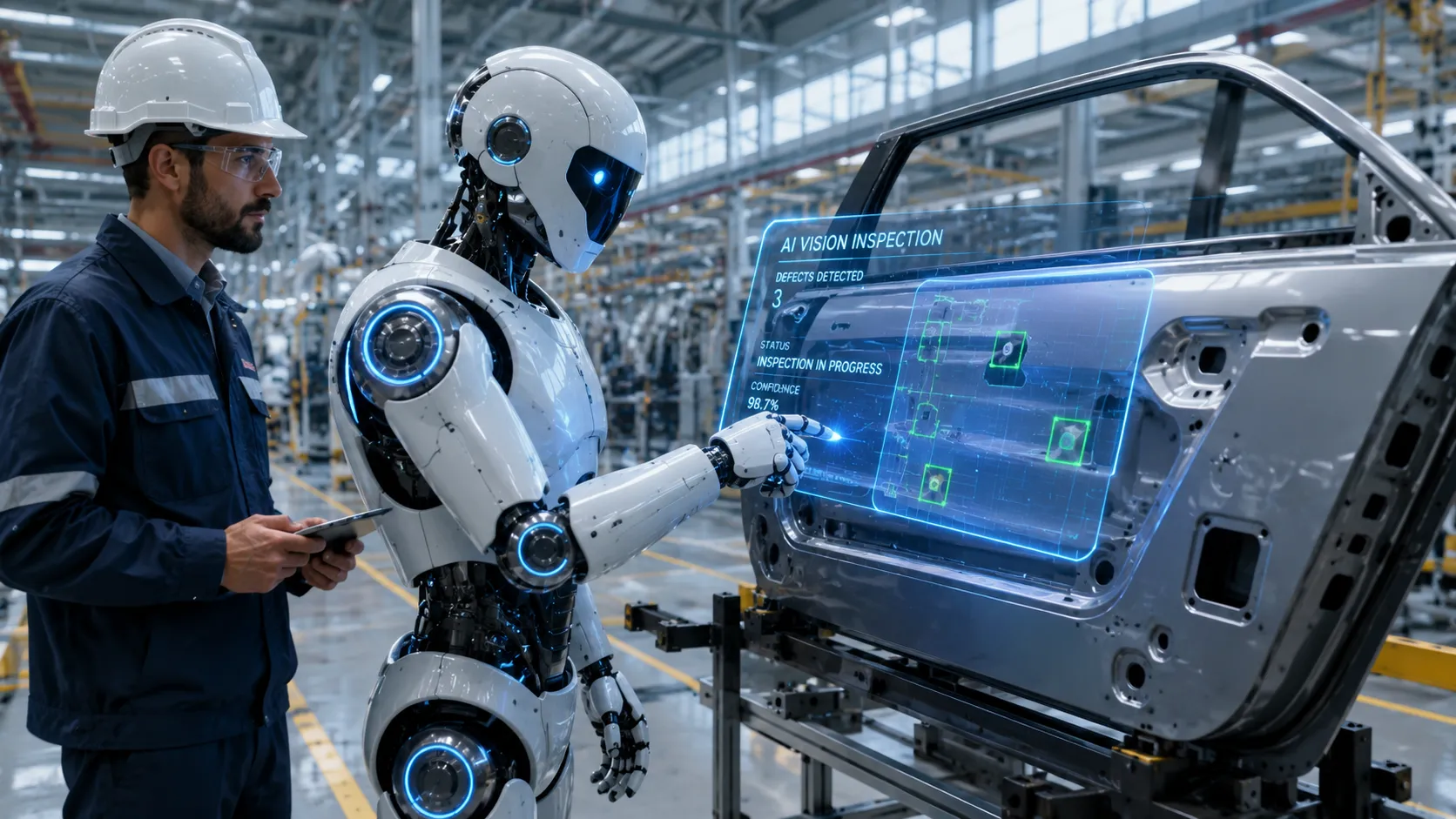
Real-World Impact: Amazon’s warehouse fleet now exceeds 1 million robots, with its DeepFleet AI boosting travel efficiency by 10% across its global network. Tesla plans to scale Optimus production to 50,000 units by year-end.
Ombrulla Angle: Ombrulla’s TRITVA AI visual inspection platform and AI predictive maintenance software platforms are designed to integrate with next-generation robotic fleets-providing the vision and intelligence layer that physical AI needs to inspect, maintain, and optimise.
3. Smaller, Domain-Specific Language Models Replace One-Size-Fits-All
The era of ‘one giant model for everything’ is ending. In 2026, enterprises are shifting to smaller, custom AI solutions for domain-specific models that deliver higher accuracy, lower latency, and better compliance for industry-specific use cases-at a fraction of the compute cost.
What’s Defining 2026:
- - Open-Source Acceleration:IBM’s Granite, DeepSeek, Alibaba’s Qwen3, and AI2’s OLMo are delivering competitive performance in domain-tuned configurations.
- - Efficiency:Sparse Mixture-of-Experts (MoE) architectures activate only a fraction of parameters per token, slashing inference costs.
- - Enterprise Tuning:Advances in fine-tuning and reinforcement learning let enterprises train domain-specific models on proprietary data in days, not months.
- - Gartner’s Pick:Domain-Specific Language Models are listed among Gartner’s Top Strategic Technology Trends for 2026.
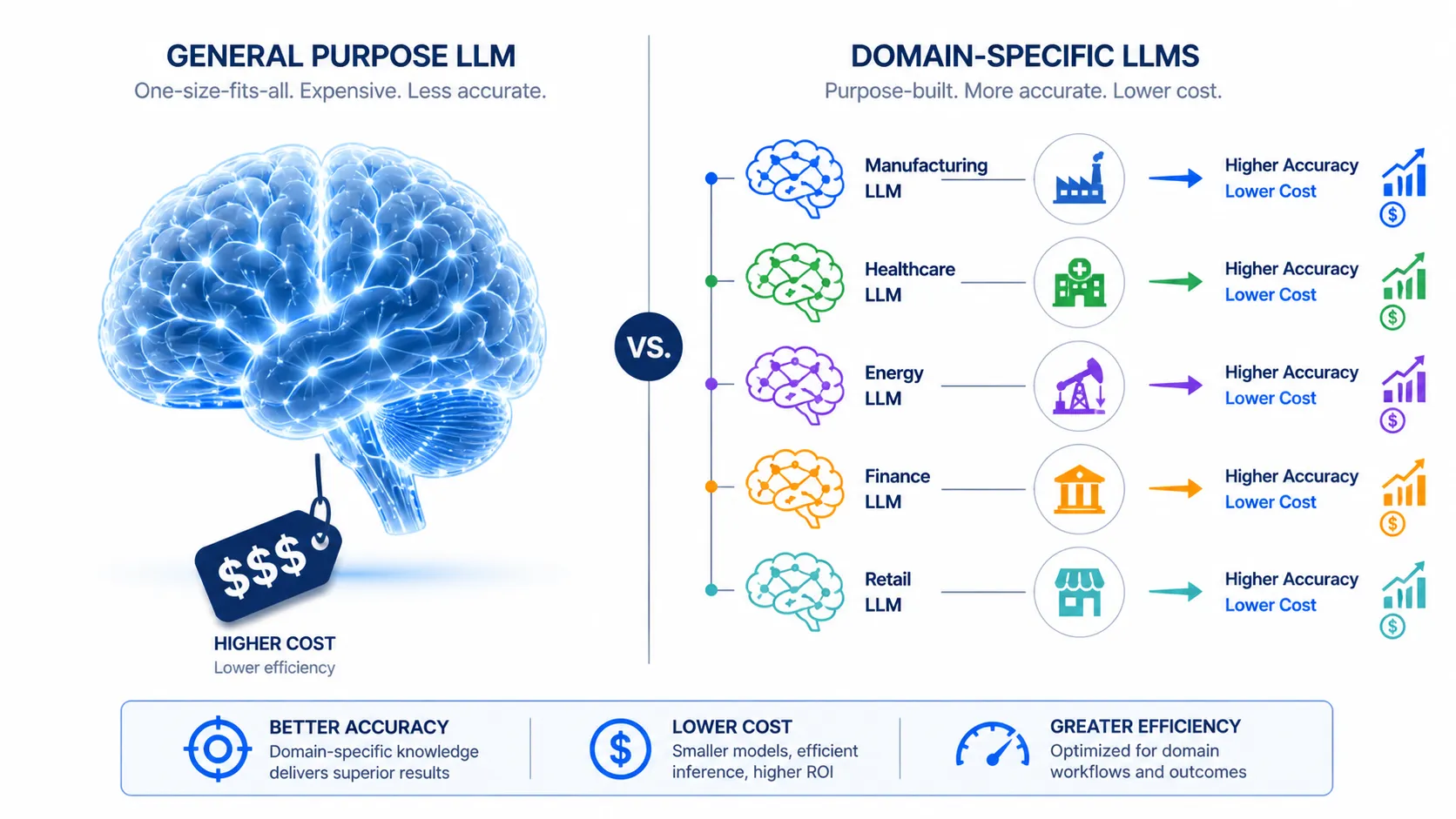
Real-World Impact: A pharmaceutical company fine-tuned a 20B-parameter open-source model on its clinical trial data, achieving diagnostic accuracy that matched GPT-4 for its domain at 1/10th the inference cost.
Use-case: AI solutions for manufacturing benefit from domain-specific models that understand production workflows, equipment specifications, and quality standards-enabling faster deployment and higher accuracy than generic models.
Ombrulla Angle: Ombrulla’s Custom AI Solutions practice specialises in building, fine-tuning, and deploying domain-specific models for manufacturing, healthcare, energy, and BFSI-with full governance and MLOps.
4. AI-Native Software Development Becomes the Norm
AI is no longer just a feature inside software-it is reshaping how software is built. AI-native development platforms empower small, nimble teams to build enterprise software using generative AI, with coding agents that understand entire repositories, generate working patches, and manage software at scale.
What's Defining 2026:
- - Coding Agents:Anthropic's Claude Code and OpenAI's Codex can read entire repos, understand complex project structures, and deliver repo-level fixes.
- - Open-Source Parity:Alibaba's Qwen3-Coder-Next (80B parameters) reached performance close to top closed models while running locally.
- - Democratisation:Platforms like Replit and Lovable let non-engineers build working apps using AI agents, lowering the barrier to entry.
- - Wage Premium:Workers with AI coding skills now command a 56% wage premium, according to PwC's 2025 Global AI Jobs Barometer.
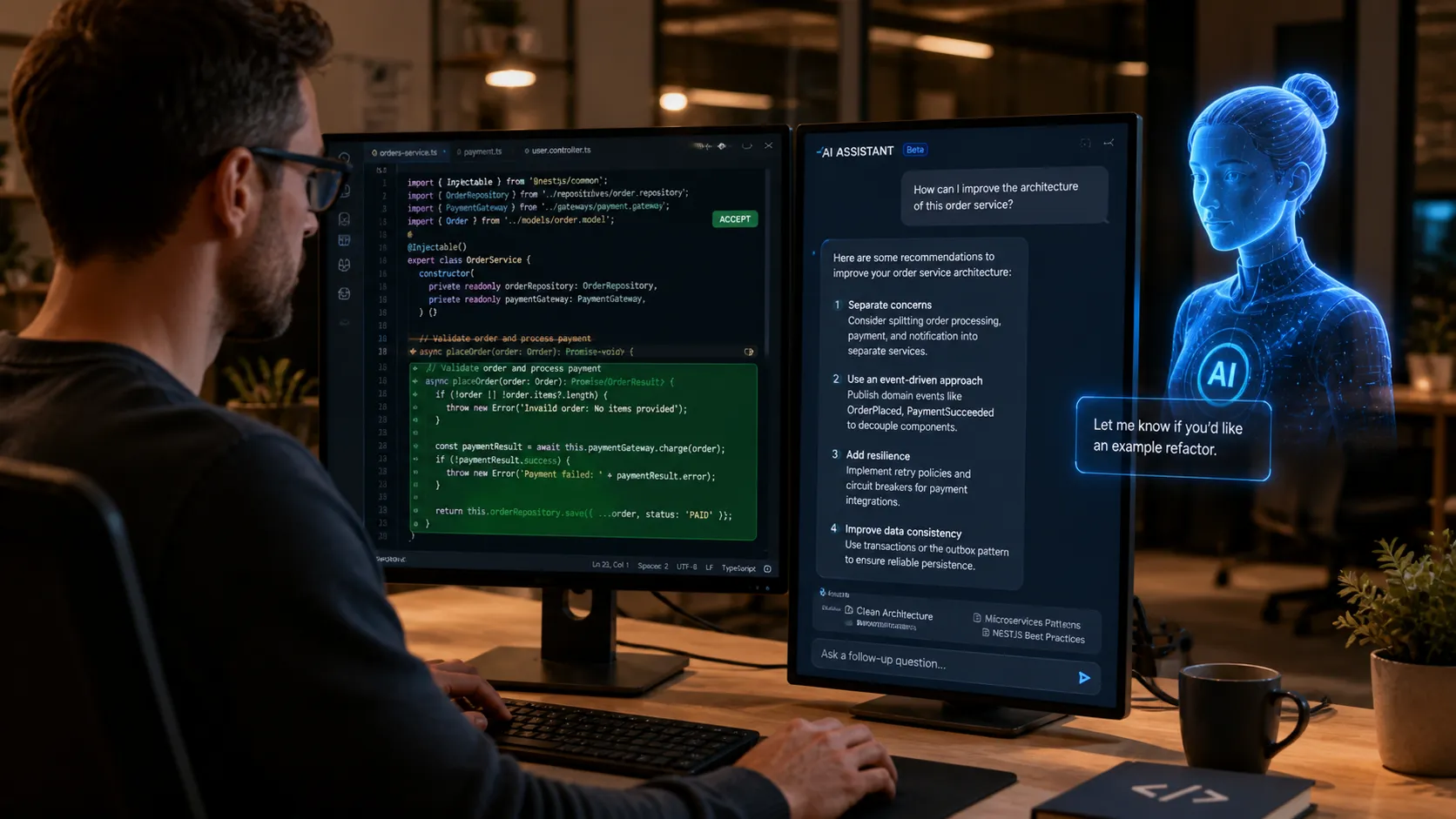
Real-World Impact: Enterprise development teams report 30–50% productivity gains when pairing with AI coding agents, compressing sprint cycles and reducing time-to-production for new features.
5. Multimodal AI Bridges Language, Vision, and Action
AI models in 2026 are no longer confined to text. computer vision and sensor-based inspection can perceive, reason, and act across language, images, video, audio, and spatial data simultaneously. This convergence is enabling a new class of 'digital workers' that can interpret complex real-world scenarios.
What's Defining 2026:
- - Video Generation:OpenAI's Sora 2 and Google's Veo 3.1 have turned AI video generation from demos into production tools with editing controls.
- - World Models:AI systems are learning physics-based representations of the real world, enabling simulation, prediction, and robotic planning.
- - Digital Workers:Multimodal agents can autonomously interpret healthcare cases, analyse engineering drawings, or process insurance claims by combining text, image, and document understanding.
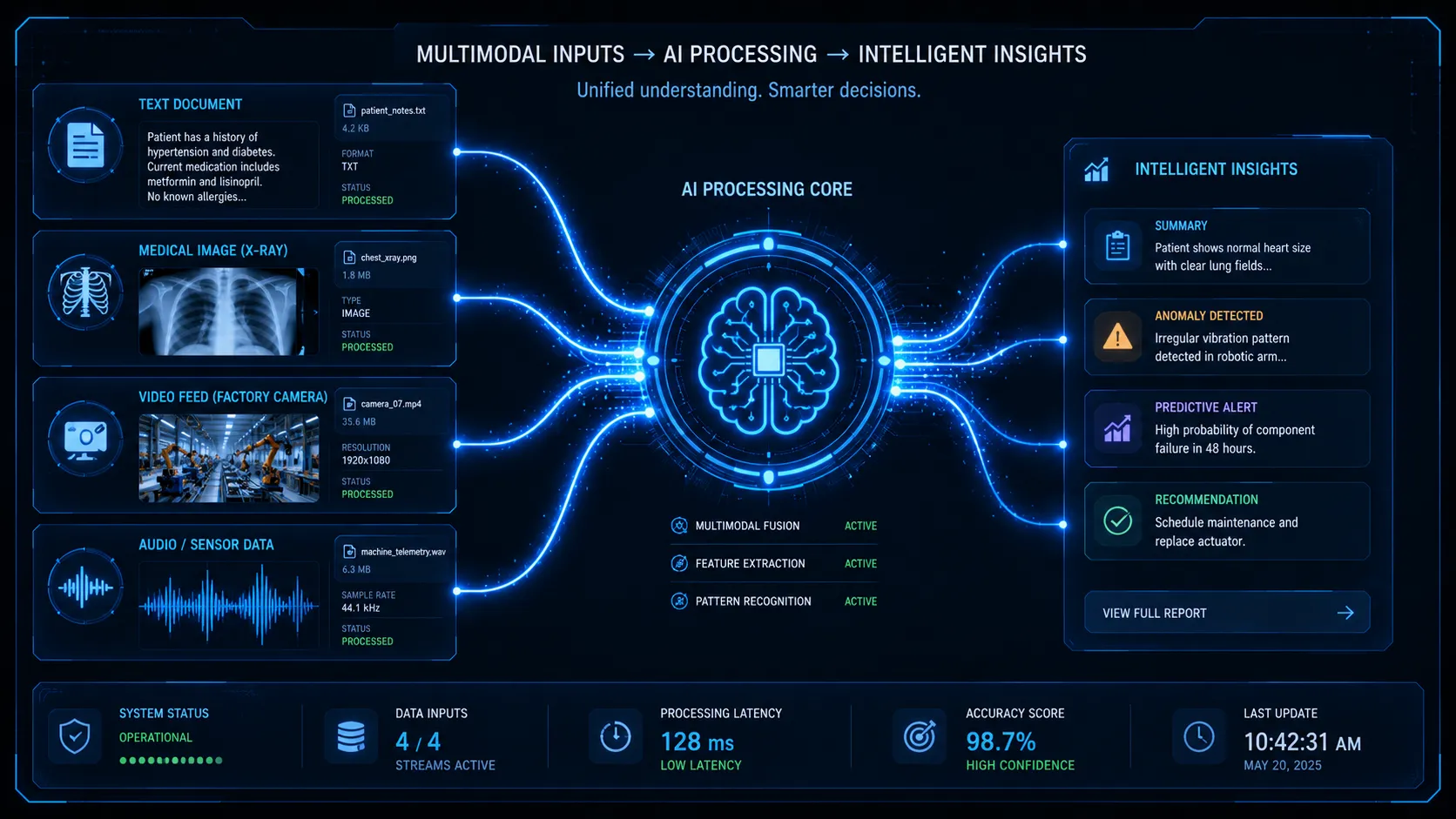
Real-World Impact: Healthcare systems are using multimodal AI to combine medical imaging, lab results, patient notes, and genetic data into unified diagnostic recommendations-improving detection rates while reducing clinician workload.
Engineering use-case: mobile AI inspection app for field teams enables digital workers to capture and analyse engineering drawings and field documentation in real time.
6. Preemptive AI-Powered Cybersecurity
Cybersecurity in 2026 is shifting from reactive to preemptive. AI-powered security platforms don't wait for breaches-they predict and block threats before they strike, using behavioural analytics, anomaly detection, and autonomous response systems that operate at machine speed.
What's Defining 2026:
- - Agent Security:As AI agents proliferate, each agent needs identity management, access controls, and threat protection-similar to human employees.
- - AI Security Platforms:Gartner identifies centralised AI security platforms as a Top Strategic Trend for 2026, providing visibility across third-party and custom AI apps.
- - Adversarial AI:Attackers are using AI for deepfake-based social engineering, automated malware generation, and prompt injection attacks on enterprise agents.
- - Digital Provenance:Verifying the origin and integrity of AI-generated content is becoming essential for trust and compliance.

Real-World Impact: Financial institutions are deploying AI security agents that analyse billions of signals daily, detecting novel phishing campaigns and ransomware variants in real time-stopping breaches before data loss occurs.
Ombrulla Angle: Ombrulla embeds secure industrial AI deployment with RBAC, audit trails and encryption: RBAC/SSO, encryption in transit and at rest, audit trails, and tenant isolation-ensuring AI systems are governed and protected from day one.
7. AI Governance, Sovereignty, and the EU AI Act Take Centre Stage
2026 is the year governance-first industrial AI solutions moves from policy papers to production requirements. The EU AI Act is now in enforcement, and organisations worldwide are building AI risk management programmes, defining guiding principles, and establishing sovereignty frameworks-even in jurisdictions without formal regulation.
What's Defining 2026:
- - EU AI Act Enforcement:High-risk AI systems must now meet transparency, auditability, and fairness requirements or face significant penalties.
- - AI Sovereignty:Organisations are architecting modular AI environments so workloads, data, and agents can shift among trusted regions and providers.
- - Enterprise AI Principles:Info-Tech Research Group reports that enterprises are developing their own guiding AI principles to address rising risk and align strategy.
- - Explainable AI:Interpretability frameworks are being embedded directly into LLMs and agent systems for legal, medical, and financial use cases. Custom AI solutions with explainability and MLOps ensure governance-first deployment.
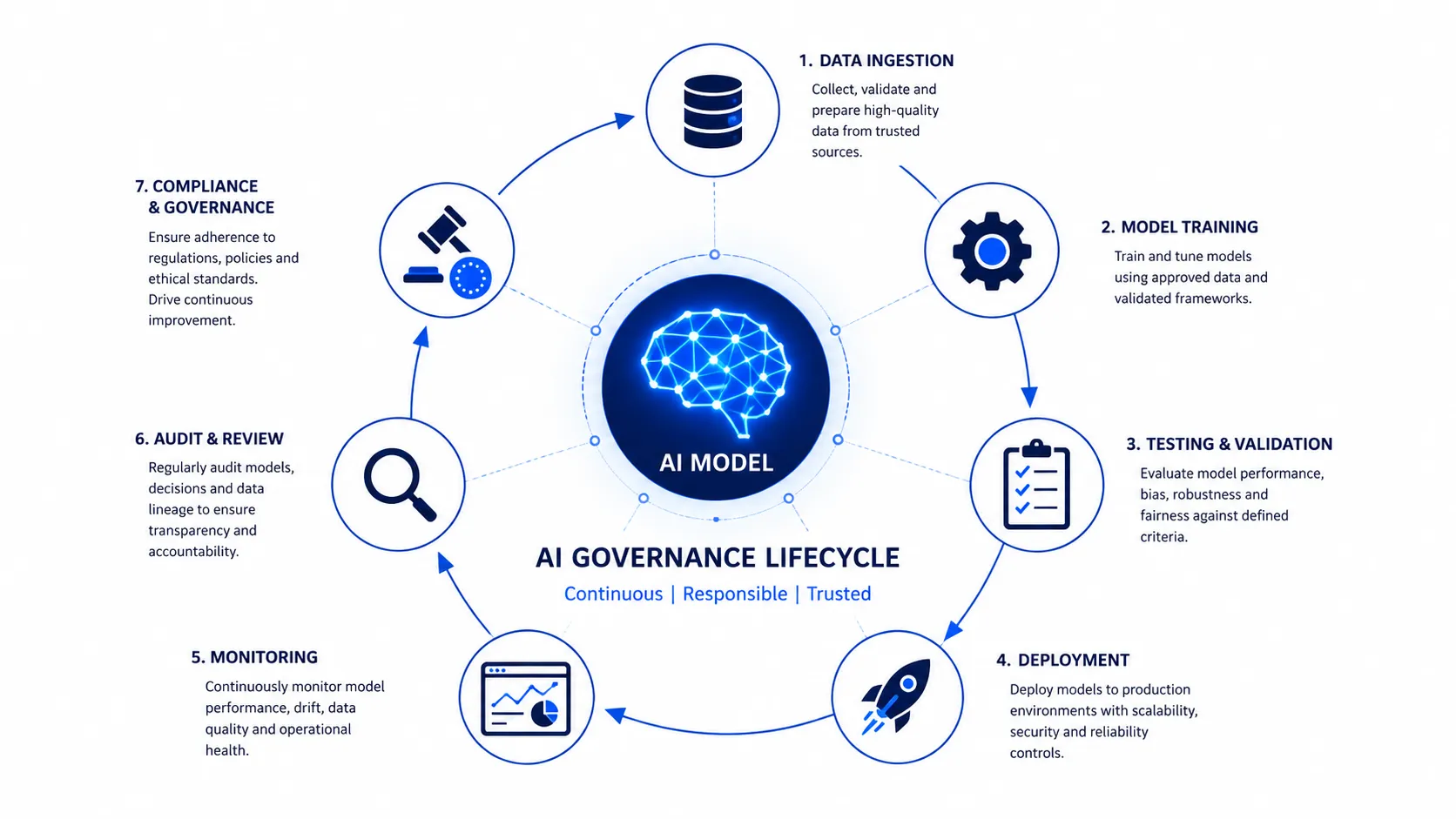
Real-World Impact: Enterprises that proactively adopt AI governance are gaining competitive advantage through faster regulatory approval, stronger customer trust, and reduced liability exposure.
Ombrulla Angle: Every Ombrulla solution is engineered with governance-first design: model versioning, explainability, RBAC, audit trails, GDPR compliance, and ISO 55000 alignment.
8. Operational Sustainability Powered by AI and IoT
AI is transforming sustainability from a reporting exercise into an operational discipline. In 2026, organisations are using AI and IoT to continuously monitor energy, water, and emissions across facilities-then prescribe and automate actions that reduce environmental impact without sacrificing throughput.
What's Defining 2026:
- - Real-Time Carbon Accounting:AI systems automate GHG accounting with audit-ready evidence, replacing manual spreadsheet-based ESG reporting.
- - Energy Optimisation:AI-driven setpoint control reduces site energy use by 10–15% within 12–18 months, normalised for weather and product mix.
- - Compressed Air & Water:Systematic leak management and tower optimisation save 20–30% of compressed-air load and trim cooling-tower make-up by ~40%.
- - Multi-Site Scaling:Best practices are templated and replicated across plants in weeks, not quarters.
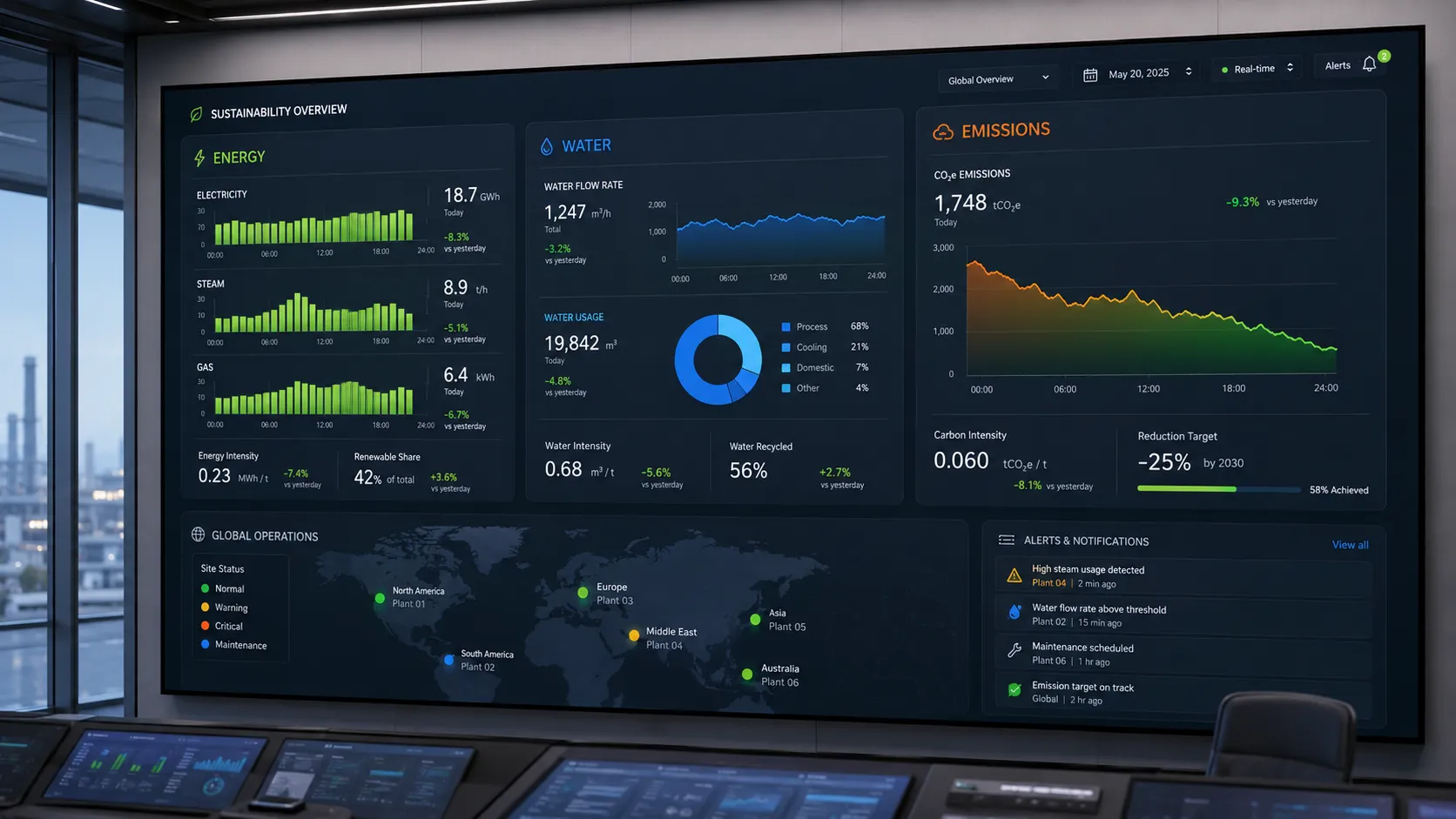
Real-World Impact: A global manufacturer deployed real-time energy, water and emissions monitoring across 12 plants, achieving an average 12% reduction in energy intensity per unit and cutting Scope 1 and 2 emissions by 8,400 tonnes CO₂e annually.
Ombrulla Angle: AI and IoT operational sustainability platform integrates real-time energy, water, and emissions monitoring with AI-driven optimisation-turning ESG targets into measurable operational improvements.
9. AI in Healthcare Scales from Pilot to Production
Healthcare AI is no longer experimental. In 2026, AI-powered diagnostic support, treatment planning, and clinical decision tools are operating at patient-facing scale-with 50 million health-related AI sessions conducted daily across Microsoft's consumer products alone.
What's Defining 2026:
- - Clinical Scale:AI is expanding past diagnostic imaging into symptom triage, treatment planning, and clinical decision support for millions of patients.
- - Cost Reduction:Deloitte reports 64% of health system leaders expect AI to reduce costs by standardising and automating workflows.
- - Surgical Robotics:Robotic-assisted procedures now account for 60% of complex surgeries in major hospitals, led by systems like Intuitive Surgical's da Vinci 5.
- - Remote Monitoring:49% of health leaders see benefits from tech-enabled patient engagement and remote monitoring powered by AI.
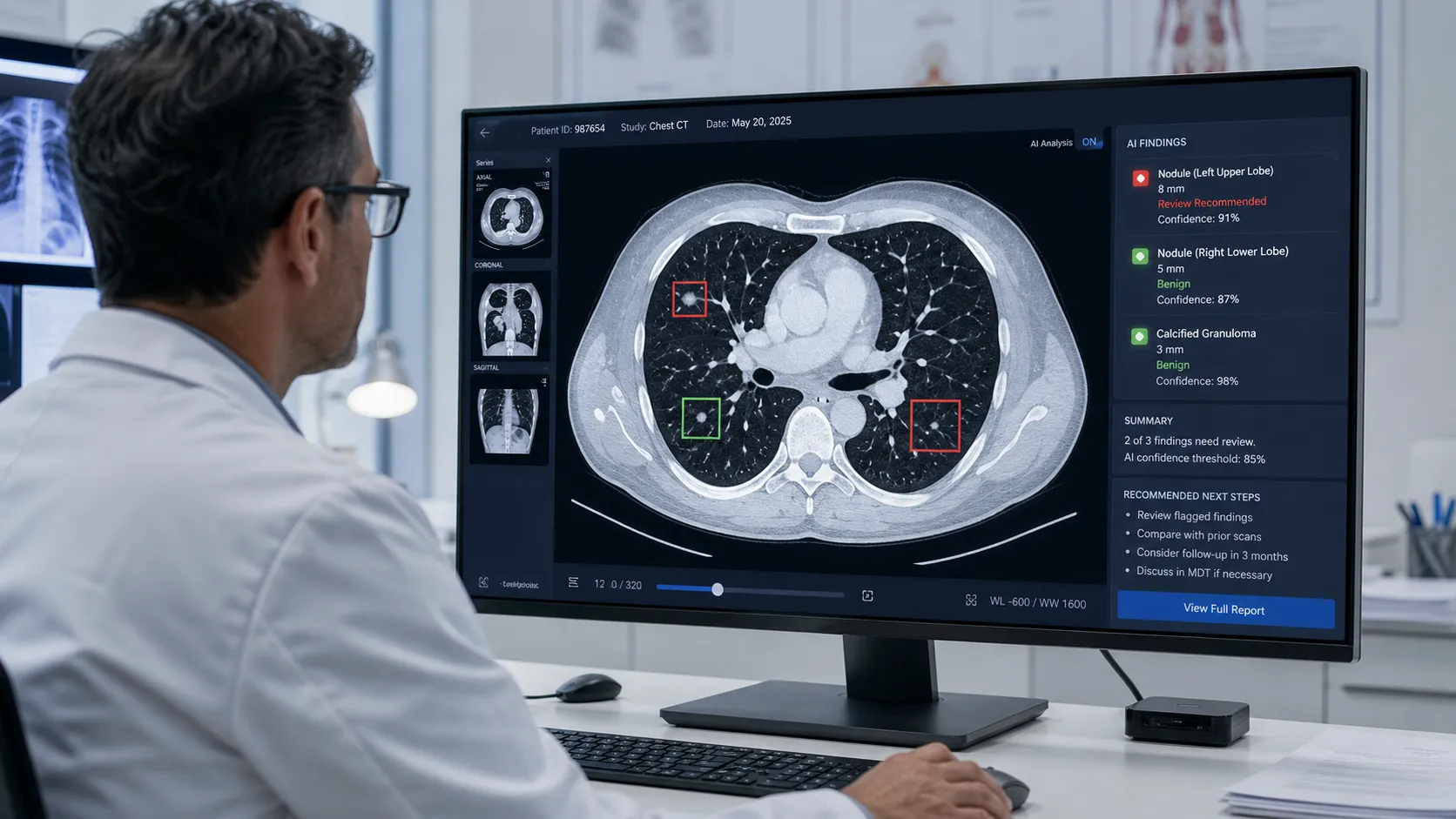
Real-World Impact: A major hospital network deployed AI-powered imaging analysis for early cancer detection, achieving 94% accuracy and reducing radiologist workload by 35%-while improving time-to-diagnosis by 40%.
Ombrulla Angle: Ombrulla's custom AI solutions for healthcare-specific applications-from medical imaging analysis to predictive patient monitoring-with GDPR compliance and explainable AI.
10. Reasoning-First Models: AI That Thinks Before It Answers
The most significant architectural shift in AI models for 2026 is reasoning-first design. Unlike earlier models that generated tokens immediately, reasoning models spend compute on intermediate 'thinking' steps before producing a final answer-dramatically improving accuracy on complex, multi-step problems.
What's Defining 2026:
- - Chain-of-Thought at Scale:Models like OpenAI's o-series and DeepSeek-R1 use extended reasoning chains to solve advanced mathematics, science, and engineering problems.
- - Enterprise Applications:Legal contract analysis, financial modelling, supply chain optimisation, and engineering design are benefiting from reasoning-first approaches.
- - Smaller Reasoning Models:IBM predicts 'smaller reasoning models that are multimodal and easier to tune for specific domains will proliferate in 2026.
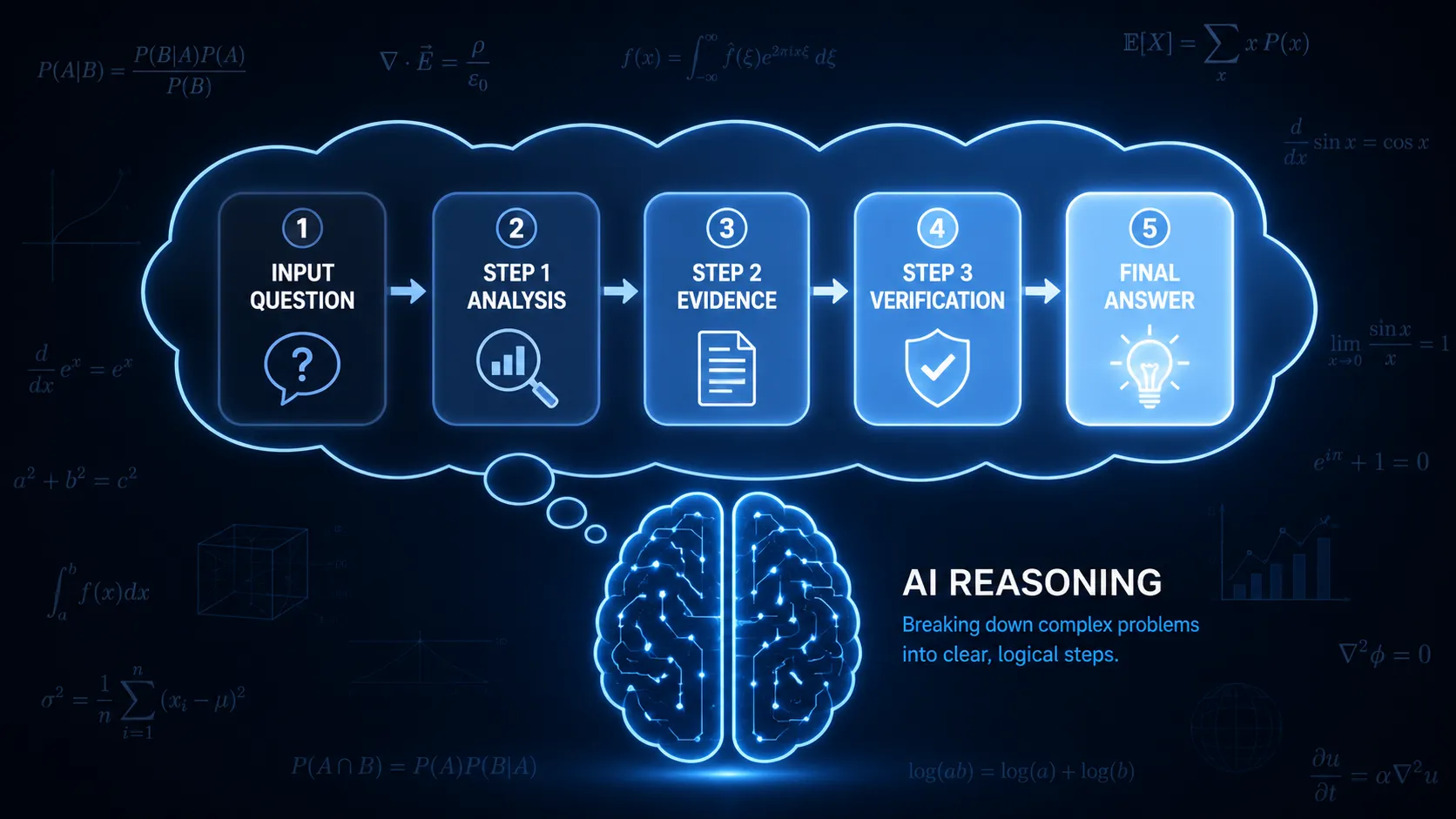
Real-World Impact: An engineering firm deployed a reasoning-first model to analyse structural integrity data from AI infrastructure inspection for bridges, tunnels and utilities, reducing assessment time from weeks to hours while flagging critical risk factors that human analysts had missed.
Ombrulla Angle: Ombrulla integrates reasoning-capable models into its predictive maintenance and asset performance platforms-enabling AI that doesn't just detect anomalies but explains why they matter and what to do next.
11. Confidential Computing Unlocks Secure AI at Scale
As AI processes increasingly sensitive data-medical records, financial transactions, proprietary manufacturing data-private, on-premises and hybrid AI deployment emerges as a critical enabler. It protects data not just at rest and in transit, but while in use, allowing organisations to run AI workloads across untrusted infrastructure without exposing raw data.
What's Defining 2026:
- - Gartner Trend:Confidential Computing is listed among Gartner's Top Strategic Technology Trends for 2026.
- - Multi-Party AI:Enables secure collaboration on shared AI models across organisations without revealing proprietary datasets.
- - Regulatory Enabler:Helps enterprises meet GDPR, HIPAA, and sector-specific data residency requirements while still leveraging cloud AI.
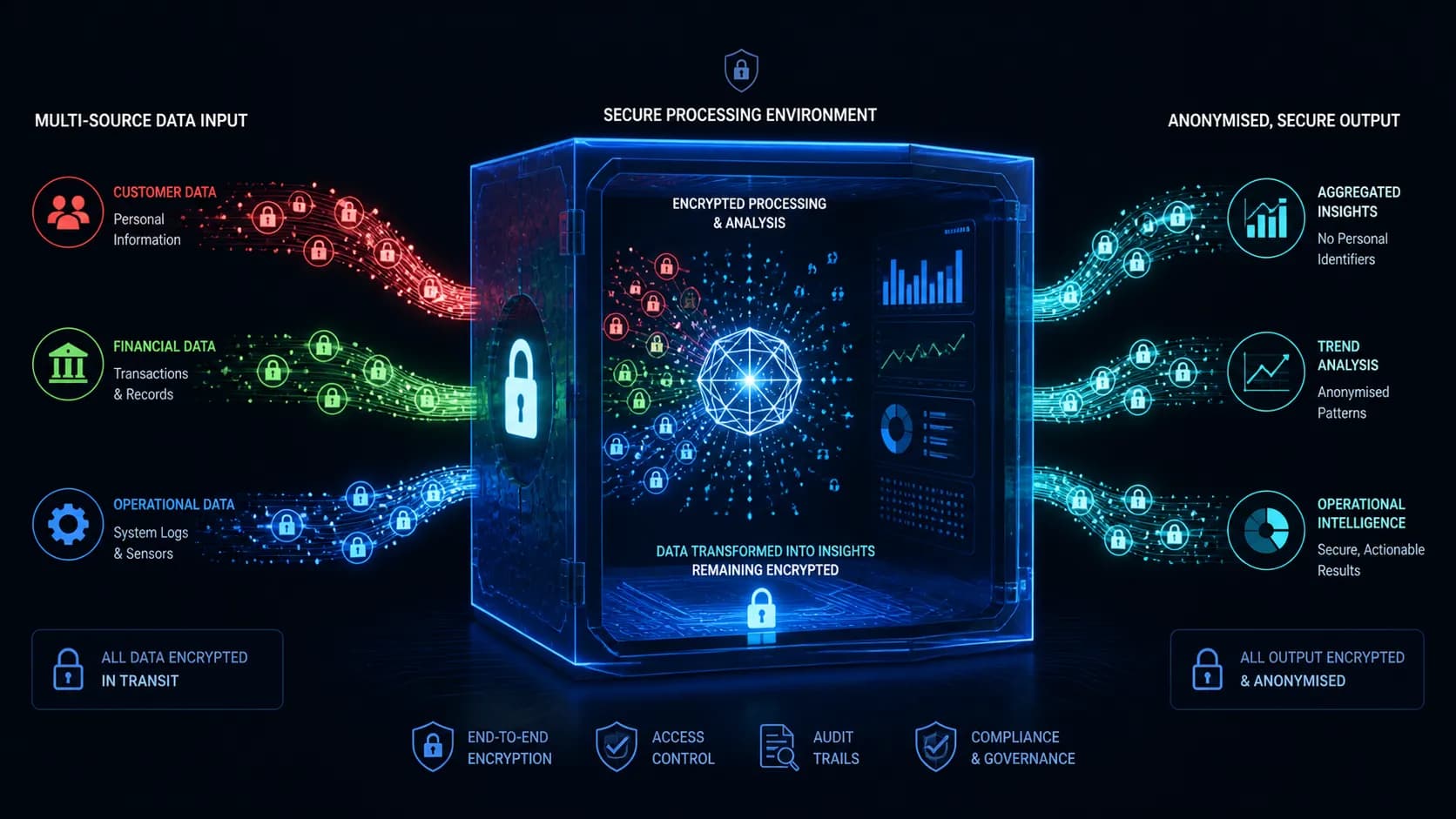
Real-World Impact: Financial services firms are using confidential computing to train fraud-detection models on pooled transaction data from multiple banks-without any bank exposing its customer records to others.
Ombrulla Angle: Ombrulla deploys all solutions with enterprise-grade data protection: customer-managed encryption keys, private VPCs, tenant isolation, and egress controls-ready for confidential computing environments.
12. AI Superfactories: From Isolated PoCs to Scalable Infrastructure
The infrastructure powering AI is maturing fast. In 2026, organisations are moving from underutilised GPU clusters to globally interconnected, high-performance edge AI and IoT real-time monitoring-coordinated grids of efficient, scalable compute designed for production AI workloads.
What's Defining 2026:
- - Hybrid Infrastructure:IDC forecasts 75% of enterprise AI workloads will operate on tailor-made hybrid infrastructures by 2028, with the groundwork being laid now.
- - Edge + Cloud:Sub-second detection runs at the edge while fleet-level learning compounds in the cloud-combining speed with scale.
- - Cost Optimisation:Cloud-based AI platforms intelligently distribute workloads to optimal resources, lowering operational costs and energy consumption.
- - ROI Focus:IDC reports 70% of organisations will prioritise aligning AI infrastructure investments with measurable business outcomes in 2026.
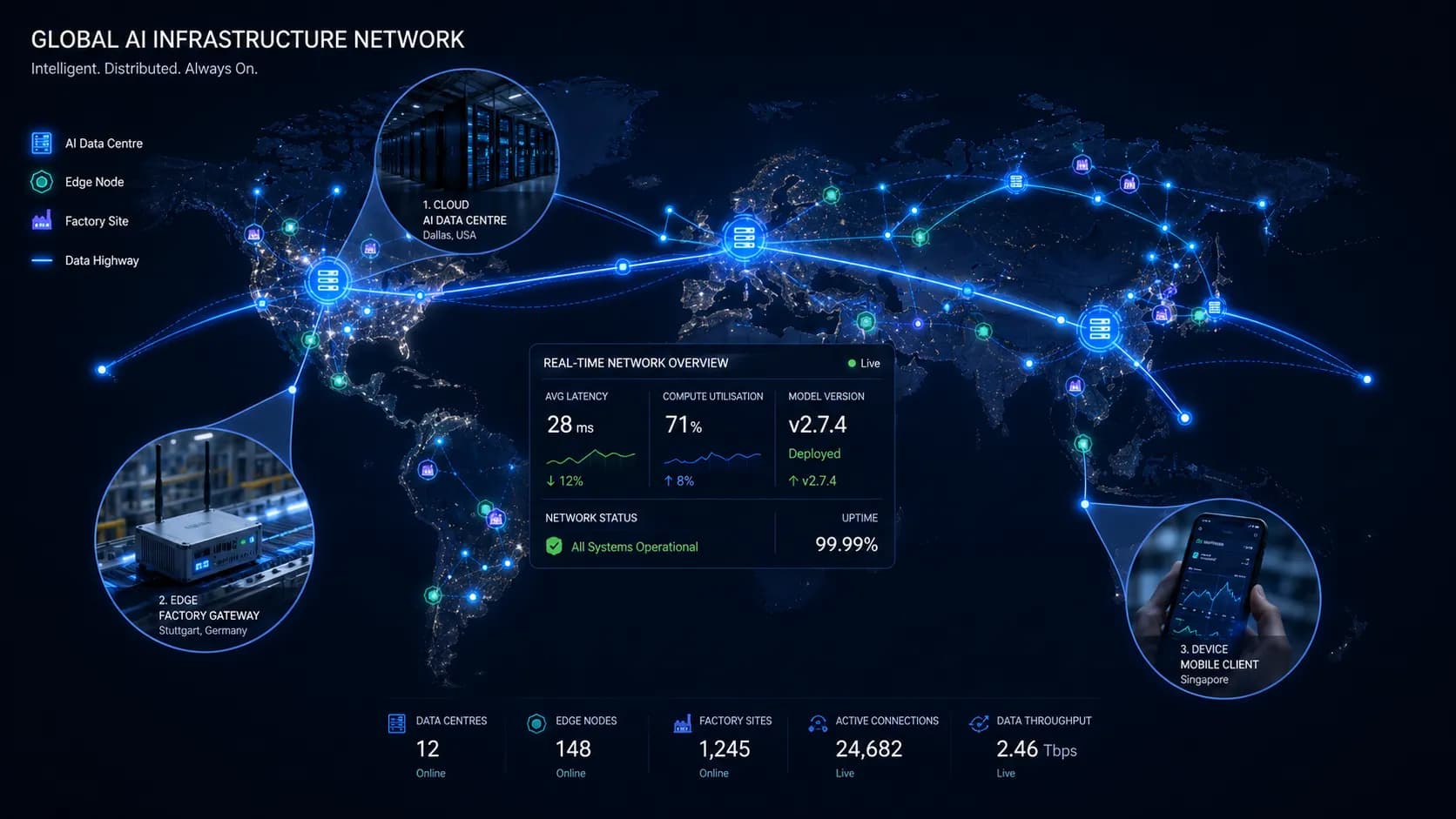
Real-World Impact: A global energy company consolidated its AI workloads from 14 disconnected PoCs into a unified hybrid platform, reducing compute costs by 40% while accelerating model deployment from months to days.
Ombrulla Angle: Ombrulla solutions deploy on edge, on-prem, or cloud-with standardised integrations (OPC-UA, MQTT, REST) and store-and-forward resilience. PETRAN AI and IoT asset performance management software scales from single-site pilots to multi-plant rollouts without rearchitecting.