Ombrulla — home
London banner

Industrial Digital Twin - See What’s Happening Now, Understand Why, and Simulate What Happens Next

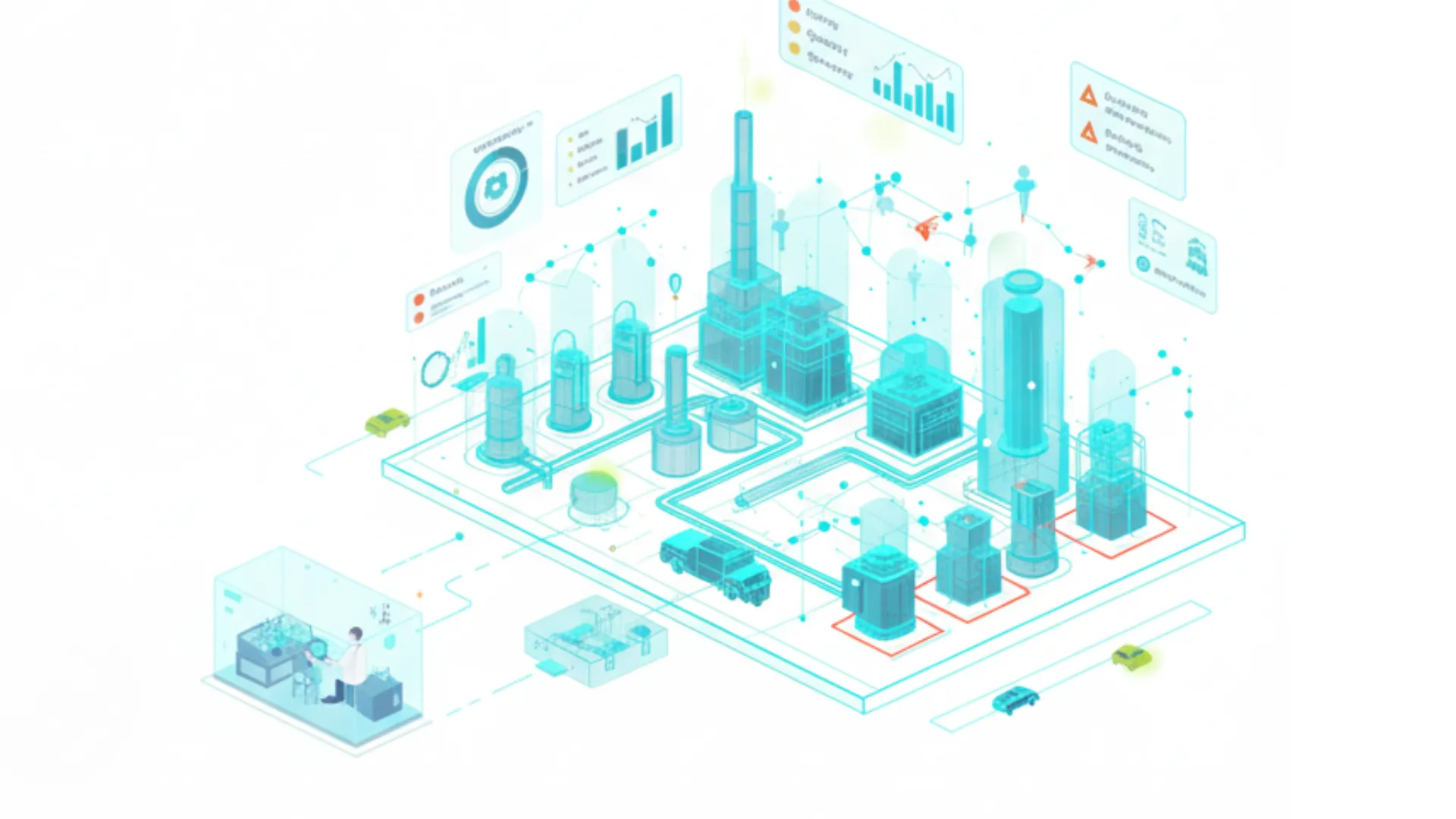
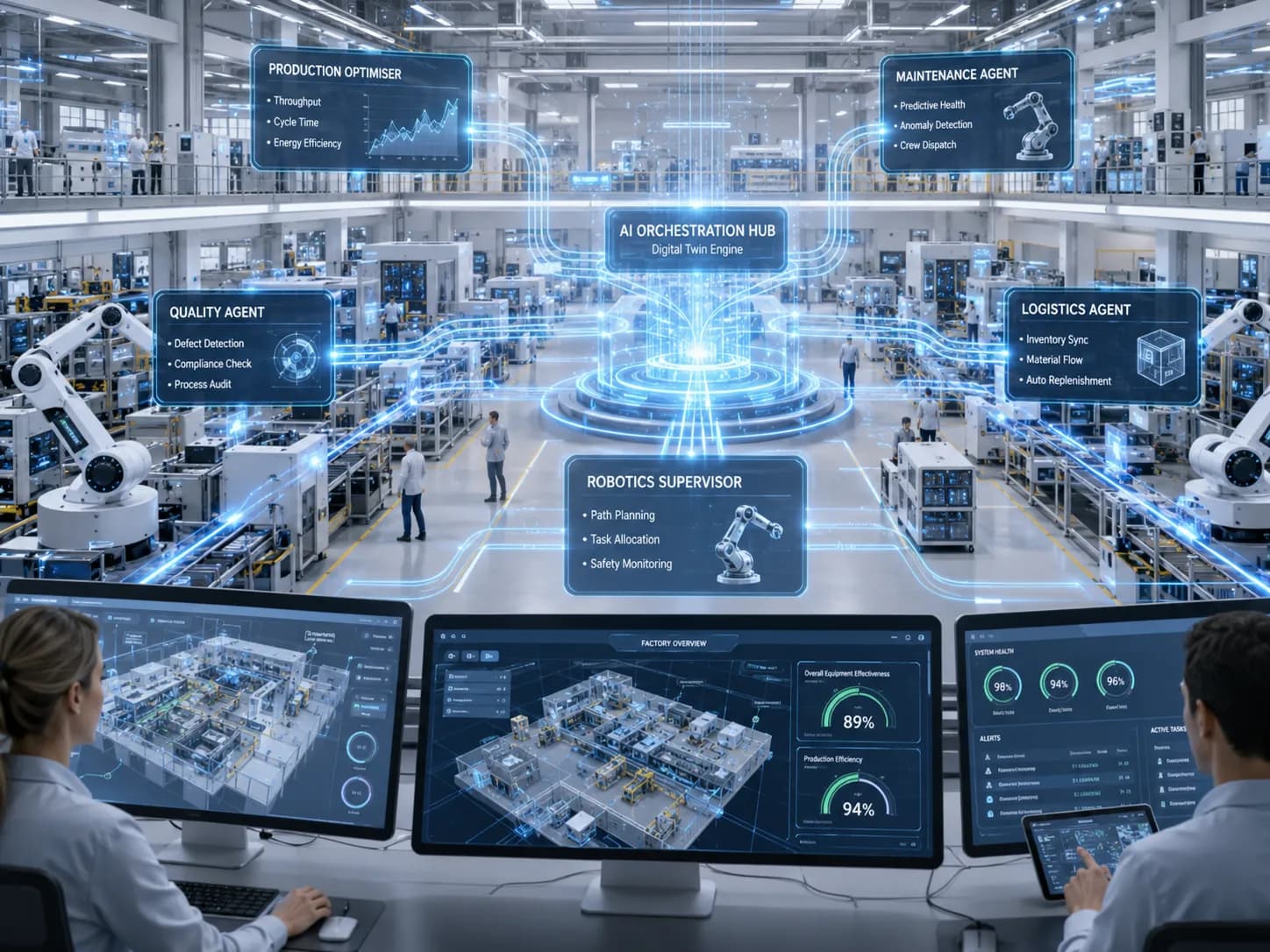
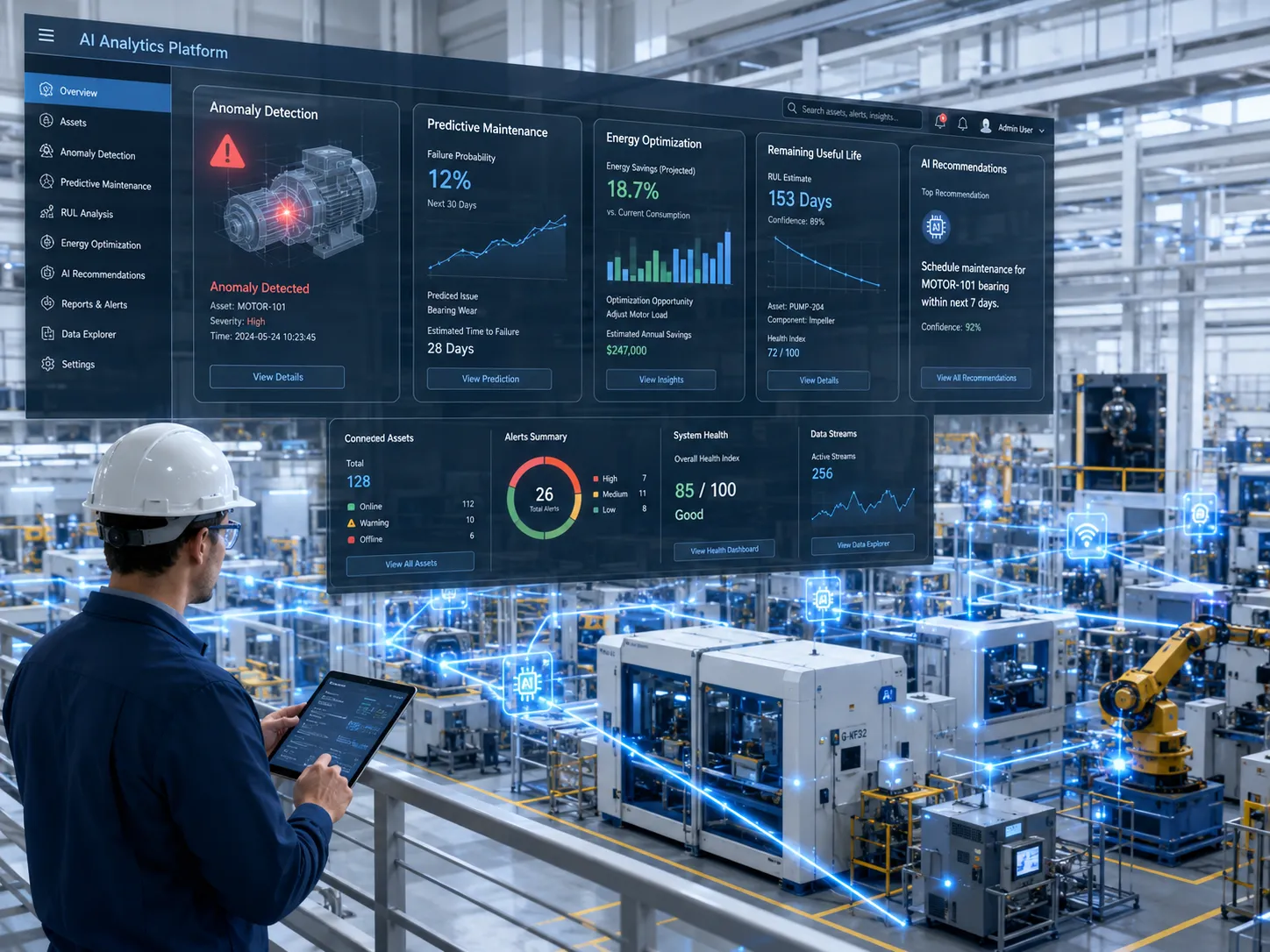
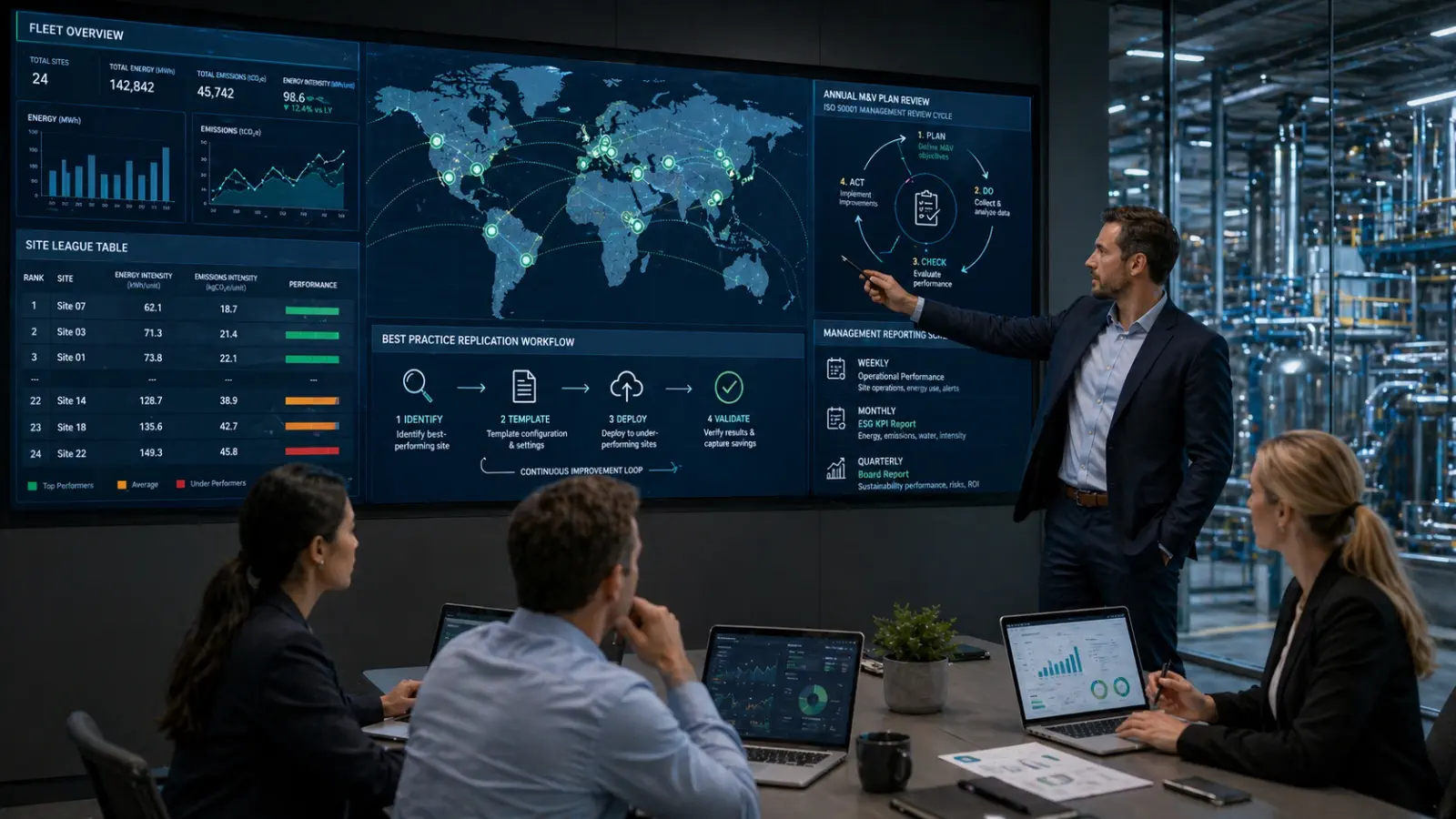
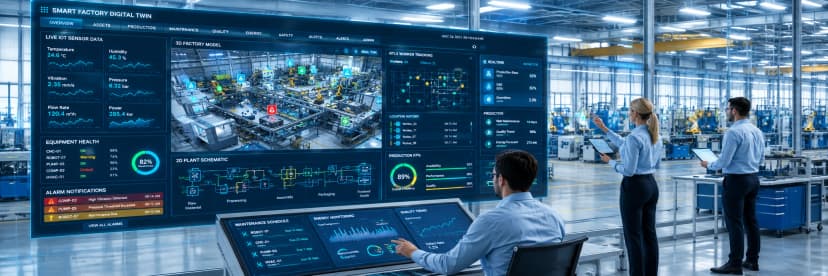
PETRAN’s industrial digital twin creates a live, evolving virtual replica of your plants, assets, processes, and people - combining IoT sensors, RTLS worker tracking, SCADA data, and enterprise systems into a single interactive model you can visualise, replay, and simulate.

What Is an Industrial Digital Twin?

  • An industrial digital twin is a virtual representation of a physical asset, system, or operational environment that uses real-time data from IoT sensors, SCADA systems, RTLS location tracking, and enterprise software to continuously mirror the physical world in a digital model - enabling operators to monitor current state, analyse historical context, predict future behaviour, and simulate the consequences of decisions before they are taken in the real world.
  • IBM defines a digital twin as: 'A virtual representation of a physical asset, system or environment. It uses data from Internet of Things (IoT) sensors and other sources to model the asset’s condition, performance and behavior over time.' The critical word is 'behaviour': a digital twin is not a dashboard or a 3D model - it is a living simulation that evolves in real time as the physical asset operates.
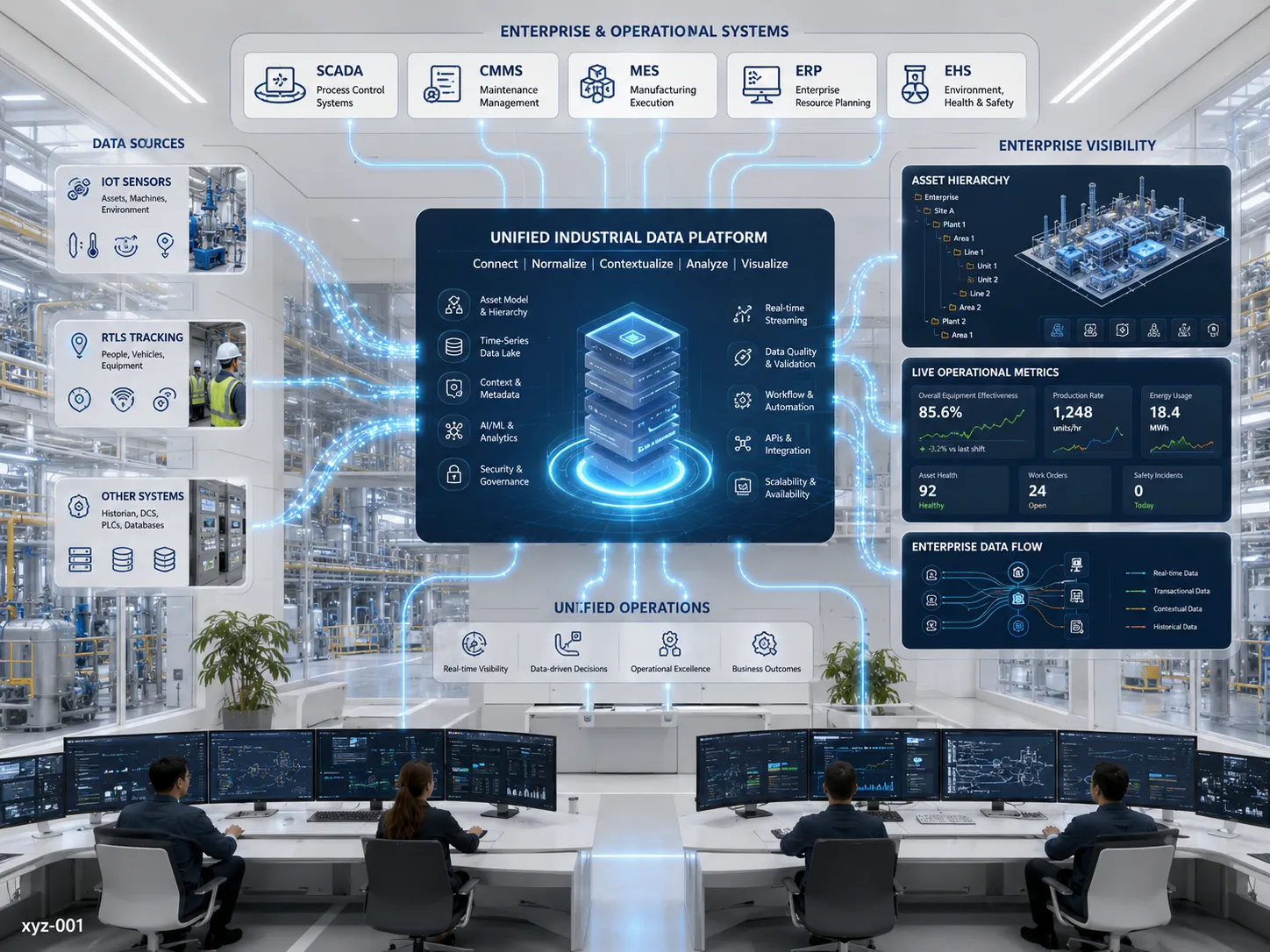
  • PETRAN’s industrial digital twin combines IoT asset monitoring, RTLS worker and equipment tracking, process data from SCADA and MES systems, and enterprise context from CMMS, EAM, and ERP into a single interactive visual model of the operation. The twin answers three questions simultaneously: What is happening right now? Why did that happen? What will happen next if we take this action?
$35.8B

Global digital twin market size 2025

Fortune Business Insights 2025

$328.5B

Projected market by 2033 - CAGR 31.1%

Fortune Business Insights 2025

92%

of companies deploying digital twins report returns above 10%

Hexagon survey 2025

75%

of businesses now employ digital twins in some capacity

Strategic Market Research 2023

>50%

of digital twin deployments report ROI of at least 20%

Hexagon 2025

10–15%

supply chain productivity improvement from digital twin maturity

IBM IBV - Fortune 500 research

50–60%

reduction in non-value-add work at digital twin maturity

IBM IBV supply chain research

Four-Stage Digital Twin Maturity Model

Monitoring Twin - Real-time IoT dashboards
Stage 1

Monitoring Twin

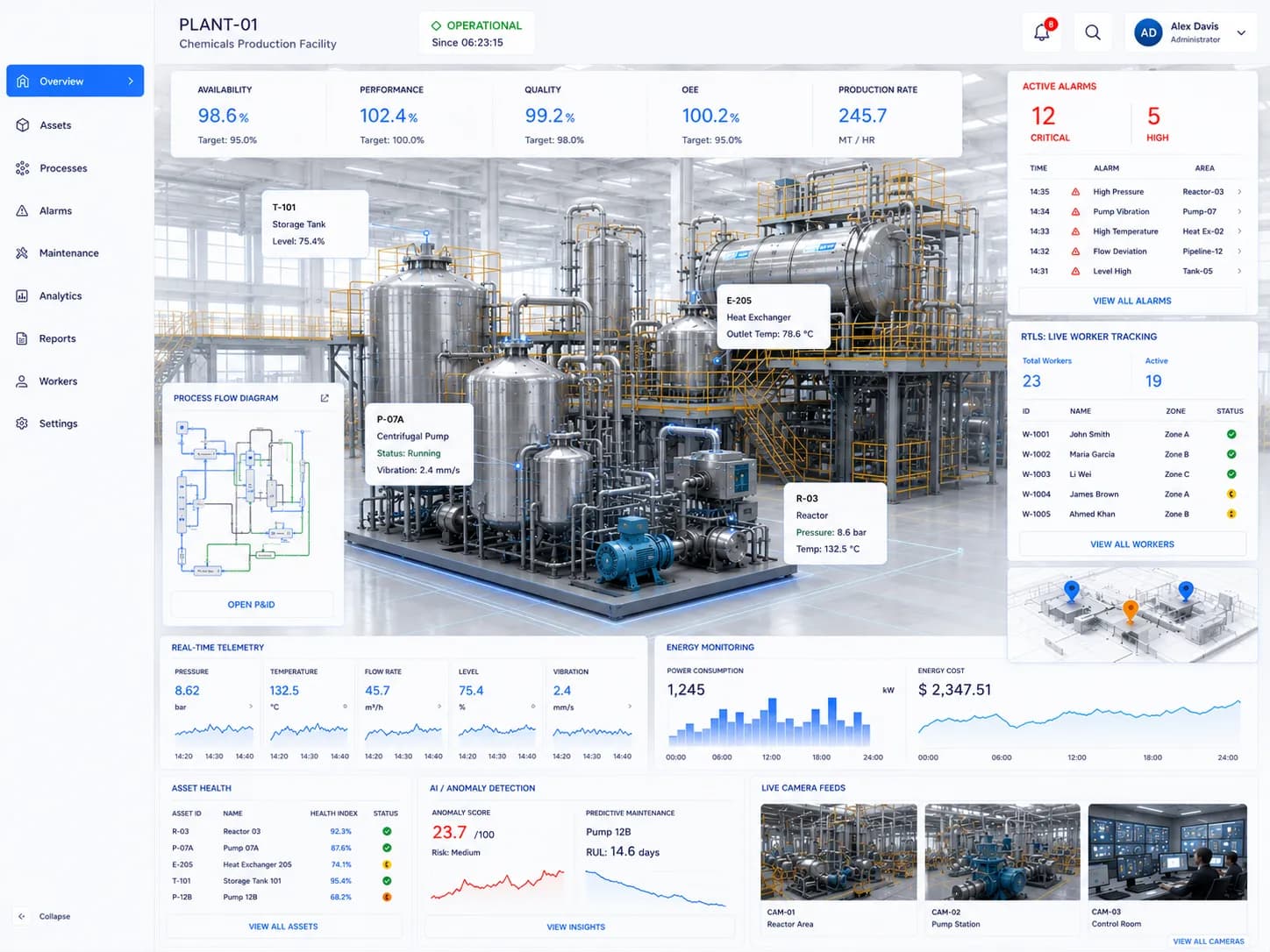
PETRAN: real-time IoT monitoring, SCADA integration, 2D/3D visualisation Static visualisation and threshold-based alerting. IoT sensors feed real-time data to a monitoring dashboard. Alerts fire when thresholds are crossed. The twin shows the current state of each asset but does not reason about why conditions have changed or what they will become. Equivalent to a smart SCADA dashboard. Examples: live sensor dashboards, alarm management, RTLS location maps.

Descriptive Twin - Historical context and root-cause
Stage 2

Descriptive Twin

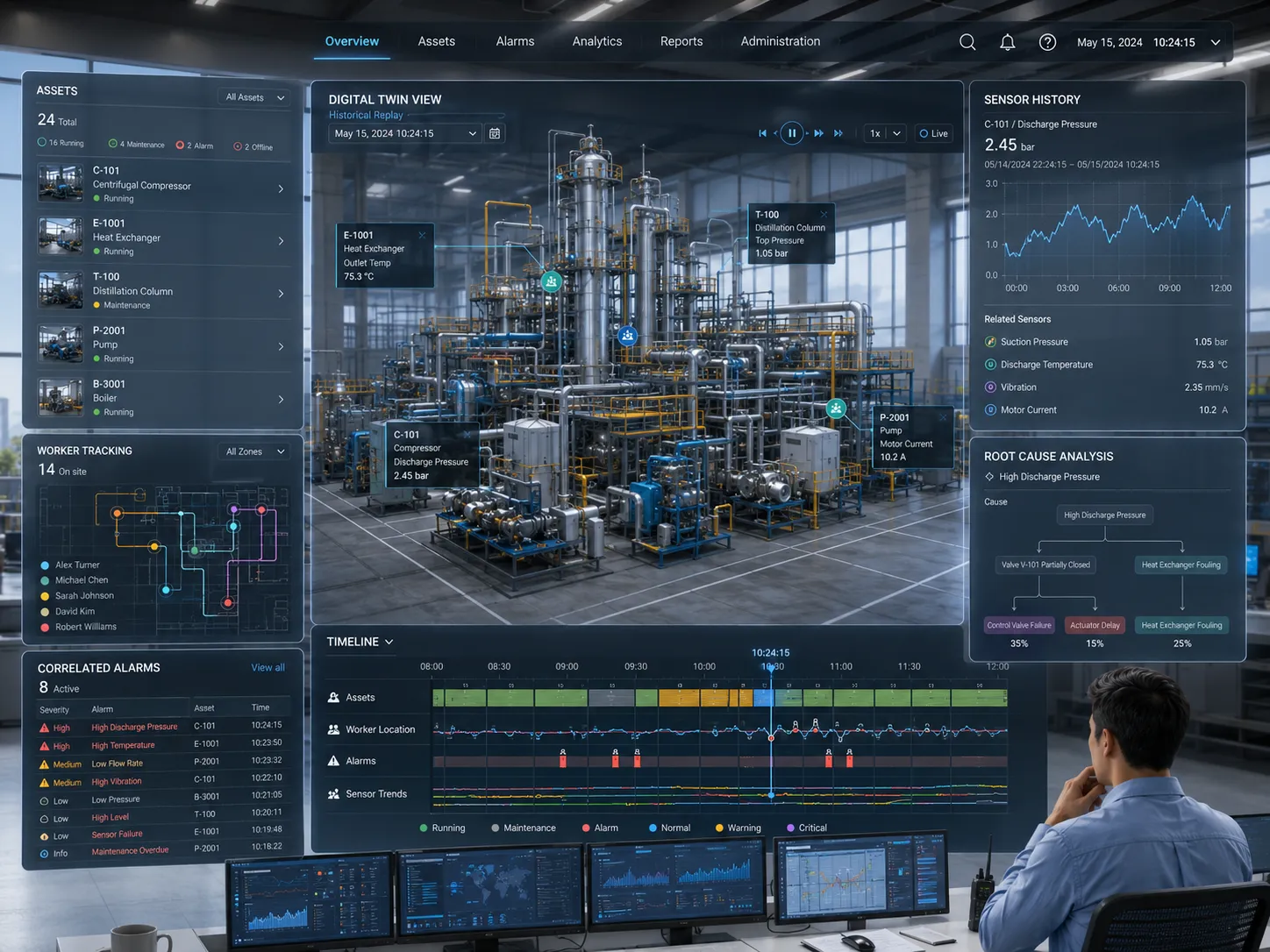
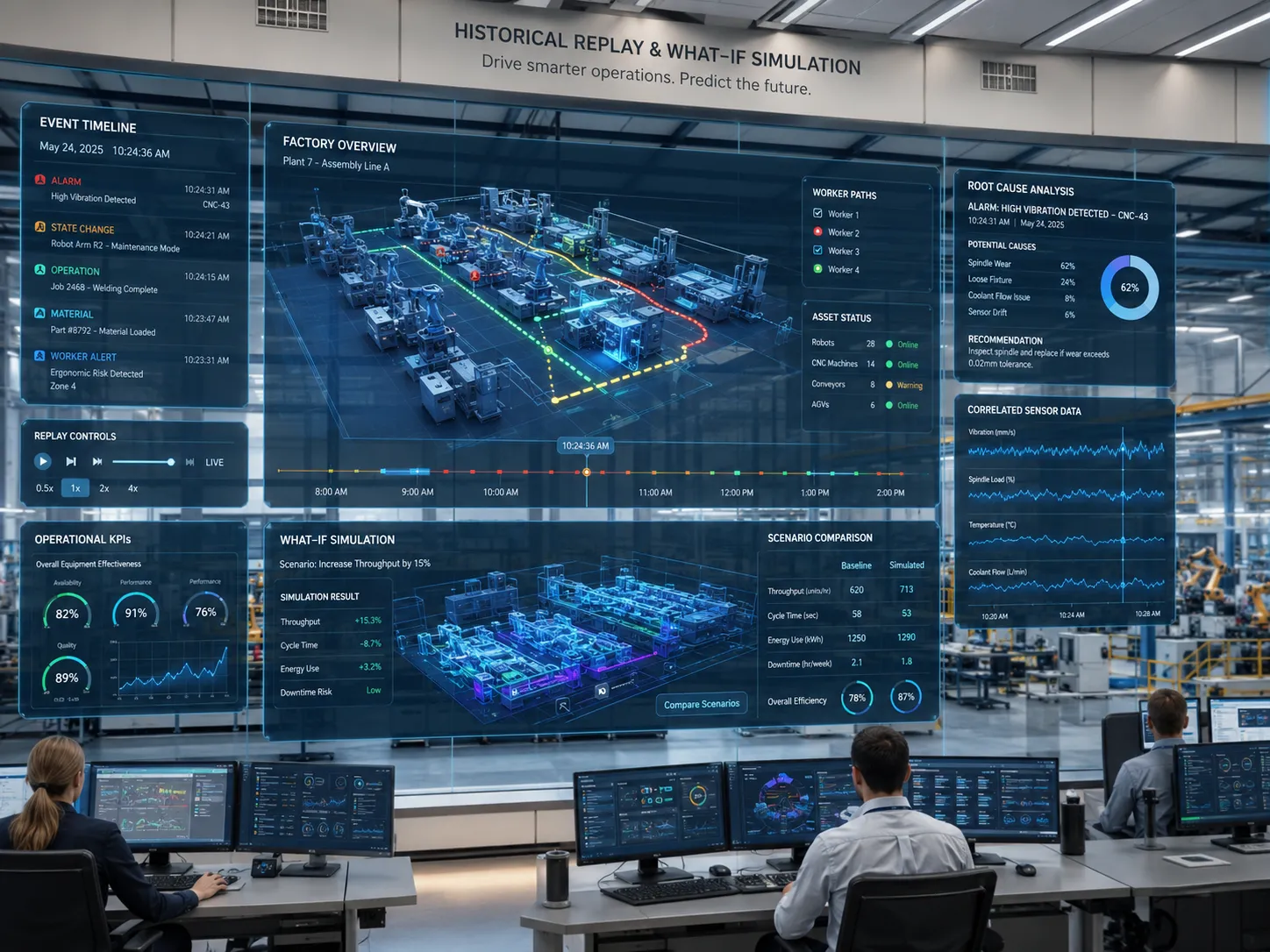
PETRAN: historical replay, cross-asset event correlation, root-cause investigation Live operational model with historical context. The twin maintains a timestamped history of all asset states, events, and people movements. Operations teams can replay events, correlate conditions across assets and people, and perform root cause analysis using the twin’s historical record. The twin now shows not just what is happening but what happened - providing the contextual evidence that static monitoring dashboards cannot generate.

Predictive Twin - AI failure prediction and simulation
Stage 3

Predictive Twin

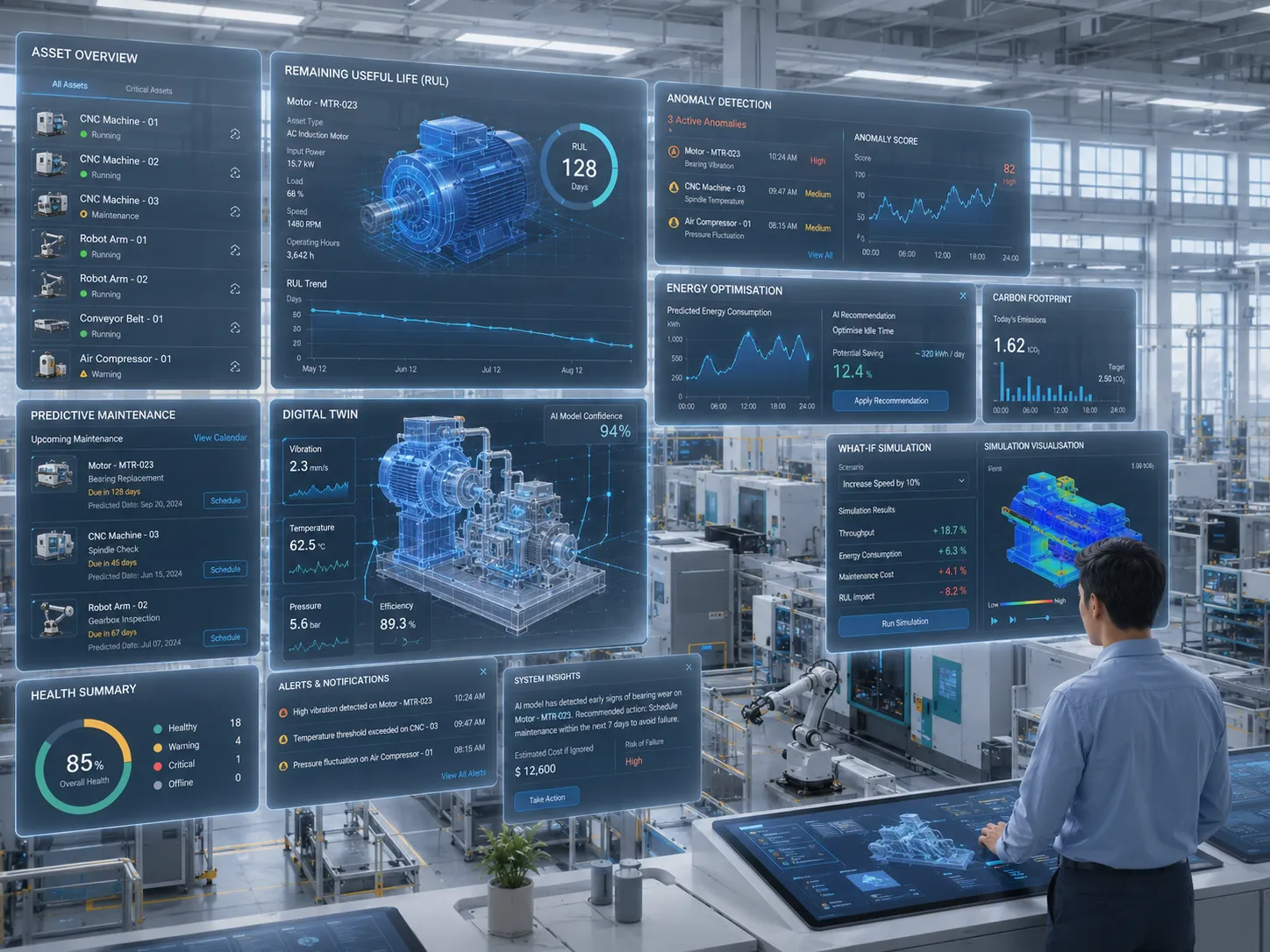
PETRAN: AI anomaly detection, predictive maintenance, what-if simulation, energy optimisation AI-driven simulation and failure prediction. AI models trained on operational history predict future asset behaviour: remaining useful life, failure probability, quality non-conformance risk, energy consumption trajectory. The twin can answer 'what will happen if this condition continues?' and 'what will happen if we take this action?' This stage transforms the twin from a retrospective tool into a forward-looking decision support system.

Autonomous Twin - Agentic AI workflow orchestration
Stage 4

Autonomous Twin

PETRAN + Agentic AI: autonomous workflow orchestration from twin state Self-optimising operations. AI agents read twin state, identify optimisation opportunities, execute workflow actions (adjusting setpoints, raising work orders, reoruting production, dispatching maintenance crews), and verify outcomes - continuously, without human instruction for routined to the digital twin: from insight to action, automatically. decisions. Human approval gates are maintained for high-consequence actions. This is PETRAN’s Agentic AI layer applied.

What the PETRAN Digital Twin Models

3D or schematic models of critical machines, utilities, and infrastructure - with live health and performance overlays

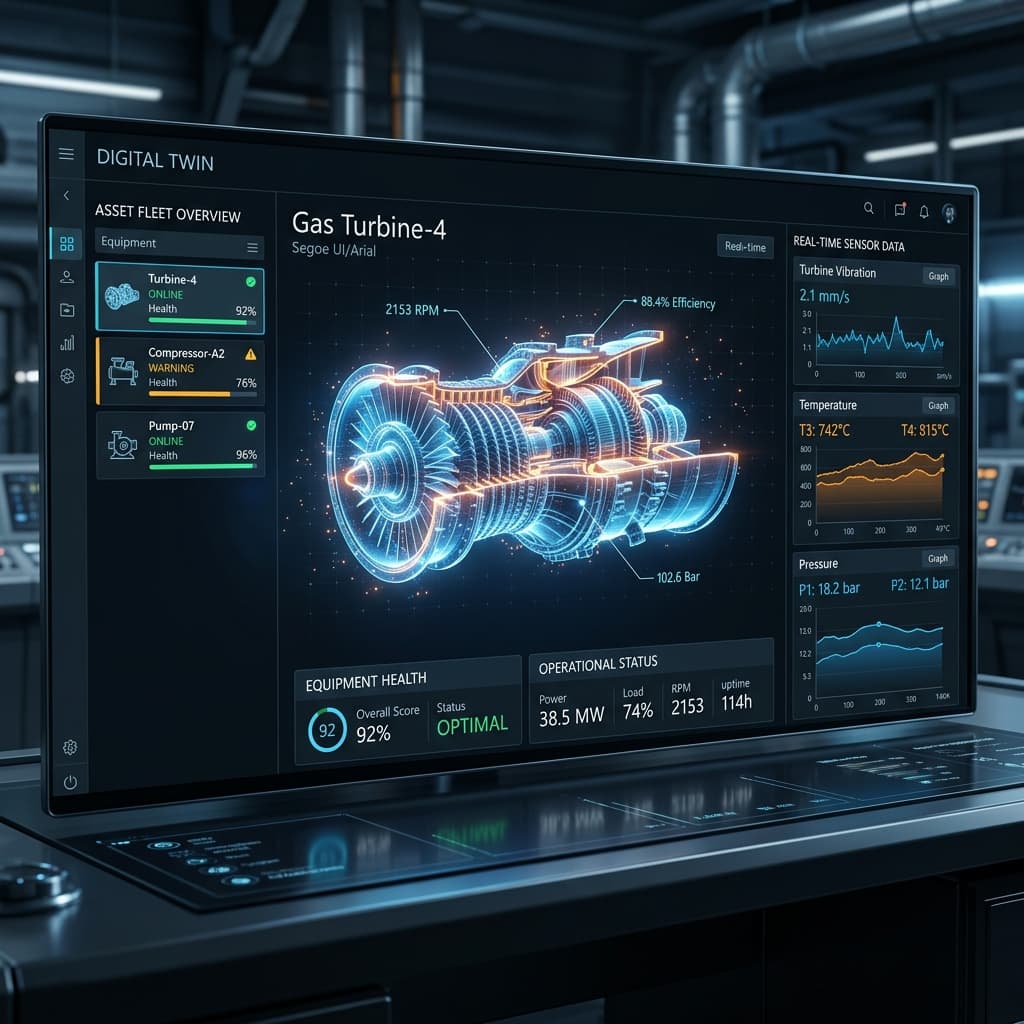
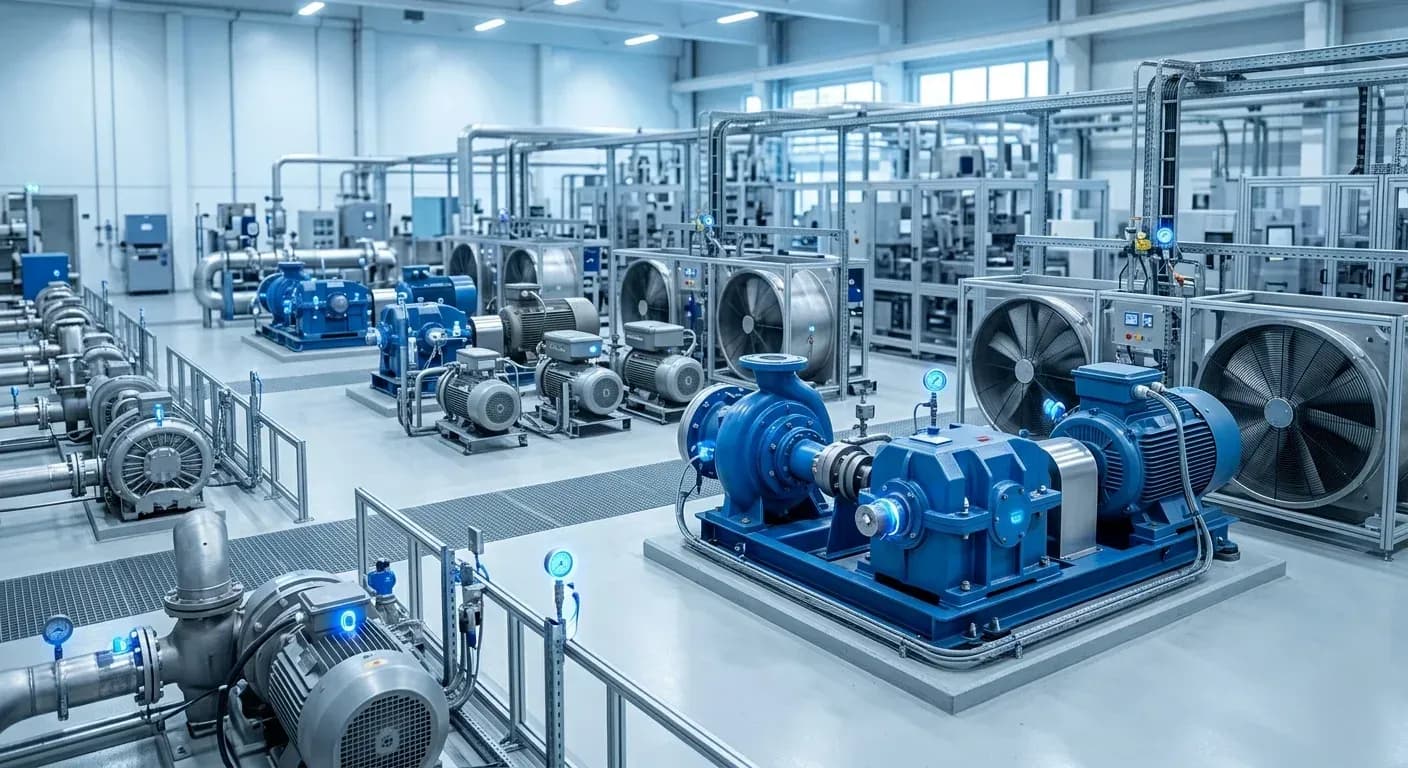
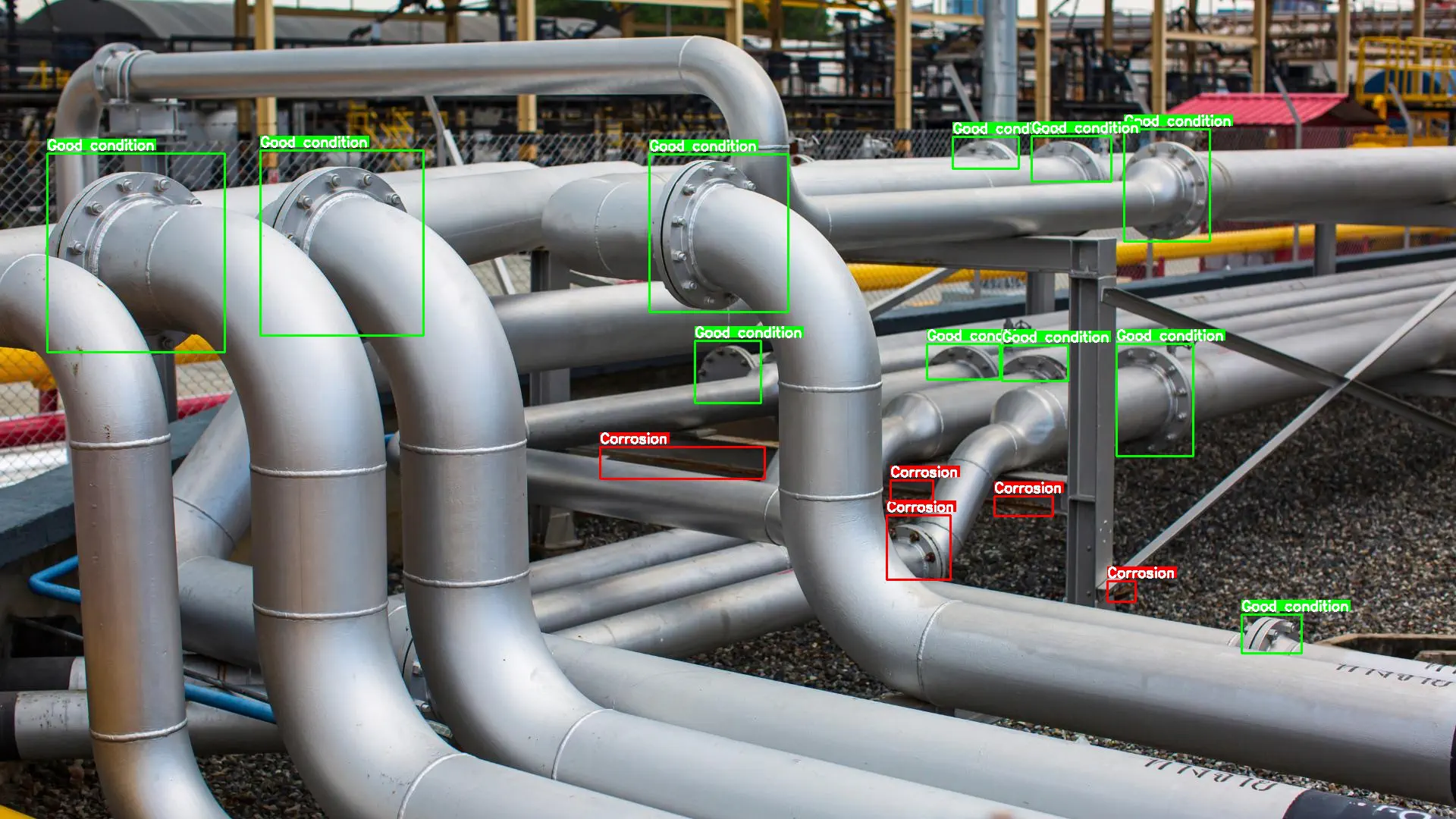
The asset dimension of the digital twin creates a live virtual representation of every connected asset: rotating equipment (pumps, compressors, turbines), production machinery (CNC machines, presses, robotic arms), utilities infrastructure (HVAC, electrical switchgear, compressed air), and civil assets (pipelines, bridges, tanks). Each asset in the twin displays real-time sensor readings, calculated health scores, maintenance history, and upcoming scheduled work - providing operations teams with a single interactive view of every asset’s current condition and maintenance status. PETRAN’s IoT platform connects to existing sensors (vibration, temperature, pressure, current, flow) via OPC-UA, Modbus, MQTT, and SCADA protocols. No sensor replacement is required: PETRAN ingests data from existing instrumentation and populates the asset twin automatically.

Assets & Equipment Digital Twin
  • -Real-time sensor overlays: vibration, temperature, pressure, current, flow - per-asset in the visual model
  • -Health scoring: AI-calculated asset health index updated continuously from live sensor data
  • -Maintenance layer: open work orders, completed maintenance history, and scheduled upcoming interventions visible per asset
  • -Failure probability: predictive model showing likelihood of failure within defined time windows
Book a Demo

Operational Benefits

Why Choose Ombrulla for Digital Twin

Core Capabilities

Interactive live view of plants, lines, and zones - sensor overlays, alarms, RTLS positions, instant drill-down

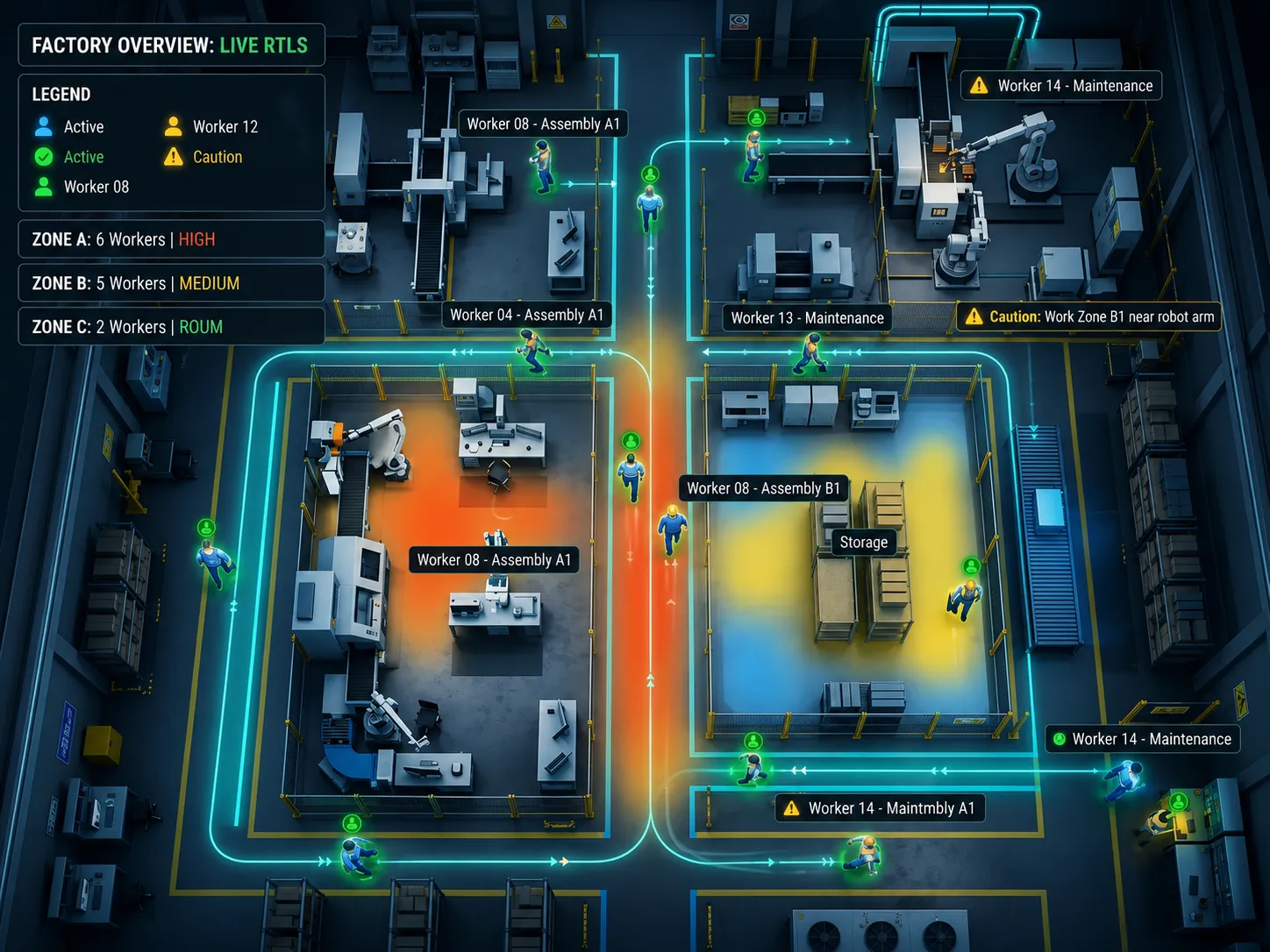
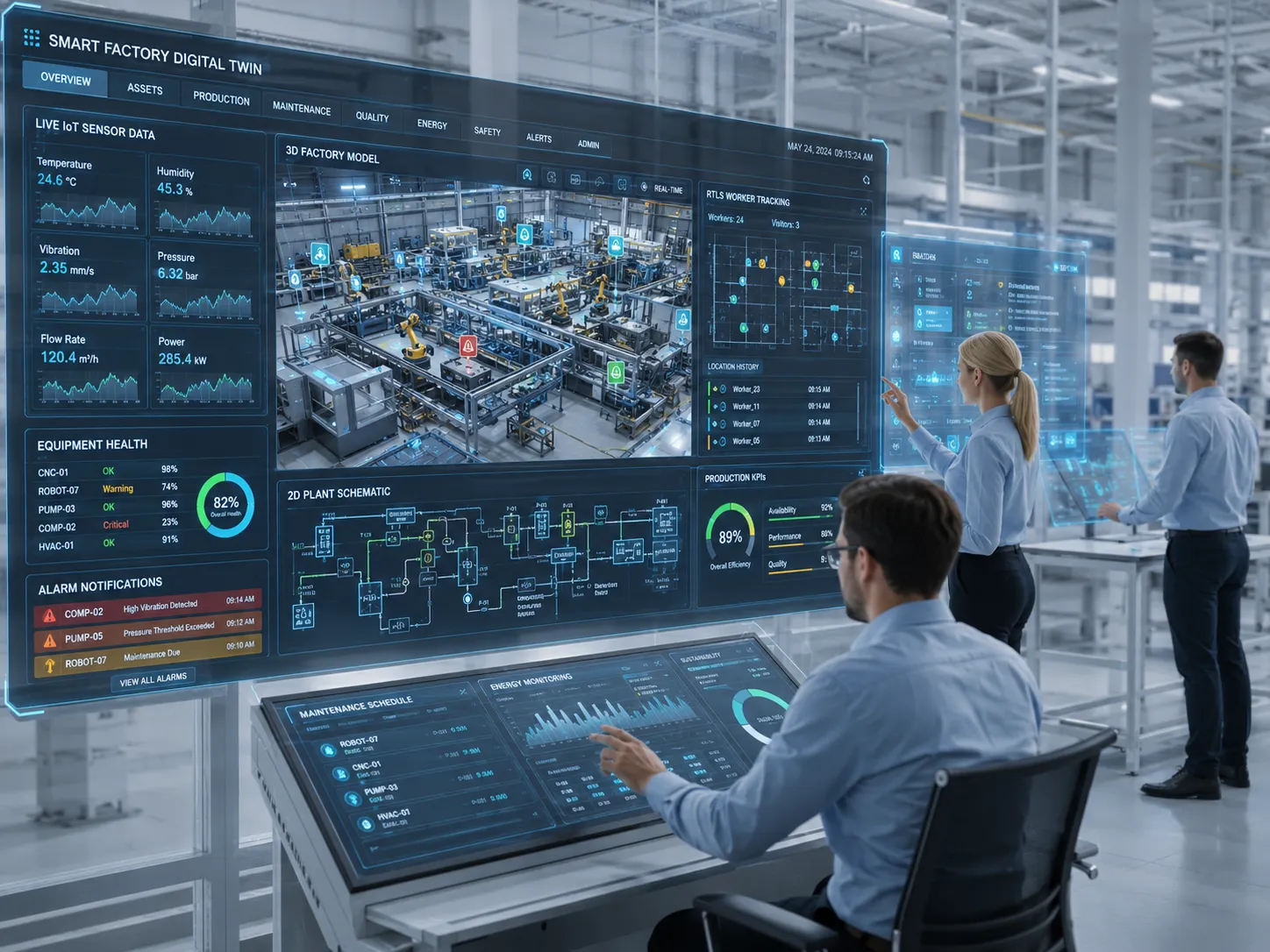
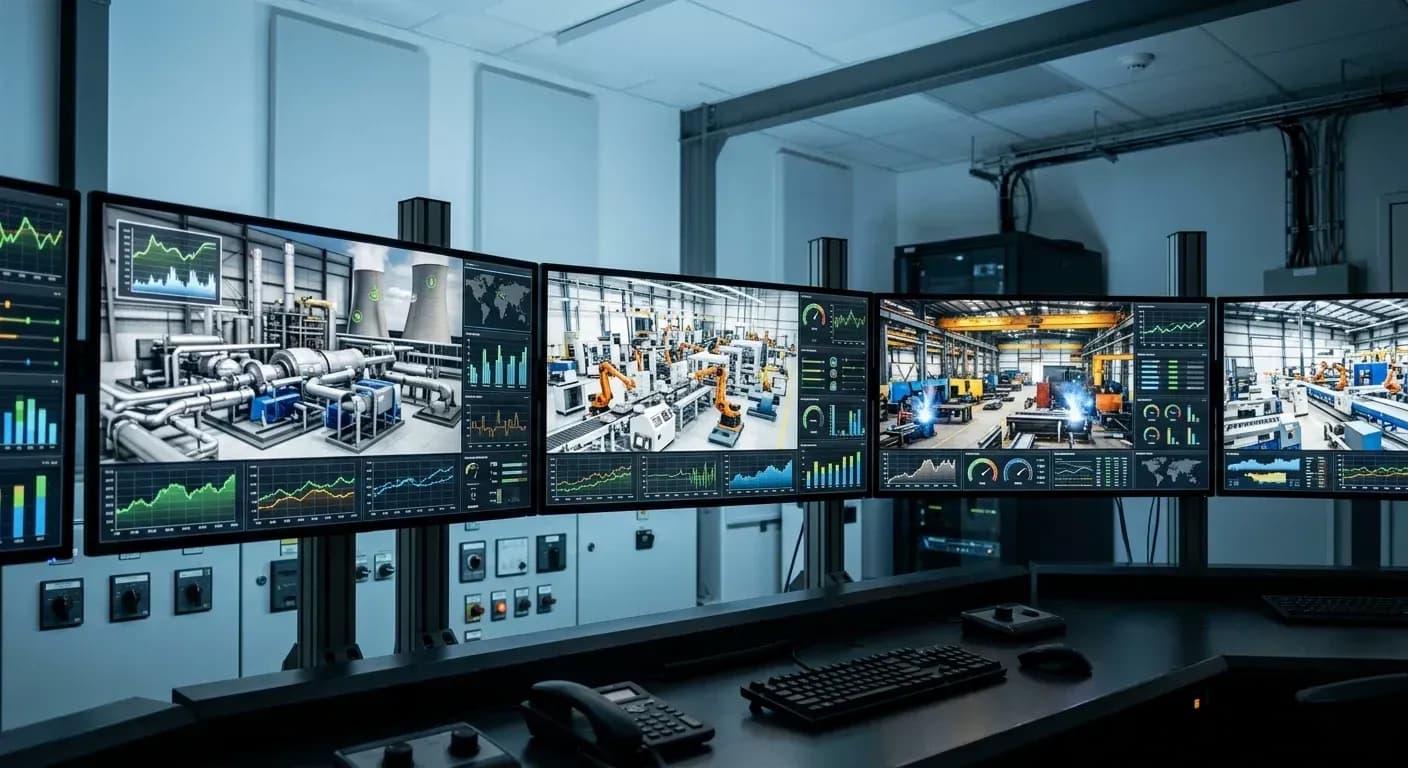
PETRAN’s digital twin visualisation renders your operation as an interactive 2D schematic or 3D spatial model - populated with live data from every connected IoT sensor, RTLS tag, SCADA system, and enterprise system. Operations teams can navigate the model from plant-level overview to individual asset detail in a single interface, without switching between separate dashboards for each system. Sensor overlay colours indicate health status at a glance: green for normal, amber for caution, red for alarm. The visualisation layer is designed for operational use, not engineering exhibition: response time is under 1 second for navigation and drill-down, the interface is accessible on desktop, tablet, and control room display systems, and all alarms and events are surfaced in-context on the visual model rather than in a separate list that requires cross-referencing to the physical location.

Real-Time 2D/3D Digital Twin Visualisation
  • -2D schematics: P&ID-style plant and line layouts with live sensor data overlaid per instrument
  • -3D spatial models: navigate by zone, floor, or asset class; rotate, zoom, and drill to individual sensor readings
  • -Live alarm overlay: active alarms surfaced in-context on the visual model - location, severity, and time to response
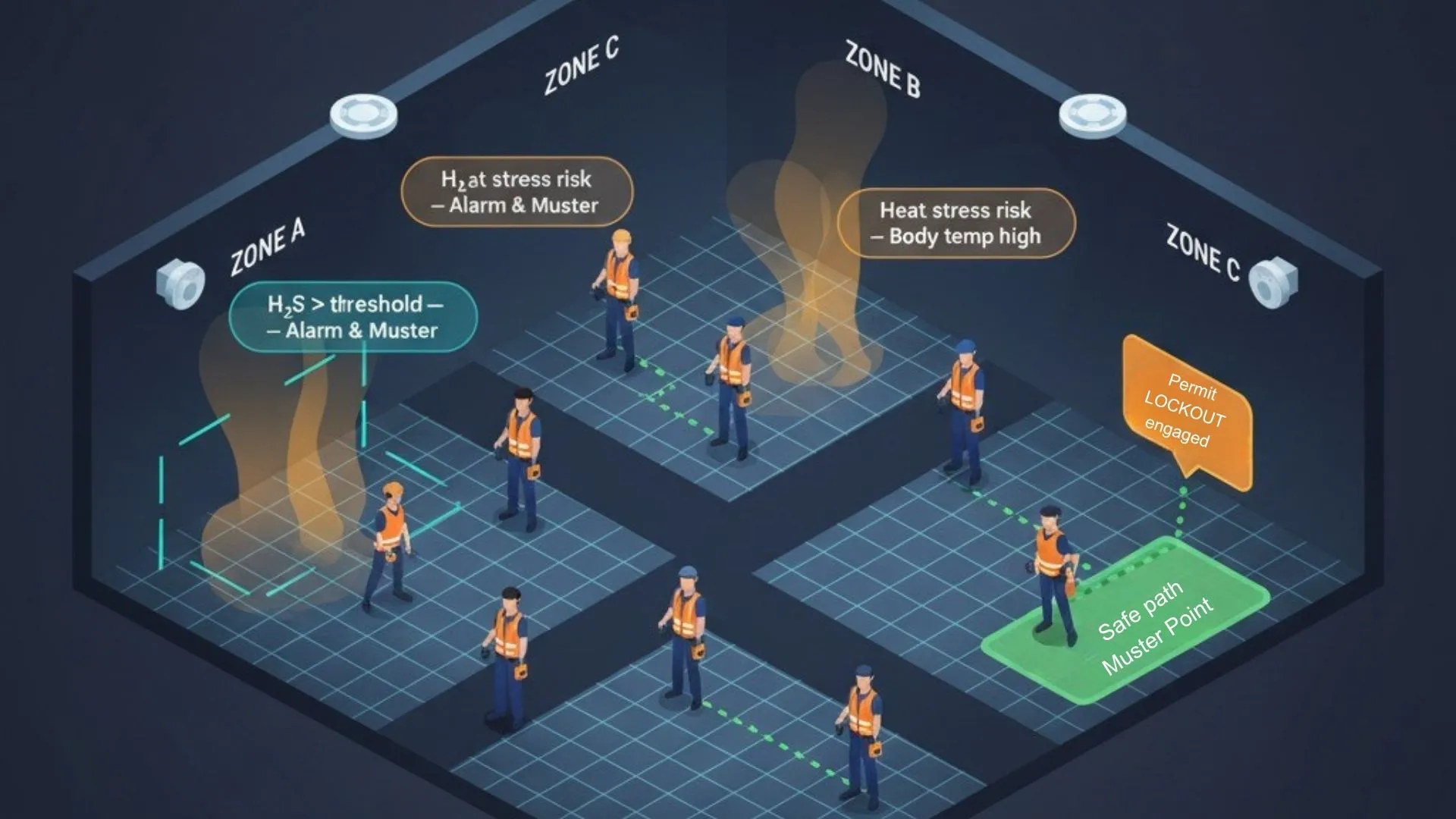
  • -RTLS layer: all workers and vehicles visible as live entities in the spatial model with real-time position updates
Request a UI Demo

How PETRAN Compares - Digital Twin vs Alternatives

How PETRAN Compares - Digital Twin vs Alternatives
CapabilityTraditional SCADA / Historian3D CAD / BIM Visualisation ToolPETRAN Industrial Digital Twin
Live operational stateLimited: static setpoint and alarm displaysYes: but only for the asset class the tool coversYes: unified across all assets, people, processes, and environment
Historical replay & root-causeNo: SCADA historian requires separate query tools; no spatial contextNo: visualisation onlyFull timestamped replay: sensors + RTLS + CMMS + MES synchronised in spatial model
What-if simulationNo: cannot simulate consequences before actionNo: passive visualisation; no simulation engineYes: adjust parameters and simulate outcomes in the twin without affecting live operation
AI anomaly detectionThreshold-based only: alarms fire when individual readings exceed limitsNone: 3D model has no analytics layerMultivariate AI: correlates multiple streams; detects developing faults before threshold crossing
People & worker RTLS integrationNone: SCADA shows equipment; workers are invisibleNone: BIM/3D tools model the building, not the peopleYes: RTLS workers, vehicles, and contractors as live entities in the spatial model
CMMS/EAM integrationLimited: SCADA-to-CMMS integration typically customNone: 3D tools do not connect to CMMSNative: IBM Maximo, SAP EAM, Hexagon EAM - work orders and maintenance history in context
Energy management (ISO 50001)Partial: energy metering data available but not contextualisedNoneYes: per-asset energy consumption with ISO 50001 target tracking and Scope 1/2 emissions analytics
Agentic AI workflow automationNone: SCADA requires manual operator responseNoneStage 4: PETRAN Agentic AI reads twin state and executes workflow actions automatically

Digital Twin Use Cases by Domain

Monitor performance in real time · Identify bottlenecks · Test strategies in the twin before deploying

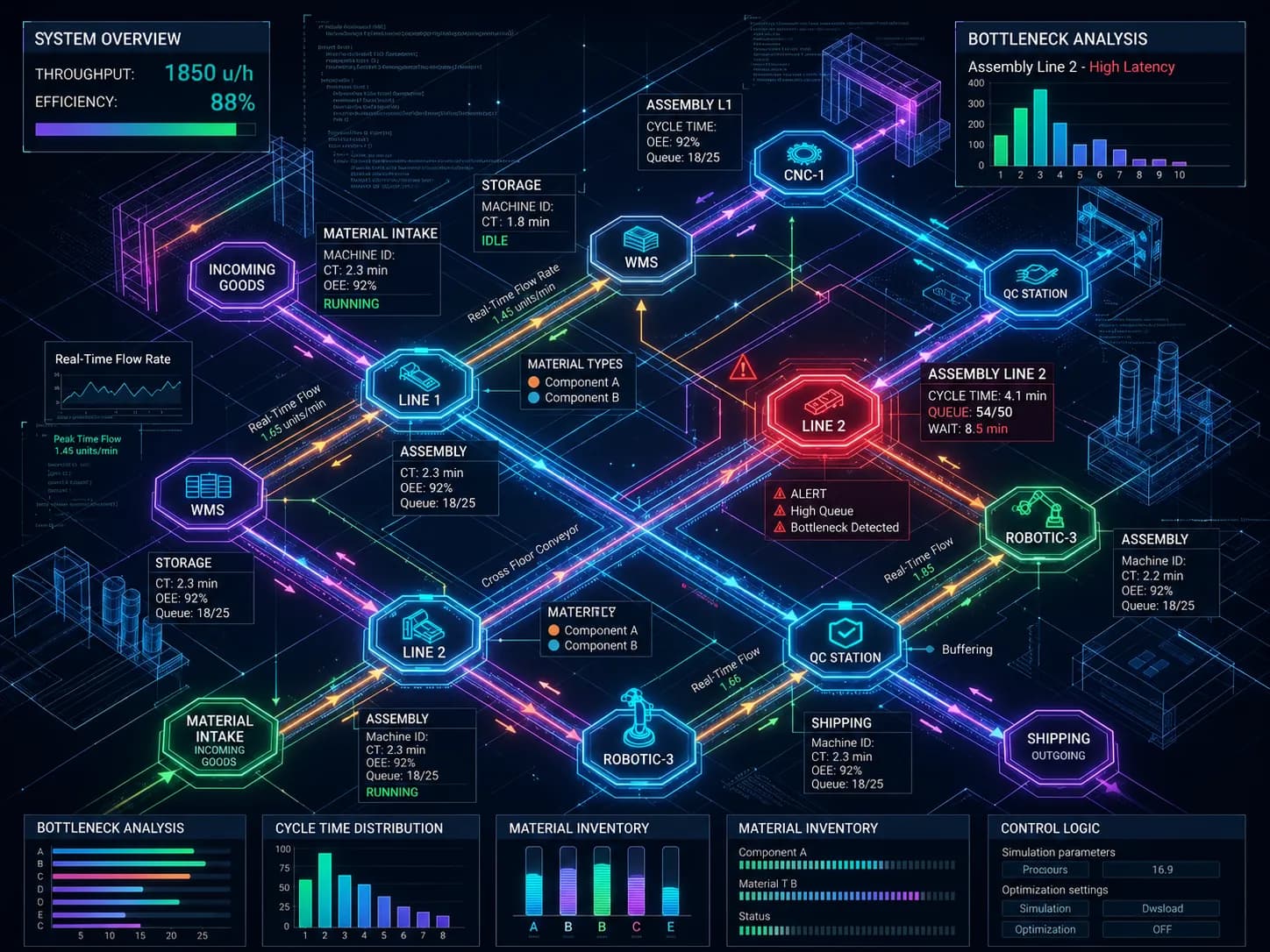
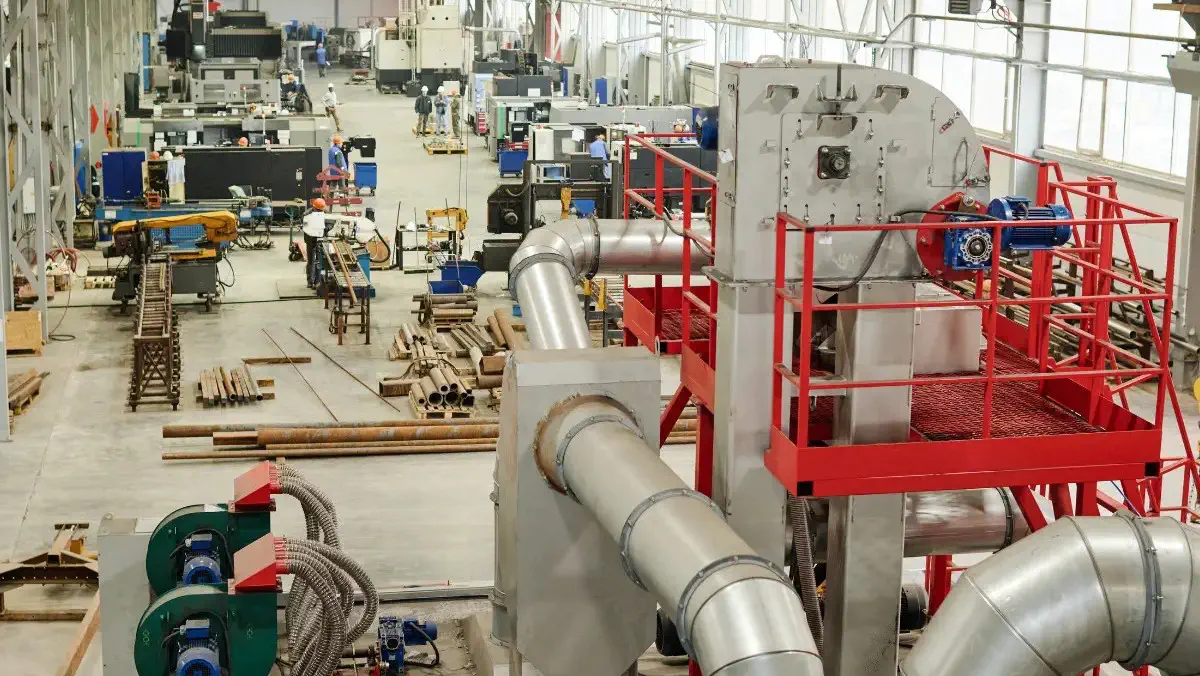
Operations teams use the digital twin as a continuous performance management tool: a single view of all production KPIs - OEE by line and shift, WIP accumulation at each stage, cycle time trends, and throughput against plan - in the spatial context of the plant model. When performance deviates from plan, the twin’s historical replay and cross-system correlation identify the cause in minutes rather than hours of spreadsheet analysis. What-if simulation for operations enables teams to test production schedule changes, line re-balancing options, routing modifications, and shift pattern adjustments in the twin before implementing them on the floor. This reduces the risk of production changes and accelerates the decision-making cycle from days to hours for complex multi-constraint optimisation problems.

Operations & Production Use Cases
  • -Real-time OEE: availability, performance, and quality by line, cell, and shift in live visual context
  • -WIP visibility: accumulation hotspots, queue lengths, and buffer utilisation visible in the production flow model
  • -Simulation: test layout changes, routing, shifts, and production sequences before committing to the physical change
  • -Cross-shift comparison: replay conditions across shifts to identify systematic performance differences
Learn More

Industry Applications

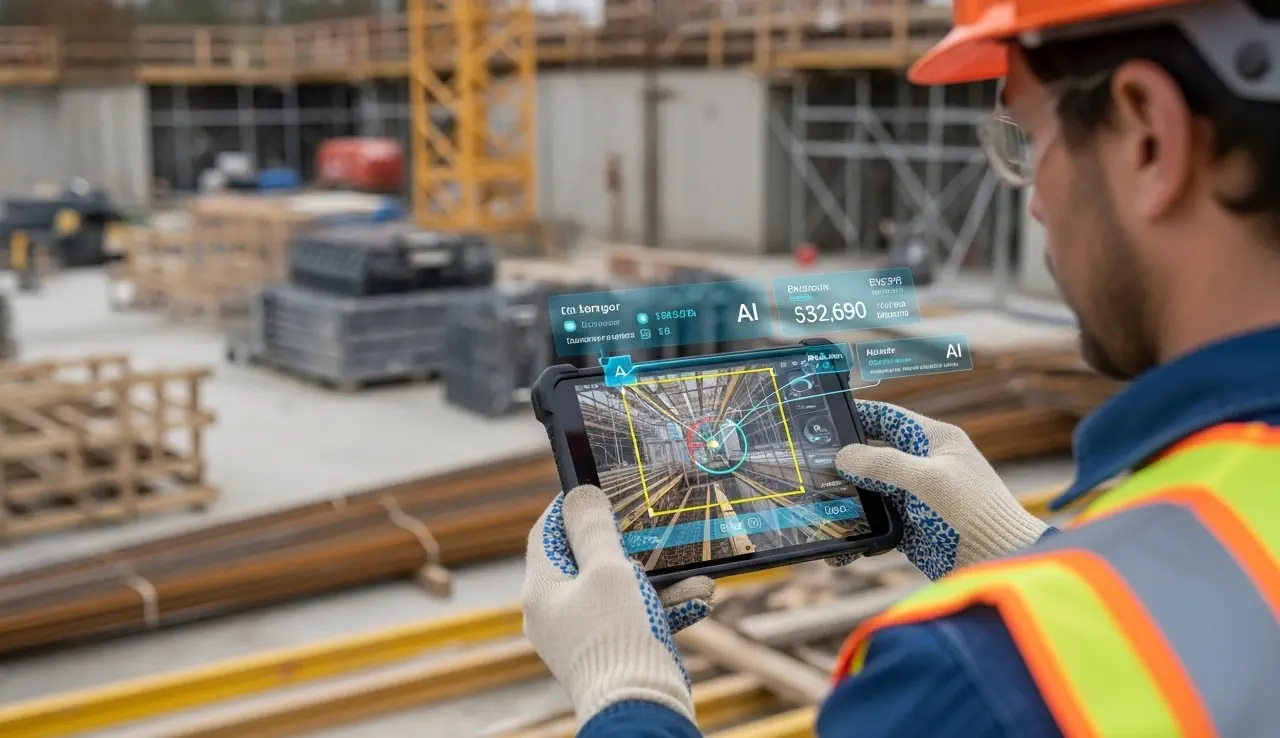
  • Ombrulla's AI mobile inspection platform is deployed across six primary industry verticals. Each application area aligns to specific regulatory frameworks, use cases, and AI detection categories most relevant to senior executives in those sectors.
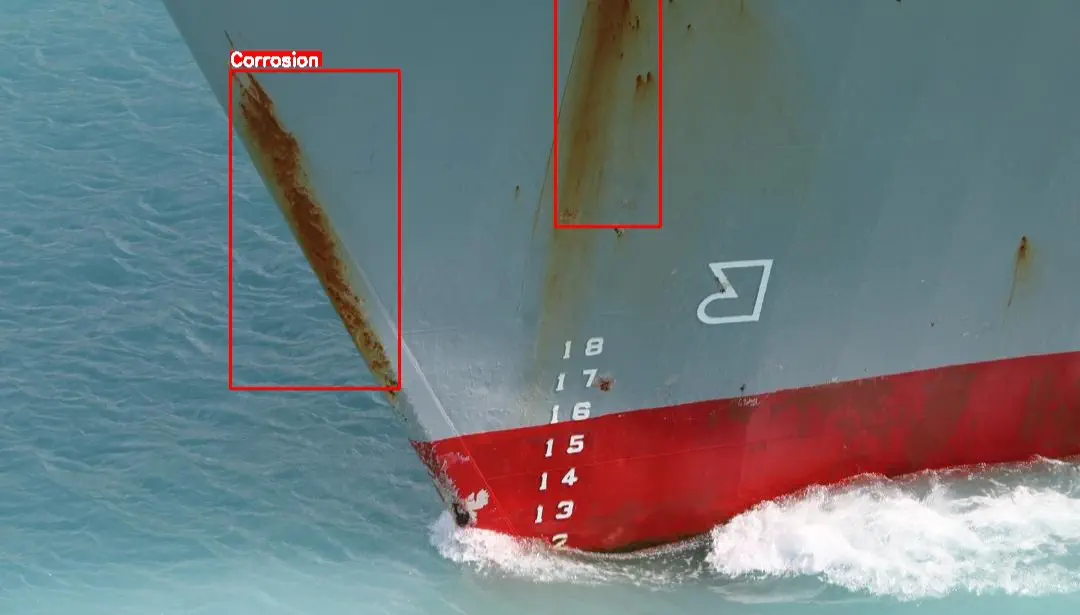
AI inspection in maritime industry to spot hull corrosion, cracks, and ensure safety of cargo holds and port infrastructure.

Maritime

Primary Use Cases: Hull, engine room & safety apparatus inspection.\nKey AI Detections: Fouling, coating degradation, dial anomalies, lashing faults.
Learn more
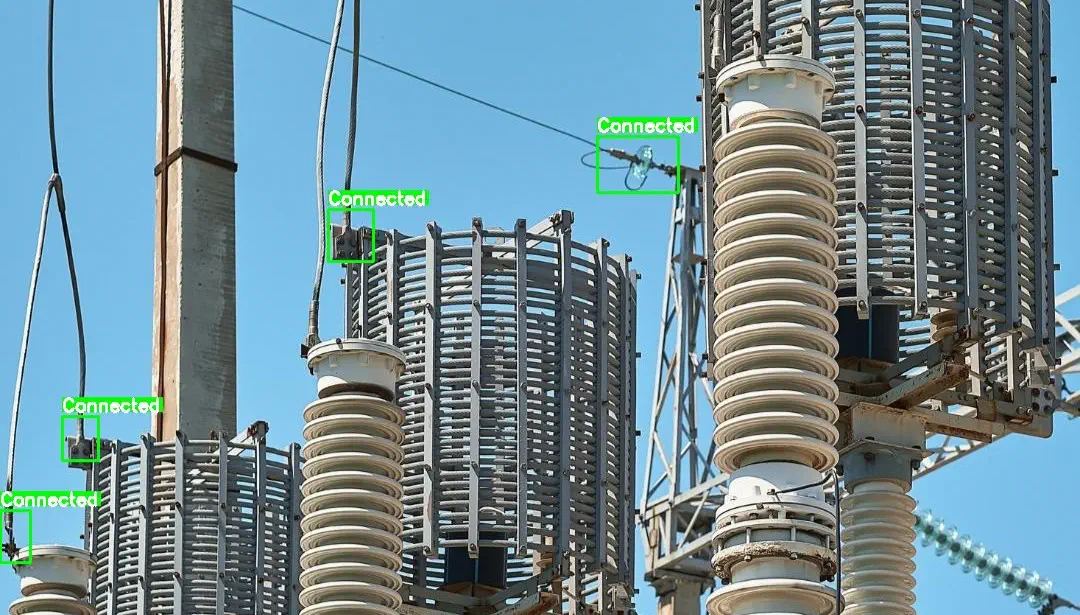
AI inspection in energy and utilities to check wind turbine blades, detect solar panel defects, and monitor power grid assets.

Utilities

Primary Use Cases: Grid asset, substation & meter inspection.\nKey AI Detections: Insulator cracks, tamper cues, vegetation encroachment.
Learn more
AI inspection for facilities management covering HVAC, fire safety, and structural monitoring.

Facilities Management

Primary Use Cases: HVAC, fire safety & structural portfolio checks.\nKey AI Detections: Water ingress, panel hotspots, fire equipment status.
Learn more
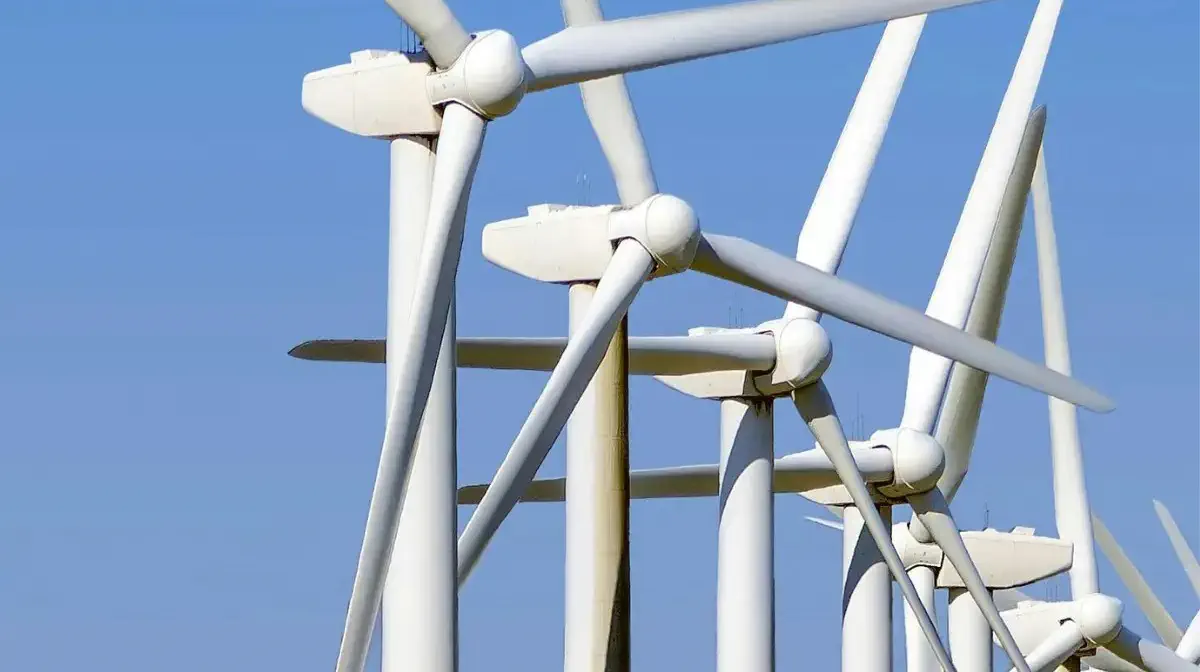
AI inspection for renewable energy assets including solar panels and wind turbines.

Renewable Energy

Primary Use Cases: Solar PV, wind blade & substation inspection.\nKey AI Detections: Soiling, micro-crack indicators, blade anomalies, oil leaks.
Learn more
1/0

Implementation Roadmap

Digital Twin Implementation with Ombrulla

Frequently Asked Questions

What is a digital twin in industrial operations?

An industrial digital twin is a live virtual representation of a physical asset, system, or operational environment that uses real-time data from IoT sensors, SCADA systems, RTLS tracking, and enterprise software to continuously mirror the physical world in a digital model. Unlike a static dashboard, a digital twin evolves in real time as the physical operation changes, maintains a complete timestamped history for retrospective investigation, and supports simulation of future scenarios - enabling operations teams to answer three questions simultaneously: what is happening right now, why did that happen, and what will happen if we take this action? IBM defines a digital twin as a virtual representation that models the asset’s condition, performance, and behaviour over time - progressing through four maturity stages from static monitoring to autonomous self-optimisation.

How does a digital twin work?

A digital twin works by continuously synchronising a virtual model with its physical counterpart through real-time data feeds. In an industrial context: IoT sensors on physical assets (vibration, temperature, pressure, flow) transmit readings to the digital twin platform via OPC-UA, Modbus, MQTT, or SCADA protocols; RTLS tags on workers and vehicles transmit their positions via BLE, UWB, or GPS; CMMS and EAM systems provide maintenance history and work order status; MES systems provide production records and quality data. The platform normalises all these data streams into a unified asset model with consistent timestamps and coordinates, then renders the model as an interactive 2D schematic or 3D spatial visualisation. AI models run continuously on the unified data to detect anomalies, predict failures, and simulate future states.

What is the difference between a digital twin and a SCADA system?

SCADA (Supervisory Control and Data Acquisition) is a real-time monitoring and control system focused on process and equipment status: it shows current sensor readings, allows operators to adjust setpoints, and triggers alarms when thresholds are crossed. A digital twin extends SCADA capabilities in four critical ways: (1) Contextual integration - the twin combines SCADA data with CMMS maintenance history, MES production records, RTLS worker positions, and ERP data in a unified model; (2) Historical replay - the twin maintains a complete timestamped history that can be replayed to investigate incidents; (3) What-if simulation - the twin can simulate the consequences of decisions before they are taken; (4) AI-driven anomaly detection - the twin identifies developing faults from multi-variate patterns that threshold-based SCADA alarming misses. PETRAN’s digital twin ingests SCADA data as one of its input sources rather than replacing it.

What is the difference between a digital twin and a BIM model?

A Building Information Model (BIM) is a 3D geometric and spatial model of a structure, created primarily for design, construction, and facilities management purposes. A BIM model accurately represents the physical dimensions and relationships of a building or plant but is typically static - it reflects the as-built state at a point in time and is updated manually when changes occur. A digital twin shares the 3D spatial model concept but adds live operational data: IoT sensor readings, real-time process conditions, worker RTLS positions, and AI analytics are continuously updated in the model. Where BIM answers 'what does this facility look like and where is everything located?', a digital twin answers 'what is this facility doing right now, and what will it do next?'. Some organisations use BIM models as the geometric foundation for their digital twin, enriching the static 3D model with live operational data feeds.

What is a digital twin maturity model?

A digital twin maturity model is a framework that defines progressive stages of digital twin capability, each delivering additional operational value. IBM’s four-stage model is the most widely referenced enterprise framework: Stage 1 (Monitoring) is a static real-time dashboard with threshold-based alerting; Stage 2 (Descriptive) adds historical replay and cross-system event correlation for root-cause analysis; Stage 3 (Predictive) adds AI-driven anomaly detection, failure prediction, and what-if simulation; Stage 4 (Autonomous) adds agentic AI that reads the twin state and executes workflow actions automatically with human approval gates for high-consequence decisions. The maturity model is valuable for enterprise planning because it provides a roadmap: organisations can identify their current stage, quantify the ROI available at the next stage, and build a deployment plan that delivers value at each step rather than requiring full Stage 4 capability before seeing returns.

What are the business benefits of a digital twin?

The quantified business benefits of industrial digital twins include: (1) Reduced unplanned downtime - 30-50% reduction from AI predictive maintenance enabled by digital twin data integration; (2) OEE improvement - identification and simulation of bottleneck solutions without production disruption; (3) Maintenance cost reduction - 10-25% from risk-based prioritisation replacing calendar-based maintenance; (4) Energy consumption reduction - ISO 50001 energy management analytics identifying optimisation opportunities; (5) Safety incident prevention - real-time hazard zone visualisation and emergency simulation; (6) Capital project risk reduction - expansion and modification planning in the virtual model. Hexagon’s 2025 survey found that 92% of companies deploying digital twins report returns above 10%, with over 50% reporting at least 20% ROI.

What industries benefit most from digital twins?

The industries with the highest digital twin deployment and documented ROI are: Oil & Gas (pipeline integrity monitoring, production optimisation, turnaround planning); Manufacturing (OEE improvement, predictive maintenance, quality non-conformance prevention, energy management); Automotive (line balance optimisation, robot health monitoring, changeover planning); Civil Infrastructure and Utilities (structural health monitoring, substation asset health, capital planning simulation); Aerospace and Defence (engine component health monitoring, maintenance interval optimisation); and Smart Cities and Buildings (energy management, occupancy optimisation, infrastructure maintenance planning). The digital twin market is growing at 31.1% CAGR from $35.8B in 2025 to a projected $328.5B by 2033, driven by expanding applications across all these sectors.

How does a digital twin reduce unplanned downtime?

A digital twin reduces unplanned downtime through three mechanisms that each correspond to a stage of IBM’s maturity model. At Stage 1 (Monitoring), real-time sensor visualisation in the twin ensures that developing conditions - rising temperatures, vibration trends, pressure deviations - are visible to operators before they reach failure. At Stage 2 (Descriptive), historical replay and cross-system correlation allow root-cause analysis after failures, enabling permanent corrective actions rather than repeat failures. At Stage 3 (Predictive), AI models trained on the twin’s unified operational data calculate failure probability and remaining useful life, enabling maintenance teams to intervene during planned windows rather than reacting to emergency breakdowns. The combination of these three mechanisms typically reduces unplanned downtime by 30-50% in industrial environments.

Can a digital twin integrate with SAP, IBM Maximo, or existing CMMS systems?

Yes. PETRAN’s digital twin integrates bidirectionally with all major CMMS and EAM platforms: IBM Maximo Application Suite (work orders, asset records, PM schedules, and inspection records visible in context in the twin); SAP PM/EAM (preventive and corrective maintenance orders, equipment hierarchy, and spare parts status); Hexagon EAM; Infor EAM; and ServiceNow. Integration is bidirectional: PETRAN reads maintenance history and work order status from the CMMS to provide context in the twin, and PETRAN’s AI-detected faults can automatically raise new work orders in the CMMS through the agentic AI layer. MES integration (SAP MES, Siemens Opcenter, Oracle MES) connects production orders and quality records. ERP integration (SAP S/4HANA, Oracle ERP) connects materials, inventory, and cost data.

What data does a digital twin need to work?

A digital twin’s value scales with the completeness and quality of its data inputs, but a functional Stage 1 twin can be built from existing instrumentation without additional sensor deployment. Minimum data requirements: real-time sensor readings from existing IoT devices or SCADA historian tags (the more sensors, the higher the model fidelity); asset master data from the CMMS (asset names, hierarchy, technical specifications); and a spatial model (P&ID schematic or 3D model from CAD or BIM). Additional data sources that enhance twin capabilities at higher maturity stages: RTLS worker and vehicle positions; production order and quality records from MES; maintenance history from CMMS; energy metering data; and environmental sensor data (gas, temperature, humidity). PETRAN’s data readiness assessment identifies which existing data sources are usable and which gaps require new sensor deployment.

What is the difference between a product twin and a plant twin?

McKinsey identifies four categories of digital twins: product twins (models of individual products or components at various lifecycle stages), data twins (digital representations of data structures and information flows), systems twins (models of entire production systems or supply chains), and infrastructure twins (virtual models of physical infrastructure - buildings, roads, bridges, pipelines). PETRAN’s industrial digital twin primarily operates as a systems twin (modelling the complete operation - assets, people, processes, and environment together) and an infrastructure twin (structural health monitoring for civil assets). Product twins - models of individual components across their full lifecycle from design to disposal - are a separate category typically used in engineering simulation (ANSYS, Siemens NX) rather than operational management.

How do you implement a digital twin in a running industrial plant?

Implementing a digital twin in a running plant follows a non-disruptive approach that requires no production shutdown and no replacement of existing sensors or systems. PETRAN’s five-stage implementation: (1) Scope & Data Connection - connect PETRAN to existing IoT sensors, SCADA historians, and enterprise systems via OPC-UA, Modbus, MQTT, and API connectors (2-4 weeks); (2) Stage 1 Monitoring Twin - build the 2D/3D visual model populated with live data; validate with operations teams (3-6 weeks); (3) Historical Intelligence & AI - enable replay and deploy AI anomaly detection on accumulated operational data (4-8 weeks); (4) Enterprise Integration - connect CMMS, MES, ERP, and EHS systems (2-4 weeks); (5) Agentic AI Activation - deploy autonomous workflow automation for validated use cases (ongoing). Total time to Stage 1 production digital twin: 5-10 weeks for a single plant or production area.

What is the ROI of a digital twin?

Hexagon’s 2025 survey of industrial digital twin deployments found that 92% of organisations report returns above 10%, with over 50% reporting at least 20% ROI. IBM IBV research quantifies supply chain digital twin maturity as delivering 10-15% productivity improvement and 50-60% elimination of non-value-add work. Industry-specific ROI benchmarks: Manufacturing - 30-50% reduction in unplanned downtime, 2-5% OEE improvement from bottleneck simulation, 10-25% maintenance cost reduction; Oil & Gas - production optimisation simulation delivering 2-5% throughput improvement on established assets; Infrastructure - capital deferral through condition-based maintenance versus calendar-based, typically 15-30% capital efficiency improvement. Ombrulla builds a use-case-specific ROI model during the scoping engagement using the client’s baseline operational data.

What is the digital twin market size and growth rate?

The global digital twin market was estimated at $35.82 billion in 2025 and is projected to reach $328.51 billion by 2033, at a compound annual growth rate (CAGR) of 31.1% (Fortune Business Insights, 2025). Manufacturing accounts for the largest share of current deployments, followed by energy and utilities, automotive, and aerospace and defence. North America holds the largest regional share (31.3% in 2025) driven by Industry 4.0 adoption across manufacturing, automotive, and aerospace sectors. Europe is the fastest-growing region, driven by sustainability regulations and decarbonisation mandates that require real-time asset monitoring and energy optimisation. The market growth is primarily driven by the convergence of IoT, AI, cloud computing, and 5G connectivity that enables large-scale real-time data synchronisation between physical and digital systems.

How is a digital twin different from IoT monitoring?

IoT monitoring provides real-time data streams from sensors: temperature, pressure, vibration, flow. It answers the question 'what is the current reading on this sensor?' A digital twin uses IoT monitoring as one of its data inputs but provides four additional capabilities: (1) Contextual integration - IoT readings are placed in the context of the asset’s maintenance history, production plan, and spatial relationship with other assets and people; (2) Historical continuity - the twin maintains a complete timestamped history for investigation and trend analysis; (3) Simulation - the twin can model future states and test decisions before they are taken; (4) AI intelligence - the twin’s AI layer correlates multiple sensor streams to detect patterns that individual sensor monitoring misses. IoT monitoring without a digital twin is like having all the instruments in an aircraft cockpit but no flight management system to integrate and interpret them.