Ombrulla implemented an AI Drone Infrastructure Inspection workflow for oil and gas asset integrity teams. Drone flights capture high-resolution video of critical infrastructure such as storage tanks and pipelines. Ombrulla’s AI models analyze the footage to detect and classify anomalies including cracks, corrosion, paint/coating loss, insulation damage, and potential leaks.
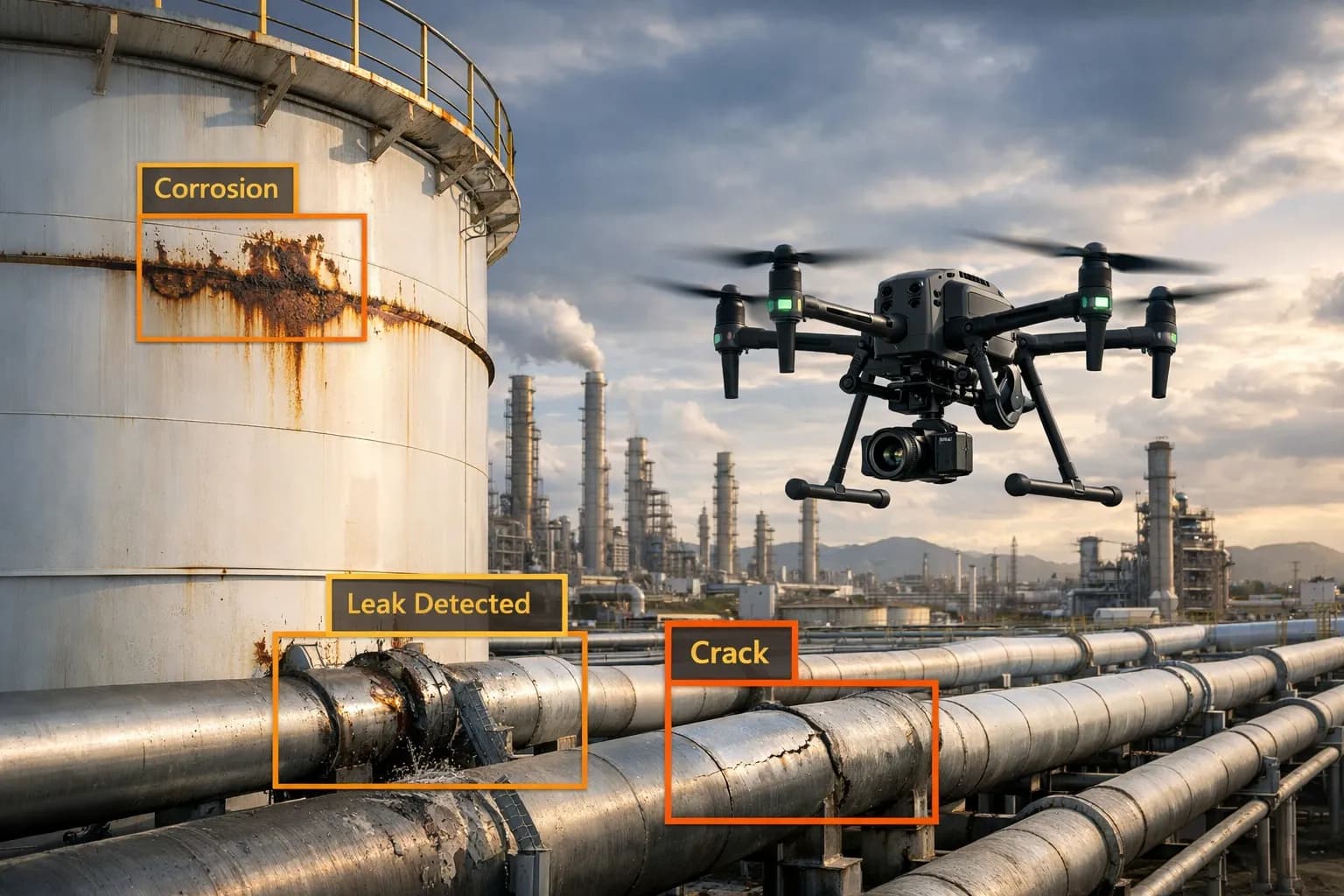
Ombrulla deployed an AI-powered drone inspection workflow to support oil and gas asset integrity teams in monitoring critical infrastructure more efficiently and safely. High-resolution drone video is captured across assets such as storage tanks, pipelines, and associated facilities, then analyzed by Ombrulla’s AI models to detect and classify anomalies including cracks, corrosion, coating loss, insulation damage, and potential leaks. This enables a faster, safer, and more consistent inspection process with traceable visual evidence, helping teams intervene earlier and prioritize maintenance more effectively.
Routine and event-driven visual inspection of critical infrastructure - storage tanks, pipelines, and other facilities - using drone data as the primary capture method.
Traditional infrastructure inspections in oil and gas often depend on manual walkdowns, rope access teams, scaffolding, and periodic shutdown windows. Even when drones are used, the bottleneck frequently shifts to manual video review.
Large volumes of video/images take hours or days to analyze and report.
High or confined areas may be sampled rather than fully reviewed due to access limits.
Defect identification varies by reviewer experience and fatigue.
Findings may lack precise location mapping, making reinspection and follow-up slower.
Deferred risk: Minor corrosion, coating failures, or insulation damage can progress between inspection rounds.
Ombrulla introduced an AI-driven inspection layer on top of drone capture. Drone missions collect consistent, repeatable video of asset surfaces and components. Ombrulla’s anomaly detection models automatically scan the footage, flagging potential issues and producing a structured inspection output.
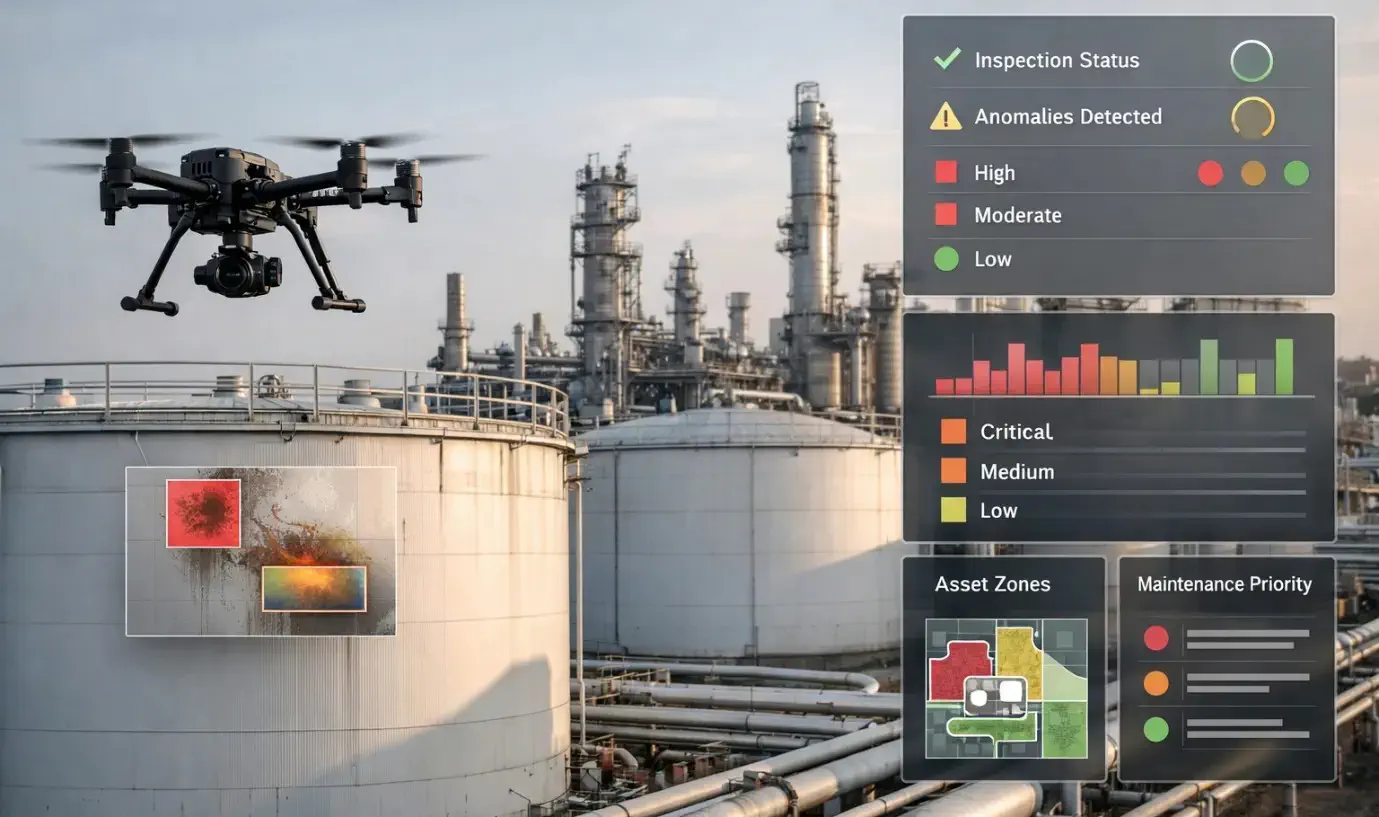
The system provides an asset map / digital twin view linking findings to exact locations (tank courses, nozzle zones, pipeline chainage).

Define inspection scope by asset type and risk priority. Plan flight paths for repeatable coverage (angles, standoff distance, overlap).

Capture high-resolution video; use thermal payloads where leak/heat anomalies are relevant.

Models analyze video frames to detect and segment defects like cracks and corrosion. Findings are categorised and scored.

Integrity engineer reviews flagged anomalies (human-in-the-loop) and confirms true positives.

Confirmed findings are generated as inspection records and routed into SAP/CMMS as work orders.
Core value delivered by the drone-video inspection approach.
Reduce the need for manual access in elevated, remote, and hazardous inspection environments.
Move from drone capture to reviewed findings and maintenance action in significantly less time.
Apply a consistent defect taxonomy and reporting structure across sites and contractors.
Help maintenance teams focus on the issues with the highest operational and asset risk.
Maintain a digital record from captured image to reviewed anomaly to follow-up action.
Scale inspection programs across more assets and locations without linear growth in review effort.
Our AI models are designed to detect and classify a wide range of visual integrity issues across industrial infrastructure, helping inspection teams identify risks earlier, prioritize maintenance more effectively, and improve reporting consistency.
Detects visible corrosion, rust, and pitting that indicate early material degradation.

Identifies cracks, fractures, and surface splits that may signal structural stress or damage.

Recognizes coating breakdown such as peeling, blistering, and bare-metal exposure.

Flags visual signs of leaks, including stains, drips, wet patches, and residue trails.

Detects damaged insulation, broken cladding, and exposed areas linked to thermal loss or CUI risk.

Drones and AI video analytics help inspect critical industrial assets such as storage tanks, pipelines, process units, and substations. They improve inspection accuracy, asset monitoring, and maintenance planning.
A typical production-grade rollout phases: