
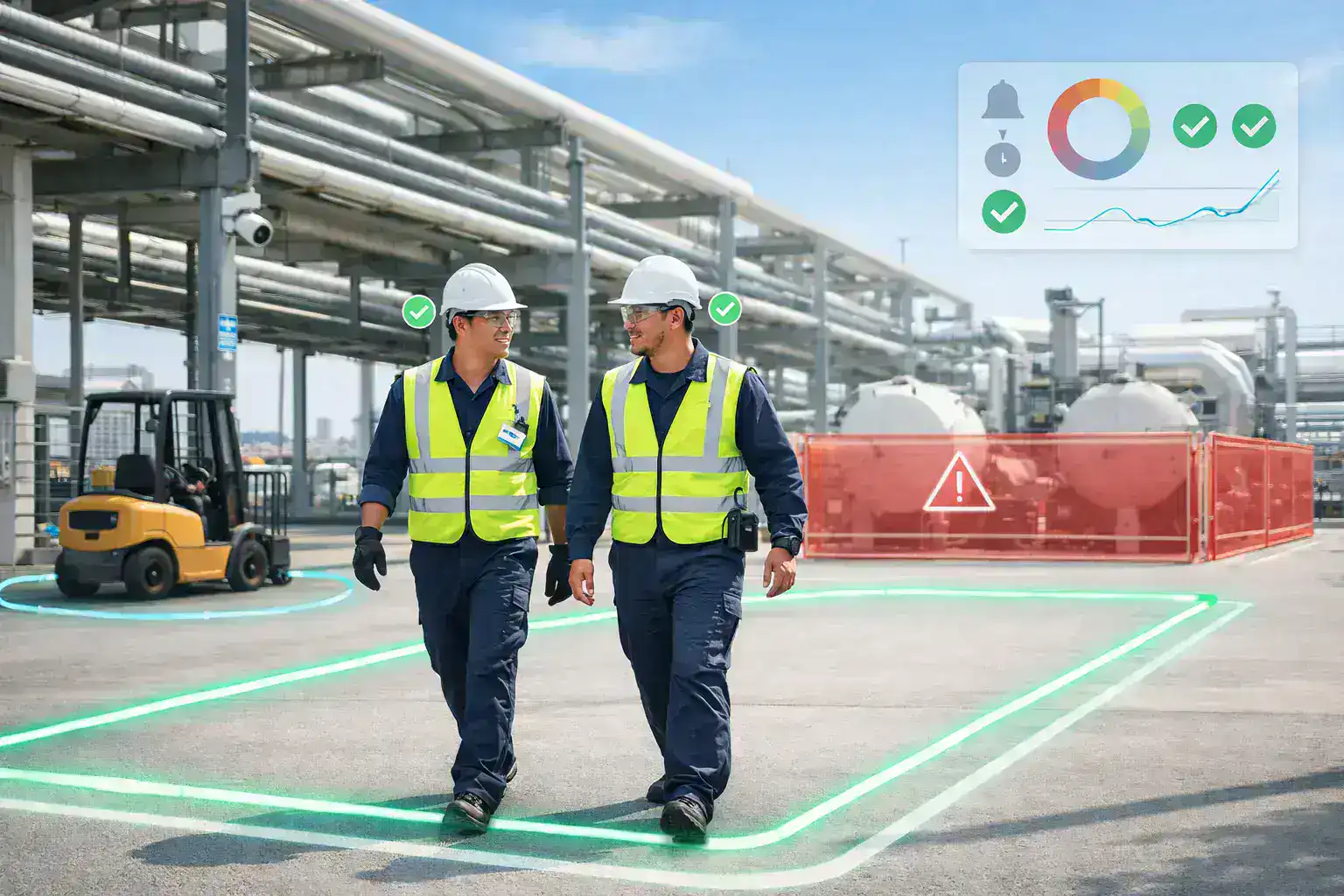
Ombrulla implemented a real-time workplace safety solution for oil and gas sites by integrating zone-certified wearable devices with Petran. The platform continuously monitors worker exposure and behaviour (temperature exposure, no motion, man down, H2S exposure) and correlates it with the exact location by operational zone. Supervisors and HSE teams receive instant alerts for high-risk events, including lone-worker entry into hazardous zones, enabling faster intervention and measurable reductions in response time and exposure duration.
Oil and gas operations frequently involve confined spaces, work at height, toxic gas exposure risk, and heat stress. Traditional safety controls rely on manual supervision, periodic radio checks, and post-event reporting. These methods are often insufficient when a worker becomes immobile, is exposed to hazardous gas, or enters a restricted zone without immediate visibility to the control room.
Limited real-time visibility of worker status and location in high-risk zones.
Delayed detection of no-motion or man-down events, especially in remote or noisy areas.
Reactive response to H2S exposure risks and heat stress, increasing medical impact.
Manual reporting burdens and incomplete evidence for audits and investigations.
Inconsistent enforcement of lone-worker policies and zone access rules.
Ombrulla deployed a connected safety layer that streams data from zone-certified wearables into Petran in real time. Ombrulla safety analytics continuously evaluates sensor readings and location context against site-defined rules to generate actionable alerts, escalation workflows, and executive reporting.

Zonecertified devices monitor temperature, no motion, man down, H2S exposure, and location (GPS/UWB/BLE).

Site is mapped into zones (Hazardous, Restricted, Muster). Logic applies rules like lone-worker detection and time-in-zone limits.

Ombrulla analytics processes data against safety rules: muster compliance, restricted access, and escalation SLAs.

Petran dashboards display live status. Alerts are routed to control rooms, HSE managers, and supervisors.

Automated incident timelines and audit-ready reports support investigation and compliance.
Senior leadership typically evaluates workplace safety technology on measurable improvements in detection, response, compliance, and risk exposure.
Move man-down event detection from minutes to near-real-time alerts.
Reduce time to assist by 20-50% with precise location accuracy.
Reduce lone-worker violations by 40-80% via geofencing alerts.
Lower total person-minutes in hazardous zones through time-in-zone controls.
Also reduces H2S threshold breaches through earlier detection and incident investigation cycle time by 25-60%.
A production-grade rollout follows these phases: