
Unified APM Platforms with ESG Intelligence: Driving Resilience, Compliance, and Lifecycle Optimization
Abstract
Asset Performance Management (APM) is shifting from a technical reliability toolset into a strategic command center that unifies asset health, operational performance, regulatory compliance, and environmental, social, and governance (ESG) intelligence. Industrial enterprises face simultaneous pressures: maximize uptime and overall equipment effectiveness (OEE), decarbonize operations, comply with rapidly evolving ESG disclosure regimes, and optimize capital allocation across aging asset portfolios.Leading APM and sustainability platforms have begun integrating real-time performance data with energy, emissions, and environmental metrics, but these integrations remain architecturally fragmented across most enterprises.
This paper proposes a conceptual framework for unified APM platforms with ESG intelligence that treat performance, risk, and sustainability as a single optimization problem.We trace the evolution from traditional APM and Enterprise Asset Management toward ESG-aware asset command centers; define a five-pillar architecture combining an industrial data fabric, real-time ESG-aware asset health scoring, cross-asset fleet learning, AI-driven investment prioritization, and governance assurance. We present a six-tier reference architecture, three case-study templates spanning energy-intensive manufacturing, transmission and distribution utilities, and renewable energy portfolios, and a structured research agenda.
The paper identifies five open research directions: standardized joint reliability-ESG KPI frameworks, multi-objective optimization with explainable trade-offs, cross-asset learning under heterogeneous data, ESG-linked digital twins, and assurance mechanisms against greenwashing. We argue that the convergence of APM, ESG reporting, and operational sustainability platforms represents one of the most consequential architectural decisions that industrial enterprises will make in the coming decade.
1. Introduction
Industrial organizations simultaneously face two powerful and often conflicting sets of pressures. On one side, operational imperatives demand increasing throughput, reliability, and safety while minimizing downtime and operating expenditure. On the other, sustainability and regulatory obligations require reductions in energy use and greenhouse gas emissions, responsible management of water and waste, protection of biodiversity, and compliance with a rapidly expanding body of ESG disclosure requirements. Examples include the European Corporate Sustainability Reporting Directive (CSRD), Securities and Exchange Commission climate risk rules, and sector-specific regulatory obligations affecting utilities, oil and gas, mining, and heavy manufacturing.
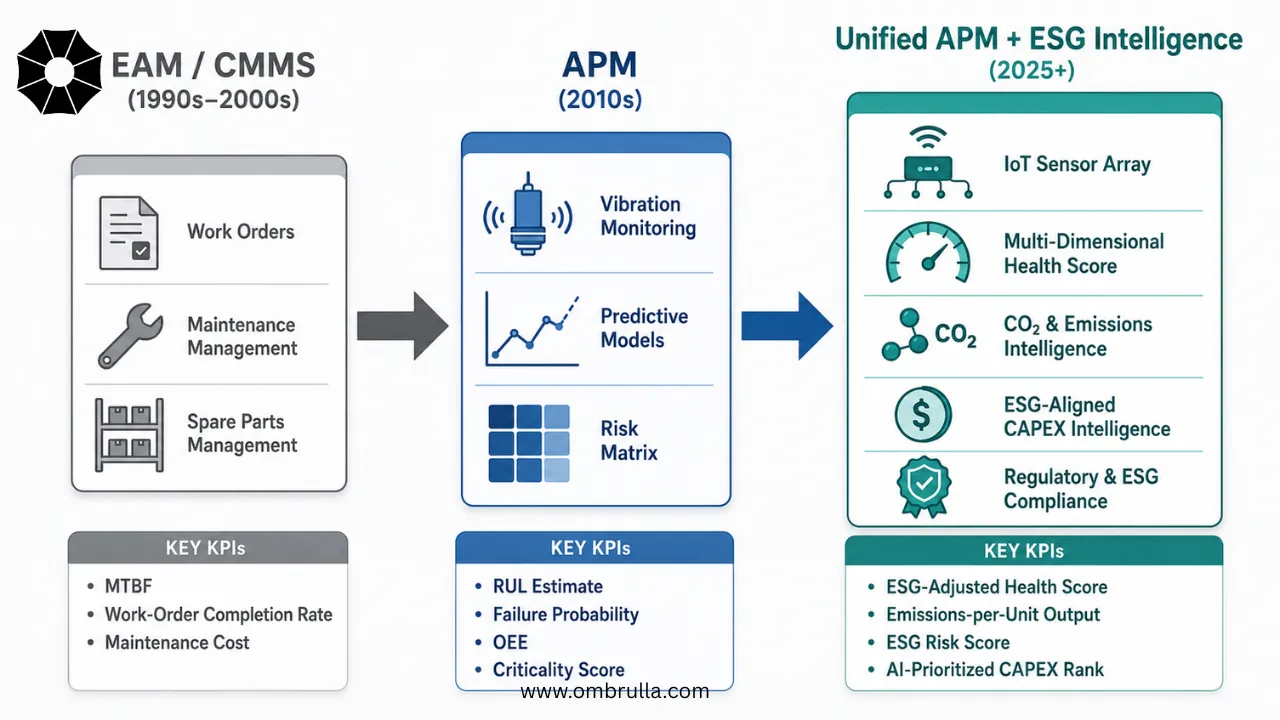
Traditional Asset Performance Management (APM) evolved from Enterprise Asset Management (EAM) and Computerized Maintenance Management Systems (CMMS) to combine condition monitoring, predictive maintenance, and risk-based prioritization for physical assets. In parallel, a distinct category of ESG platforms and operational sustainability solutions emerged to centralize non-financial metrics, including energy, emissions, water, waste, safety incidents, and social indicators, for external reporting and internal decision support. For most of the last decade, these two capabilities developed in separate organizational and technological silos: APM owned by reliability and operations teams, ESG reporting owned by sustainability and finance functions.
This separation is now untenable. Regulatory frameworks increasingly require asset-level attribution for ESG disclosures, asking not merely that a facility reports total Scope 1 emissions, but that it can identify which assets and which operational decisions drove those emissions. Investors and boards are linking capital allocation explicitly to ESG performance, expecting enterprises to demonstrate that maintenance and infrastructure investment strategies are aligned with decarbonization trajectories. And operational experience is confirming that well-maintained assets consume less energy, generate less waste, and produce fewer safety incidents, making reliability management and sustainability management fundamentally the same optimization problem from different vantage points.
A unified APM platform with ESG intelligence addresses this convergence by treating asset performance, risk, and sustainability as a single optimization space. This paper makes four contributions: it proposes a five-pillar conceptual framework for such a platform (Section 4); presents a six-tier reference architecture suitable for enterprise deployment (Section 10); develops three case-study templates illustrating the framework across distinct industrial contexts (Section 12); and defines a structured research agenda with five priority directions (Section 13).
2. Related Work
This paper bridges three research and practice communities: APM and predictive maintenance, ESG reporting and sustainable investing, and AI-driven multi-objective optimization.
The APM literature has extensively documented the progression from reactive maintenance through condition-based and predictive strategies. Systematic reviews in this area establish that predictive maintenance, when properly instrumented and integrated, delivers measurable reductions in unplanned downtime and maintenance cost. More recent contributions have begun to examine sustainability co-benefits: Colson and Macneil argue that asset management and ESG principles are mutually reinforcing, with disciplined asset lifecycle management supporting each of the E, S, and G dimensions, while industry reports from EY and PwC contend that asset management is among the highest-leverage levers available to industrial enterprises pursuing sustainability targets.
The ESG platform and reporting literature is more recent. Enterprise Performance Management (EPM) vendors including Oracle and IBM now offer sustainability modules that integrate non-financial data streams with financial planning, aligning with disclosure frameworks including GRI, SASB, TCFD, and CSRD. However, these platforms have historically operated at facility or enterprise level rather than individual-asset level, limiting their ability to support asset-level attribution of emissions, energy use, or water consumption and to drive specific maintenance or investment decisions on that basis.
The AI-driven multi-objective optimization literature provides relevant foundations. Portfolio optimization methods incorporating ESG preferences alongside financial metrics are increasingly discussed in the sustainable finance literature, adapting mean-variance frameworks to include ESG factor loadings or penalty terms for transition and physical risk. Digital twin literature demonstrates the feasibility of simulating ESG outcomes alongside mechanical and process behavior under different operating and maintenance policies. However, the specific challenge of jointly optimizing asset health scoring and ESG risk at the fleet level, with explainable trade-offs and audit-compliant data lineage, remains largely unaddressed.
The present paper differs by proposing an integrated five-pillar conceptual framework and reference architecture that spans the full stack from OT data acquisition through ESG-aware health scoring, fleet learning, investment prioritization, and governance assurance, and by providing case-study templates and an empirically grounded research agenda rather than treating any single component in isolation.
3. From Traditional APM to ESG-Intelligent Asset Command Centers
3.1 Traditional APM Scope and Limitations
Conventional APM platforms focus on four core capabilities: reliability analytics covering mean time between failures, failure mode and effects analysis, and criticality ranking; predictive maintenance using vibration analysis, condition-based maintenance triggers, and RUL forecasting; risk-based inspection and maintenance strategy optimization; and integration with CMMS and EAM systems for work management and parts inventory. While some APM tools allow tracking of energy efficiency losses associated with equipment degradation, ESG considerations are typically peripheral, managed in parallel sustainability information systems or manual spreadsheet workflows with no systematic link to asset-level operations.
3.2 ESG Intelligence and Operational Sustainability Platforms
Modern ESG platforms and operational sustainability solutions now aggregate real-time industrial data from electricity and fuel meters, process sensors, and historians to quantify energy, Scope 1 and Scope 2 greenhouse gas emissions, water abstraction and discharge, and waste streams. They automate ESG reporting against multiple frameworks including GRI, SASB, TCFD, and CSRD, and provide benchmarking, scenario analysis, and executive dashboards for sustainability KPIs. The limitation of these platforms is that they typically lack detailed asset-level context: they can report total facility emissions but cannot identify which specific assets drive which ESG outcomes, nor can they recommend how maintenance or investment strategies should change in response to ESG targets.
3.3 The Convergence Case
The case for integrating APM and ESG intelligence rests on three observations. First, physical asset condition is a primary driver of ESG performance: inefficient, degraded, or poorly maintained equipment consumes more energy, leaks more fluids, generates more waste, and poses more safety risk than well-maintained equivalents, making reliability improvement inseparable from operational decarbonization. Second, regulatory ESG disclosure requirements are increasingly demanding asset-level data lineage, requiring enterprises to trace emissions and resource consumption to specific assets, processes, and operating decisions rather than reporting only at facility or enterprise level. Third, capital allocation decisions, which must now simultaneously satisfy financial, reliability, and ESG criteria, require a common analytical foundation that neither APM nor ESG platforms alone can provide.
4. Conceptual Framework: Five Pillars of the Unified APM–ESG Platform
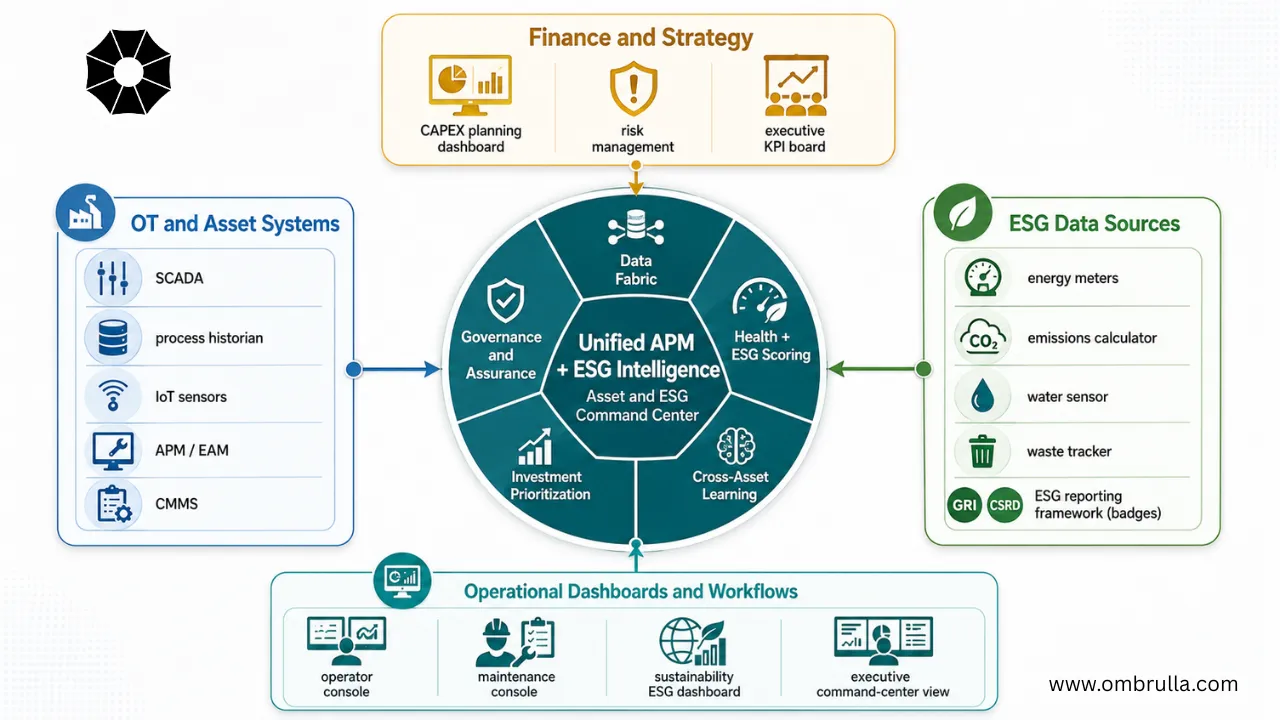
We conceptualize the unified platform as an Asset and ESG Command Center built on five interdependent pillars. Each pillar addresses a distinct functional requirement.
Pillar 1 - Data and Integration Fabric: Unified ingestion, modeling, and semantic harmonization of OT, IT, and ESG data from sensors, SCADA, historians, ERP, and ESG measurement systems.
Pillar 2 - Real-Time Asset Health and ESG Impact Scoring: Multi-dimensional health indices combining reliability risk, safety and compliance risk, and ESG intensity into a single actionable score per asset.
Pillar 3 - Cross-Asset and Cross-Site Learning: AI and ML models that learn from fleets of similar assets across sites, propagating performance and sustainability insights and enabling cross-asset benchmarking.
Pillar 4 - AI-Driven Investment and Intervention Prioritization: Decision engines for maintenance scheduling, retrofit selection, and replacement decisions that integrate ESG-adjusted value alongside financial and reliability criteria.
Pillar 5 - Governance, Compliance, and Assurance: Controls, audit-trail mechanisms, data lineage tracking, and anti-greenwashing safeguards that maintain the integrity and credibility of ESG and operational claims.
5. Data and Integration Layer: The OT/IT/ESG Fabric
5.1 Data Source Taxonomy
A unified APM–ESG platform ingests data from three categories of source. Asset and process data include condition monitoring streams covering vibration, temperature, current, and acoustics; equipment alarms and event logs; production rates and OEE calculations; and downtime records and CMMS work-order histories. ESG-related signals include electrical power consumption and fuel type; direct greenhouse gas emissions and their sources; water abstraction, treatment, and discharge volumes; waste stream weights and recycling rates; and safety incident reports and near-miss records. Contextual data include real-time and forecasted weather, physical climate risk indicators, and grid carbon intensity factors; regulatory emissions thresholds and carbon price signals; and energy tariff structures relevant to demand-response and load-shifting decisions.
5.2 Semantic Harmonization and the Digital Thread
To support cross-asset learning and ESG analytics, the data fabric must establish a consistent asset ontology defining the asset hierarchy, asset classes, criticality ratings, and geographic location metadata. It must map ESG metrics to specific assets, systems, and processes, for example attributing CO2e to a specific compressor or production line rather than reporting only at facility level. It must harmonize heterogeneous time series across different sampling rates, time zones, vendor data formats, and unit systems.
The resulting digital thread links ESG outcomes to their root causes in asset performance and operating modes. This lineage is essential both for operational decision-making, allowing engineers to identify which asset changes would most effectively reduce emissions or water use, and for regulatory compliance, providing the auditable evidence trail that CSRD and other frameworks require.
Table 1 classifies the principal data source categories with representative examples, integration challenges, and ESG relevance.
| Data Category | Representative Sources | Integration Challenge | ESG Relevance |
|---|---|---|---|
| Asset condition and performance | Vibration sensors, temperature RTDs, current clamps, CMMS work orders | Heterogeneous protocols (OPC-UA, Modbus, REST); time alignment across assets | Degradation drives energy intensity; maintenance events affect waste and safety |
| Energy and emissions | Smart meters, fuel flow meters, DCS energy tags, grid carbon factor APIs | Real-time vs. invoiced data reconciliation; emission factor currency | Direct Scope 1 and Scope 2 measurement; input to carbon footprint per asset |
| Water and waste | Flow meters, discharge permits, waste manifests, LIMS lab data | Manual data entry; low reporting frequency; unit inconsistency | Water stress risk; waste diversion rate; regulatory discharge compliance |
| Safety and social | Incident management systems, permit-to-work records, community complaint logs | Fragmented systems; classification inconsistency across sites | TRIR, LTIF metrics; social license to operate; governance risk indicators |
| Contextual and market | Weather APIs, grid carbon intensity services, carbon price feeds, regulatory databases | Data latency; jurisdiction-specific factors; frequent policy changes | Physical climate risk; transition risk pricing; dynamic ESG threshold setting |
6. Real-Time Asset Health Scoring with ESG Context
6.1 Multi-Dimensional Asset Health Indices
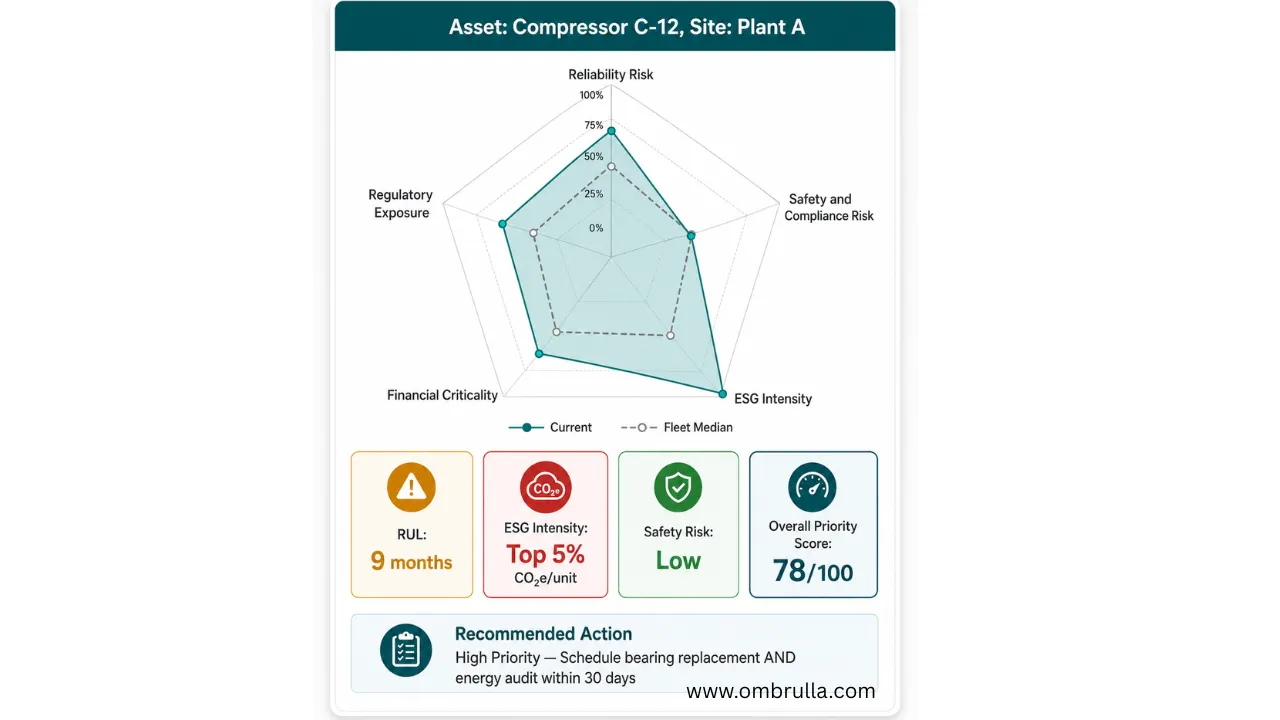
Traditional asset health indices combine condition monitoring signals, failure history, and criticality classification into a single score that supports maintenance prioritization. The unified platform extends this to a multi-dimensional ESG-aware health index with four components. Reliability risk quantifies the probability of failure and remaining useful life, drawing on predictive models trained on the asset's condition data. Safety and compliance risk measures the asset's proximity to safety operating limits, its incident history, and its compliance status relative to permit and regulatory thresholds. ESG intensity captures the asset's contribution to energy consumption per unit output, greenhouse gas emissions per unit, water use intensity, and waste generation rate relative to peers. Financial criticality encodes the revenue impact of an unplanned outage, replacement cost, and insurance or regulatory exposure.
The composite score, expressed schematically as a function of these four components with configurable weights, supports both at-a-glance prioritization and drill-down analysis. It can be rendered as a radar chart exposing the relative magnitude of each dimension, or as a single weighted value for ranking. Critically, the weighting can be dynamically adjusted as regulatory frameworks and corporate ESG targets evolve: tightening emissions limits increase the weight of ESG intensity, while an upcoming CSRD disclosure cycle may increase the weight of compliance risk for high-materiality assets.
6.2 Dynamic ESG Thresholds and Regulatory Signals
A distinctive feature of ESG-aware health scoring is the need for dynamically adjustable thresholds that respond to external signals. An increasing internal carbon price raises the cost-equivalent weighting of an asset's emissions intensity. An upcoming regulatory emissions reporting deadline increases the priority of assets that are major emitters and whose data quality is low. A physical climate risk event, such as a heat wave forecast, raises the resilience priority of cooling-dependent assets in affected regions. The platform must support parameterized threshold management that tracks these signals and recalibrates health scores in near real time without requiring manual re-configuration.
7. Cross-Asset and Cross-Site Learning
Unified APM platforms with ESG intelligence can exploit data from across an asset fleet to generate insights that no individual asset or site could produce in isolation. Three modes of cross-asset learning are particularly valuable.
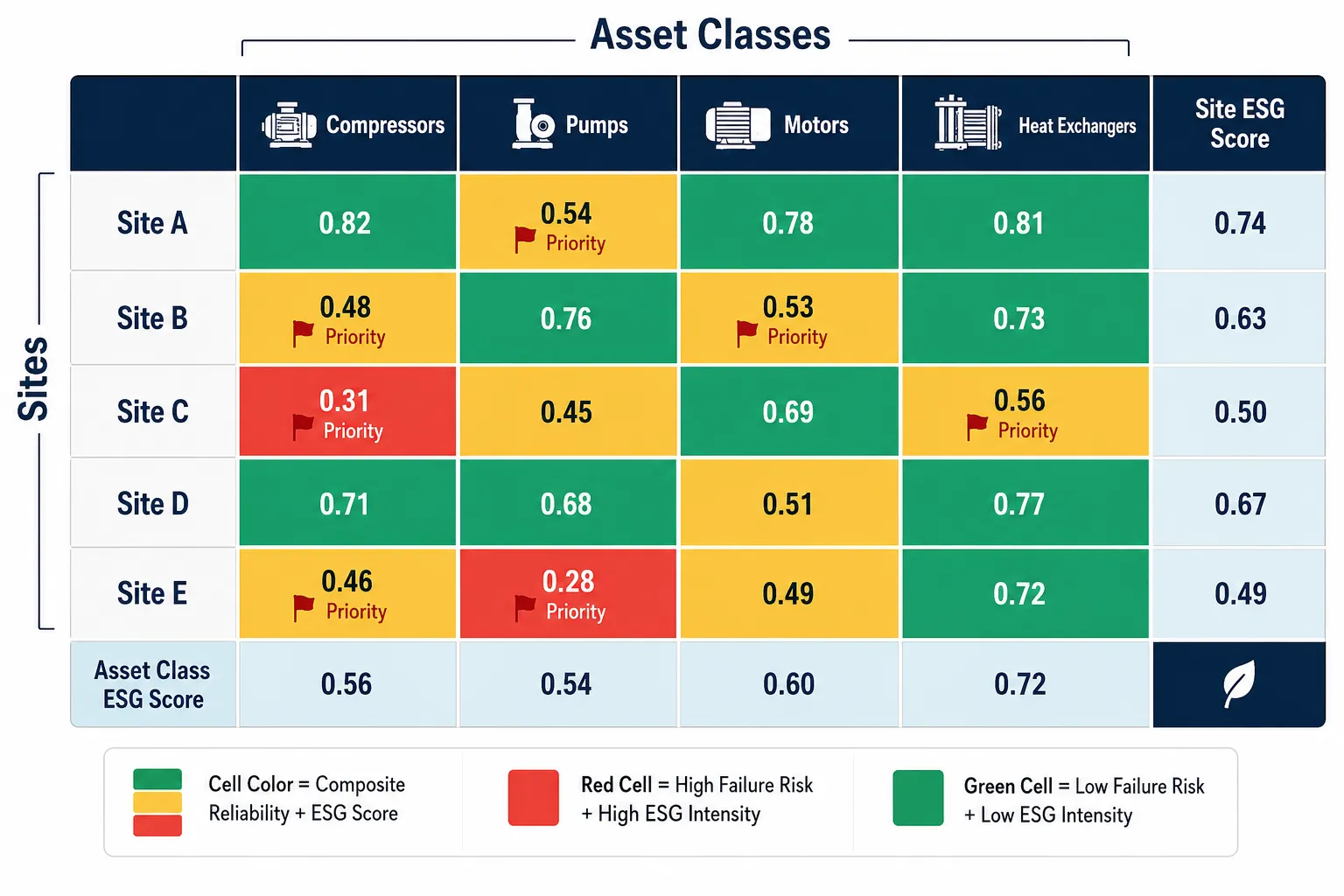
Fleet analytics compare similar asset classes, such as pumps, boilers, or compressors, across sites to identify outliers in both reliability performance and ESG intensity. An asset that consumes 20 percent more energy per unit of output than the fleet median, while showing similar mechanical health, is a strong candidate for operational tuning or efficiency retrofit. Transfer learning uses predictive models trained on data-rich, well-instrumented assets to bootstrap models for newer assets or lower-data-density installations, accelerating time to reliable prediction for the smaller part of the fleet. Cross-site benchmarking normalizes KPIs including OEE, emissions per ton, and energy per unit of output across geographically dispersed plants, accounting for local factors such as climate, grid carbon intensity, and raw material characteristics, to produce fair comparisons that inform both operational and investment decisions.
Cross-asset learning for sustainability enables assets that are both reliable and low-emission to serve as operational templates. Their setpoint configurations, maintenance frequencies, and operating patterns can be recommended to similar assets whose ESG performance lags, creating a flywheel effect in which best-practice propagation accelerates decarbonization across the fleet without requiring individual asset analysis for each site.
8. ESG Intelligence, Compliance, and Risk Management
8.1 ESG Reporting Embedded in APM
ESG disclosure frameworks including CSRD, GRI, and SASB increasingly demand auditable, asset-level evidence for metrics such as Scope 1 direct emissions, water intensity by facility and process, and waste diversion rate by material stream. Embedding ESG reporting within the APM platform achieves two objectives simultaneously. It provides direct linkage between ESG metrics and the specific asset operations and work orders that generated them, enabling attribution that disclosure frameworks require. It also makes visible over time how specific interventions, such as variable-speed drive upgrades, heat-recovery retrofits, or bearing replacement in a fouled pump, alter both performance and ESG outcomes, creating an evidence base for the efficacy of sustainability investments.
8.2 ESG Risk Typology in Asset Strategy
ESG risks can be classified under four types with distinct implications for asset management strategy. Transition risk arises from policy, market, and technology changes associated with decarbonization: carbon-intensive or regulation-incompatible assets must be flagged for early replacement or repurposing before they become stranded. Physical risk arises from climate hazards including flooding, extreme heat, and drought affecting asset performance and reliability: assets exposed to such hazards receive higher resilience priority in inspection and investment planning. Social and community risk affects assets with high community visibility, large local employment footprints, or historical incident records, requiring elevated safety margins and proactive stakeholder engagement programs. Governance risk covers inadequate data quality for ESG reporting, management accountability gaps, and the reputational and legal exposure associated with inaccurate or unverifiable ESG disclosures.
Table 2 maps the four ESG risk types to their asset management implications and the data signals used to operationalize each type within the unified platform.
| ESG Risk Type | Asset Management Implication | Operationalization in Unified Platform | Example Signal or Metric |
|---|---|---|---|
| Transition risk | Carbon-intensive or regulation-incompatible assets flagged for early retirement or repurposing | ESG intensity score weighted by internal carbon price; regulatory horizon tracker per asset class | CO2e per unit output vs. sector decarbonization pathway; asset useful life vs. net-zero target date |
| Physical climate risk | Climate-exposed assets receive higher resilience priority in inspection and CAPEX planning | Physical climate risk overlay on asset register using TCFD physical risk scenarios | Flood-zone classification; design temperature vs. climate projection; cooling-water availability under drought scenarios |
| Social and community risk | Elevated safety margins, monitoring frequency, and community engagement for high-visibility assets | Incident history and community complaint index integrated into safety and compliance risk dimension of health score | Total Recordable Incident Rate (TRIR); community complaint frequency; permit non-compliance history |
| Governance and reporting risk | Data quality and auditability gaps that expose the enterprise to disclosure inaccuracy risk | Data lineage tracking from sensor to disclosure; anomaly detection on ESG data streams; audit trail for score methodology | ESG data completeness rate; number of manual data entry override events; external audit findings |
Table 2. ESG risk typology and operationalization in unified APM platforms: risk types, asset management implications, operationalization strategies, and key metrics.
9. AI-Driven Investment Prioritization and Lifecycle Optimization
9.1 ESG-Adjusted Project Valuation
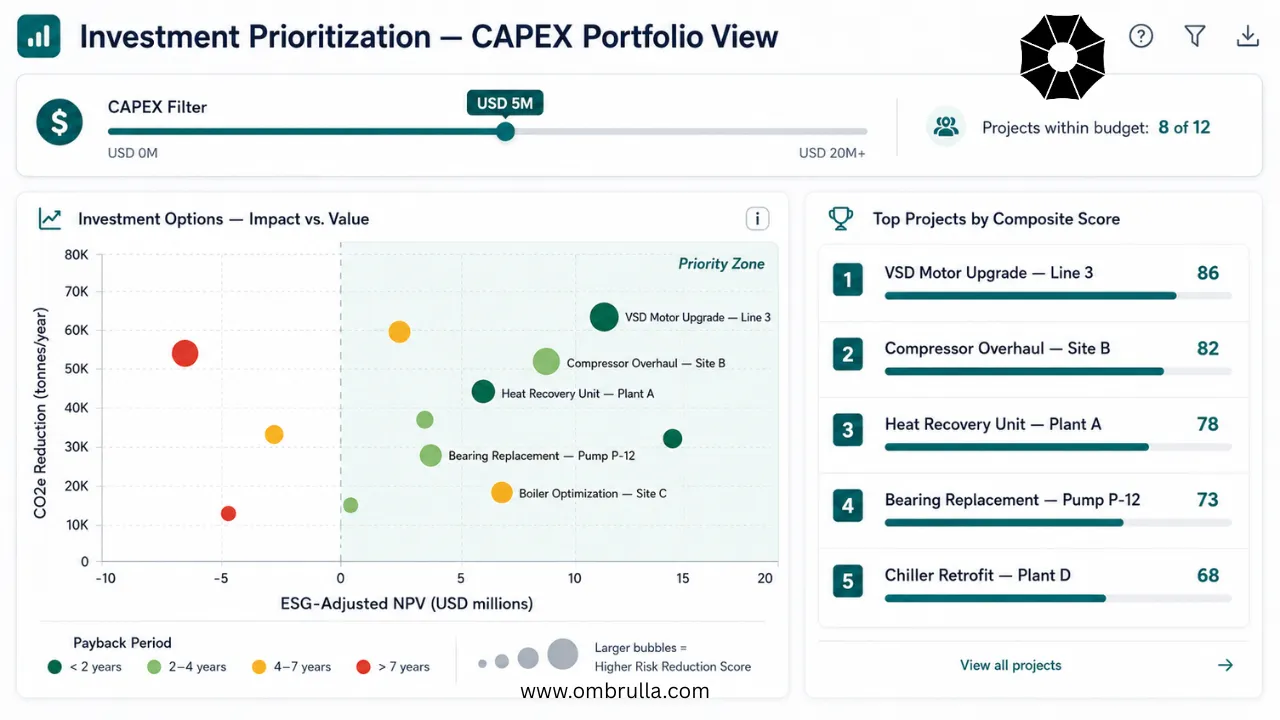
Traditional capital planning uses net present value (NPV), internal rate of return (IRR), and risk-adjusted return metrics to rank competing investment options. The integration of ESG criteria into asset investment decision-making requires extending these metrics to incorporate ESG-adjusted project valuation. An ESG-adjusted NPV calculation adds the financial present value of projected carbon savings at the applicable internal carbon price; incorporates energy cost savings as a direct financial benefit using projected tariff and fuel cost trajectories; applies regulatory compliance value, the expected cost reduction from avoided penalties, permit violations, and disclosure liabilities; and deducts any residual transition risk premium associated with continuing to operate a carbon-intensive asset beyond a decarbonization checkpoint.
9.2 Multi-Objective Scenario Analysis
Multi-objective optimization engines and what-if simulators, often implemented using digital twin environments, can evaluate portfolios of potential projects, comprising repairs, retrofits, and replacements, under budget, resource, and timeline constraints. These tools expose the Pareto frontier of achievable combinations of uptime improvement, cost reduction, and emissions reduction, allowing executives and asset managers to understand the trade-offs inherent in different CAPEX allocation strategies rather than being presented with a single recommended plan whose basis is opaque.
AI-driven investment prioritization dashboards synthesize these outputs into actionable ranked lists. Each project on the list carries a composite score reflecting its financial return, reliability improvement, and ESG outcome, along with a payback period, a confidence interval on the projected ESG improvement, and the data quality score underlying the projection.
10. Reference Architecture for Unified APM with ESG Intelligence
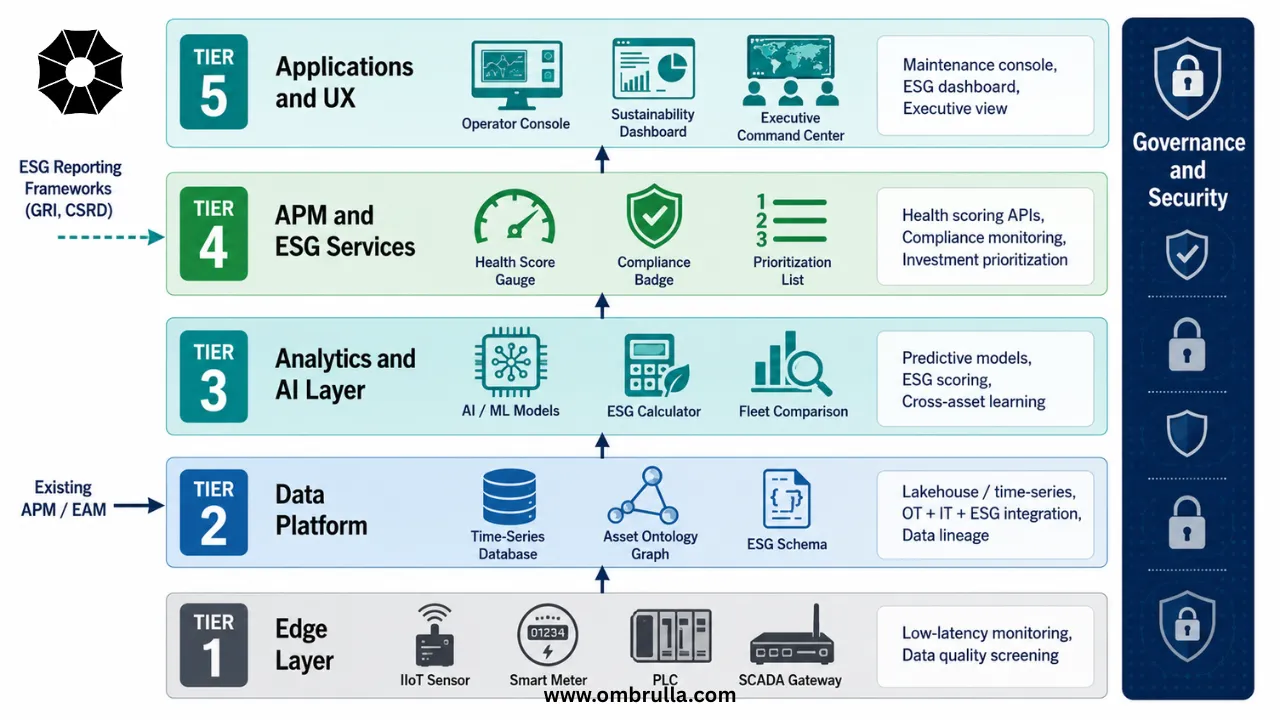
A six-tier reference architecture provides the technology blueprint for implementing the five-pillar conceptual framework described in Section 4.
Tier 1 - Edge Layer: data collection from sensors, PLCs, smart meters, and existing APM and SCADA systems; edge analytics for low-latency monitoring and data quality screening; secure transmission to the data platform tier.
Tier 2 - Data Platform: a lakehouse or time-series data platform integrating OT, IT, and ESG data with a harmonized asset ontology and ESG metric schema; data lineage tracking from sensor to disclosure; master data management for asset hierarchy and ESG factor databases.
Tier 3 - Analytics and AI Layer: predictive maintenance models, multi-dimensional ESG-aware asset health scoring engines, ESG analytics including emissions calculation and reporting, and cross-asset fleet learning models; model management, versioning, and drift monitoring.
Tier 4 - APM and ESG Intelligence Services: health and ESG scoring APIs; regulatory compliance monitoring services that track threshold breaches and disclosure obligations; investment prioritization engines running multi-objective optimization and scenario analysis; and cross-asset benchmarking services.
Tier 5 - Applications and User Experience: operator and maintenance engineer consoles for condition monitoring and work-order management; sustainability team dashboards for ESG KPI tracking and reporting; executive asset command-center views for portfolio-level decisions.
Tier 6 - Governance and Security: data access controls and role-based authorization across OT and ESG data; audit logs for model decisions, ESG assertions, and investment recommendations; external ESG audit support through data export and methodology documentation.
11. Governance, Assurance, and Change Management
11.1 Data Quality and Auditability
ESG reporting standards emphasize reliable, auditable data that can withstand external verification. A unified APM–ESG platform must implement sensor-to-disclosure data lineage that records the origin, transformation, and calculation methodology for every ESG metric used in a regulatory disclosure or investor report. This includes tracking which sensor readings were used, what emissions factors were applied, when the factors were last updated, and whether any manual adjustments or data gaps were filled by estimation. Automated data-quality alerts should flag implausible readings, reporting gaps, or sudden step-changes in ESG metrics that may indicate sensor failure or manipulation rather than genuine operational change.
11.2 Anti-Greenwashing Safeguards
If ESG metrics are poorly linked to actual asset performance, or if health scores can be manipulated by selective weighting, organizations face both reputational and regulatory risk from greenwashing accusations. Three safeguards are particularly important. Methodology transparency requires that every ESG-adjusted health score and every ESG-NPV calculation be accompanied by a documented, versioned methodology specification that can be reviewed by internal audit or external verifiers. Independent validation through periodic third-party audit of the platform's data pipelines, emissions calculation methods, and health score algorithms provides credibility that internal review alone cannot achieve. Anomaly detection on ESG data streams can flag systematic patterns that suggest over-reporting of positive outcomes, under-reporting of incidents, or inconsistency between operationally reported and externally disclosed figures.
11.3 Cross-Functional Adoption
Maintenance engineers, operations personnel, sustainability teams, and finance functions all have legitimate but distinct information needs and decision-making contexts. Successful unified platform adoption requires shared KPI definitions that all functions accept and use in their own workflows; role-appropriate user interfaces that present the right level of detail for each user type; training programs that build sufficient cross-functional literacy for maintenance engineers to understand ESG metrics and for sustainability professionals to understand asset health indicators; and executive sponsorship that sustains the organizational change required to move from siloed reporting cycles to integrated, real-time asset intelligence.
12. Case Study Templates
12.1 Energy-Intensive Manufacturing Plant
The objective is to manage multiple production lines equipped with energy-intensive rotating equipment, compressors, and heat-exchange systems under ambitious internal decarbonization targets. The unified platform provides real-time asset health and energy intensity KPIs per production line and per major asset, enabling ESG-aware maintenance prioritization that schedules efficiency-improvement interventions, such as variable-speed drive installations and insulation upgrades, alongside reliability-driven maintenance. Automated ESG reporting feeds energy and emissions data to both internal sustainability dashboards and external disclosure preparation workflows.
12.2 Transmission and Distribution Utility
The objective is to manage large populations of power infrastructure assets including transformers, overhead and underground lines, and substations under both grid reliability mandates and climate-resilience obligations. The unified platform extends conventional asset criticality scoring, traditionally based on failure risk and contribution to service reliability indices such as SAIDI and SAIFI, to incorporate ESG dimensions including grid losses per asset and flood or heat-wave exposure under physical climate scenarios. Investment prioritization balances grid-hardening for resilience against efficiency improvements that reduce line losses and system emissions, integrated with ESG disclosures on reliability, resilience, and decarbonization progress.
12.3 Renewable Energy Portfolio
The objective is to manage a geographically dispersed portfolio of wind turbines and solar arrays under high investor ESG scrutiny and availability-based revenue contracts. The unified platform provides fleet-wide health scoring and availability optimization using cross-asset learning to propagate best-practice maintenance intervals from high-performing assets to lower-performing equivalents. ESG intelligence covers lifecycle emissions, land-use biodiversity impact, and end-of-life component recyclability, addressing the full ESG scope that responsible investors increasingly evaluate. AI-driven investment prioritization supports decisions on repowering, battery integration, and predictive maintenance upgrade timing.
Table 3 summarizes the three case-study templates for structured comparison.
| Case Study | Industrial Context | Core Unified Platform Capability | Primary ESG Dimension Addressed |
|---|---|---|---|
| Energy-intensive manufacturing | Multiple production lines with high energy and emission intensity | Asset-level energy KPI tracking; ESG-aware retrofit prioritization; automated emissions reporting | Scope 1 and Scope 2 emissions reduction; decarbonization trajectory compliance |
| T&D utility | Large population of grid infrastructure assets; climate-resilience mandates | Reliability + ESG + physical climate risk integrated criticality; grid-hardening CAPEX prioritization | Physical climate resilience; grid efficiency and loss reduction; SAIDI/SAIFI + ESG disclosure |
| Renewable energy portfolio | Dispersed wind/solar assets; high investor ESG scrutiny | Fleet-wide health scoring via cross-asset learning; lifecycle ESG intelligence; repowering prioritization | Lifecycle emissions; biodiversity impact; end-of-life recyclability; ESG investor reporting |
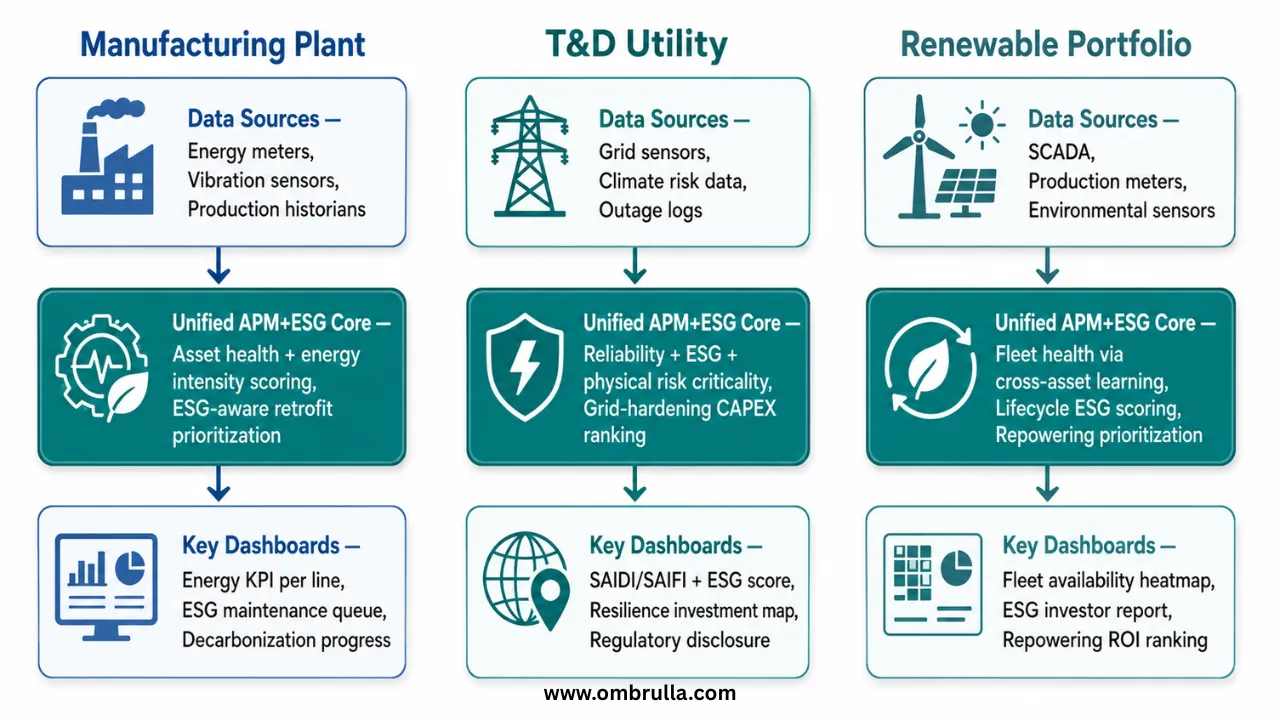
Figure 7. Three case-study mini-architecture diagrams showing data sources, unified platform core functions, and key dashboards for manufacturing, T&D utility, and renewable energy contexts.
13. Open Research Directions
Five research directions are particularly important for advancing unified APM platforms with ESG intelligence.
- -Standardized KPIs and benchmarks: the field currently lacks consensus frameworks that jointly evaluate asset reliability, cost efficiency, and ESG performance on comparable terms across industries and geographies, limiting the ability to validate improvement claims, benchmark against peers, or transfer lessons between sectors.
- -Multi-objective optimization with explainable trade-offs: optimization algorithms that can simultaneously balance cost, availability, and ESG goals are technically feasible but rarely deployed in practice, partly because their outputs are difficult for non-technical decision-makers to interpret and challenge; research in explainable multi-objective optimization is needed to bridge this gap.
- -Cross-asset learning under data and context heterogeneity: effective transfer learning and domain adaptation for assets spanning different geographies, climates, maintenance regimes, and vintage years remains an open problem, particularly for ESG metrics where local context, including grid carbon intensity and water stress classification, materially affects the meaning of observed values.
- -ESG-linked digital twins: extending digital twin environments to simulate ESG outcomes alongside mechanical and process behavior under different operating and maintenance policies would enable what-if ESG analysis at the asset level, accelerating the identification of operational changes that reduce emissions or water use without compromising reliability.
- -Assurance and anti-greenwashing mechanisms: methods for independent validation of ESG data pipelines and ESG-adjusted health scores, anomaly detection in ESG reporting streams, and control frameworks for ESG assertion governance are needed to establish the credibility that regulatory and investor audiences increasingly demand.
14. Conclusion
Unified APM platforms with ESG intelligence transform asset performance management from a reliability and maintenance silo into a strategic command center for resilience, compliance, and lifecycle optimization. By integrating real-time asset condition data, predictive maintenance models, and ESG metrics within a single five-pillar architecture, organizations can generate ESG-aware asset health scores, exploit cross-fleet learning to propagate best practices, and allocate capital through AI-driven investment prioritization that is simultaneously accountable to financial, reliability, and sustainability objectives.
The convergence of APM, ESG reporting, and operational sustainability platforms observed in the current market reflects a structural shift in how industrial enterprises are evaluated by investors, regulated by governments, and held accountable by communities. The architecture proposed in this paper provides a blueprint for enterprises that wish to lead this convergence rather than respond to it reactively.
For practitioners, a four-step implementation roadmap is recommended: establishing a robust OT/IT/ESG data fabric with clear asset and ESG semantic alignment; extending existing APM platforms with ESG-aware health scoring and sustainability KPIs; piloting AI-driven investment prioritization and scenario analysis for selected high-impact asset classes; and building governance and assurance mechanisms that make ESG claims auditable, defensible, and trusted by internal and external stakeholders. Pursued systematically, unified APM with ESG intelligence enables a shift from reactive sustainability reporting and isolated reliability projects to proactive, portfolio-level asset strategies that drive durable competitive advantage, regulatory compliance, and long-term value creation.
References
- EY. (2025). Why Asset Management Is the Next Frontier for Sustainability
- Ombrulla. (2025). Operational Sustainability Solutions – AI-Powered ESG Platform[ombrulla.com]
- IBM. (2025). Maximo Sustainability in Asset Management[ibm.com]
- IBM. (2024). IBM Named an Enterprise Asset Management Leader – Green Quadrant: EAM Software 2024[ibm.com/newsroom]
- IBM / ESG Today. (2024). IBM Launches Renewable Energy Asset Management Solution
- Progressive TSL / Hexagon. (2024). Performance-Based Asset Management for Long-Term Business Value and Sustainability
- Colson, C., and Macneil, R. (2021). Asset Management Enabling Environment, Social and Governance (ESG) Principles[reliabilityconnect.com]
- Sustainability Magazine. (2025). How Can Asset Management Boost Sustainability Strategy?
- Concentrix. (2024). Driving Sustainable Manufacturing with AI-Powered ESG Intelligence – Case Study
- Greenovative. (2025). AI in Industrial Digitalization – Real-Time ESG and Sustainability Platform
- AMCS Group. (2025). Complete ESG Management Software[amcsgroup.com]
- ESG Reporting Intelligence. (2024). ESG Asset Management Platform Launch
- ESGIntel. (2025). Enterprise ESG Intelligence Platform – AI-Powered ESG Analytics
- PwC. (2024). ESG Considerations for Asset and Wealth Managers[pwc.com]
- Oracle. (2024). ESG Reporting and Enterprise Performance Management – Oracle Cloud EPM for Sustainability[oracle.com/sustainability]
- OROCON. (2024). ESG in Manufacturing and Industrial Operations
- AssetFuture. (2022). 5-Step Guide to Sustainability in Asset Management
- JPMorgan; KPMG; Lazard. (2020–2024). Various ESG Integration and Sustainable Investing Policy Papers