

What Does It Mean for a Business to Think and Act in Real Time?
A real-time business is one that continuously senses what is happening across its assets, processes, people, and environment; analyzes that data as it is generated rather than after the fact; and triggers a decision or action, automated or human-approved, within seconds to minutes instead of days or weeks.
In an industrial context, "thinking and acting in real time" rests on three connected capabilities:
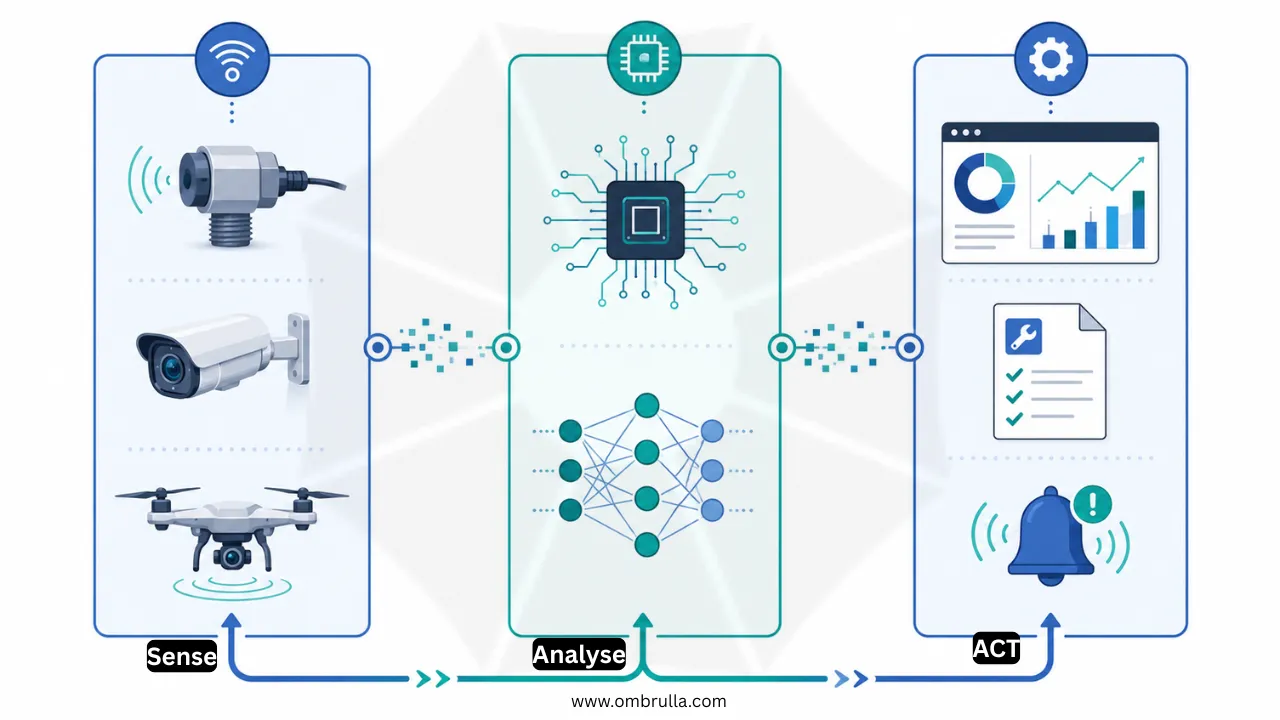
- - Continuous SensingIoT sensors, cameras, drones, and wearables capture data on vibration, temperature, pressure, gas concentration, location, and visual condition around the clock.
- - Real-Time Analysis (Edge Intelligence)Instead of routing every signal to a distant data center and waiting for a batch report, AI models running at or near the source (on the plant floor, on a rig, on a vehicle) process data the moment it's generated. This is often called edge intelligence or edge AI, and it is what makes sub-second detection possible.
- - Connected, Closed-Loop ActionThe insight doesn't stop at a dashboard. It triggers an alert, a work order, a line adjustment, or, with agentic AI, a recommended (or automatically executed, with approval) response.
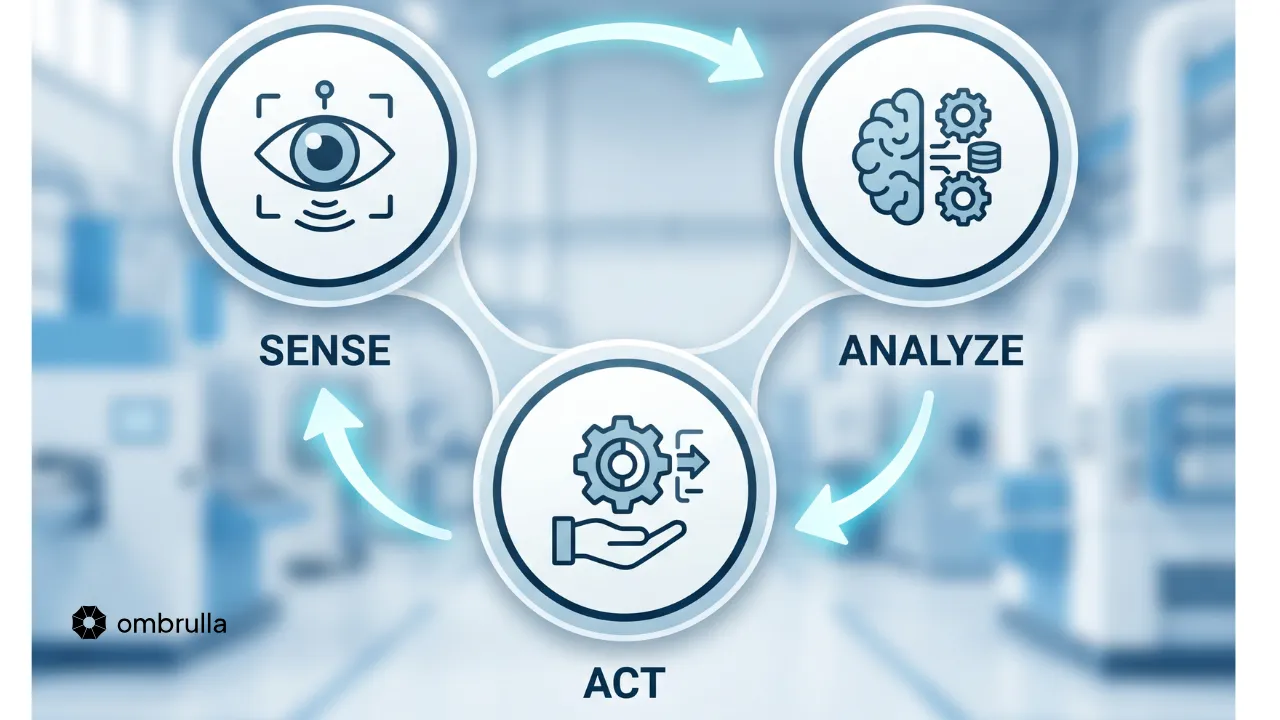
Together, these capabilities form what researchers call a cyber-physical system (CPS): a feedback loop where physical equipment and processes are continuously monitored and, increasingly, controlled by digital systems that sense, learn, and adapt. In 2026, this convergence of the Industrial Internet of Things (IIoT), edge computing, computer vision, and AI is reshaping how oil and gas, manufacturing, construction, and chemical companies design, operate, and improve their operations.
The opposite of a real-time business is a lagging organization, one where information about a problem arrives well after the problem has already caused damage: a failed pump, a batch of defective parts, a near-miss that wasn't logged until the next shift handover, or an energy spike that wasn't visible until the monthly utility bill arrived.
The Three Pillars of a Real-Time Industrial Enterprise
Building real-time capability doesn't require replacing your entire technology stack. It requires three layers working together, each of which can often be added incrementally on top of existing systems.
Pillar 1: Continuous Sensing - Eyes and Ears Across Operations
The foundation of any real-time system is data capture at the point of activity. This includes:
- - IoT sensors measuring vibration, temperature, pressure, flow, and power on rotating equipment, pumps, compressors, and pipelines
- - Cameras, drones, rovers, and mobile devices capturing visual data for inspection, on production lines, in tanks, on towers, underwater on ship hulls, or across construction sites
- - Real-Time Location System (RTLS) tags using UWB, BLE, GPS, or LoRaWAN to track the position and movement of people, vehicles, and mobile assets
- - Gas detectors, environmental sensors, and PPE-integrated wearables for health, safety, and environmental monitoring
A common mistake is assuming this layer requires a complete sensor overhaul. In most deployments, existing PLCs, SCADA systems, and historians already hold a substantial amount of usable data, the gap is in connecting and contextualizing it, not necessarily generating more of it.
Pillar 2: Edge + AI Analysis - Turning Data Into Insight Instantly
Raw sensor data is not insight. The second pillar applies machine learning and computer vision to that data, and increasingly does so at the edge, meaning on local servers, gateways, or embedded devices close to the equipment, rather than solely in a centralized cloud.
This matters for three reasons:
- - Latency, Some decisions (stopping a line, triggering a safety alarm) need to happen in under a second. Round-tripping data to a distant cloud and back is too slow.
- - Bandwidth and connectivity, Remote sites (offshore platforms, pipelines, rural construction sites) often have limited or intermittent connectivity. Edge processing keeps critical detection running locally.
- - Fleet-level learning, While individual sites benefit from local, sub-second analysis, aggregating anonymized patterns in the cloud allows models to improve across an entire fleet of assets or sites, so a failure pattern detected at one plant strengthens detection at every other plant.
Pillar 3: Connected Action - Closing the Loop
The final pillar is where most "monitoring" projects fall short, and where real-time platforms differentiate themselves. Detecting an anomaly is only valuable if it leads to action, and the action needs to reach the right person, system, or automated process without delay.
This typically means:
- - Automated alerts routed to the right role (maintenance technician, shift supervisor, EHS manager)
- - Auto-generated work orders pushed into existing CMMS/EAM systems
- - Risk-scored recommendations that an agentic AI system can present for one-click approval, or, for well-understood, low-risk scenarios, execute automatically under defined policy rules
- - Dashboards that give plant managers and executives a single, real-time view of operational status across multiple sites
When these three pillars work together, an organization moves from "we have a lot of data" to "we know what's happening right now, what's likely to happen next, and what to do about it."
From Reactive to Prescriptive: The Maintenance Evolution
Maintenance strategy is one of the clearest illustrations of what "real-time" means in practice, and it's one of the highest-impact areas for senior leaders evaluating AI and IoT investments. There are four recognizable stages.
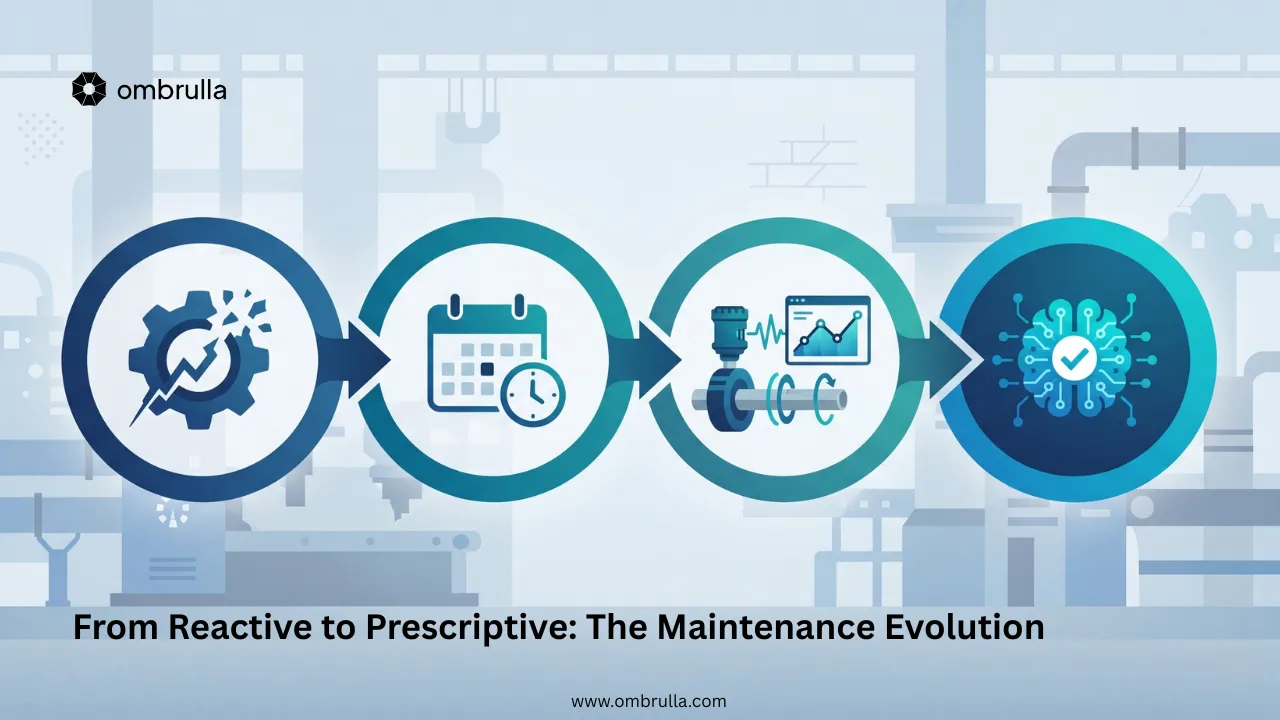
| Maintenance Approach | How It Works | Typical Trigger | Business Impact | Real-Time Capability |
|---|---|---|---|---|
| Reactive | Repair after a failure occurs | Equipment breakdown | Highest cost; unplanned downtime; emergency parts and labor; safety exposure | None |
| Preventive | Service on a fixed schedule (time or usage-based) | Calendar interval or run-hours | Moderate cost; some servicing is unnecessary; some failures still occur between intervals | Low |
| Predictive (PdM) | AI/ML models analyze sensor data against learned baselines | Detected anomaly or forecasted Remaining Useful Life (RUL) | Reduces unplanned downtime by roughly 30–50% in the first year; cuts unnecessary preventive work by roughly 10–25% | High |
| Prescriptive | AI evaluates the anomaly, scores the risk, and recommends, or executes, the response | Risk-scored AI decision, often via agentic AI | Fastest response (minutes instead of hours); consistent execution across sites; audit-ready evidence | Highest |
How This Looks in Practice: A platform such as Ombrulla's PETRAN, an AI- and IoT-enabled Asset Performance Management (APM) system, ingests sensor data from pumps, compressors, motors, and generators, learns what "normal" looks like for each asset, and flags developing faults weeks or months ahead of failure. Instead of servicing equipment on a fixed calendar regardless of its actual condition, maintenance teams act on the asset's real condition, extending component life, consolidating work orders, and reducing both reactive breakdowns and unnecessary preventive visits.
The shift from preventive to predictive and prescriptive maintenance is not an all-or-nothing change. Most organizations run a hybrid model: critical, high-risk assets move to predictive/prescriptive monitoring first, while lower-criticality equipment remains on preventive schedules until the program matures.
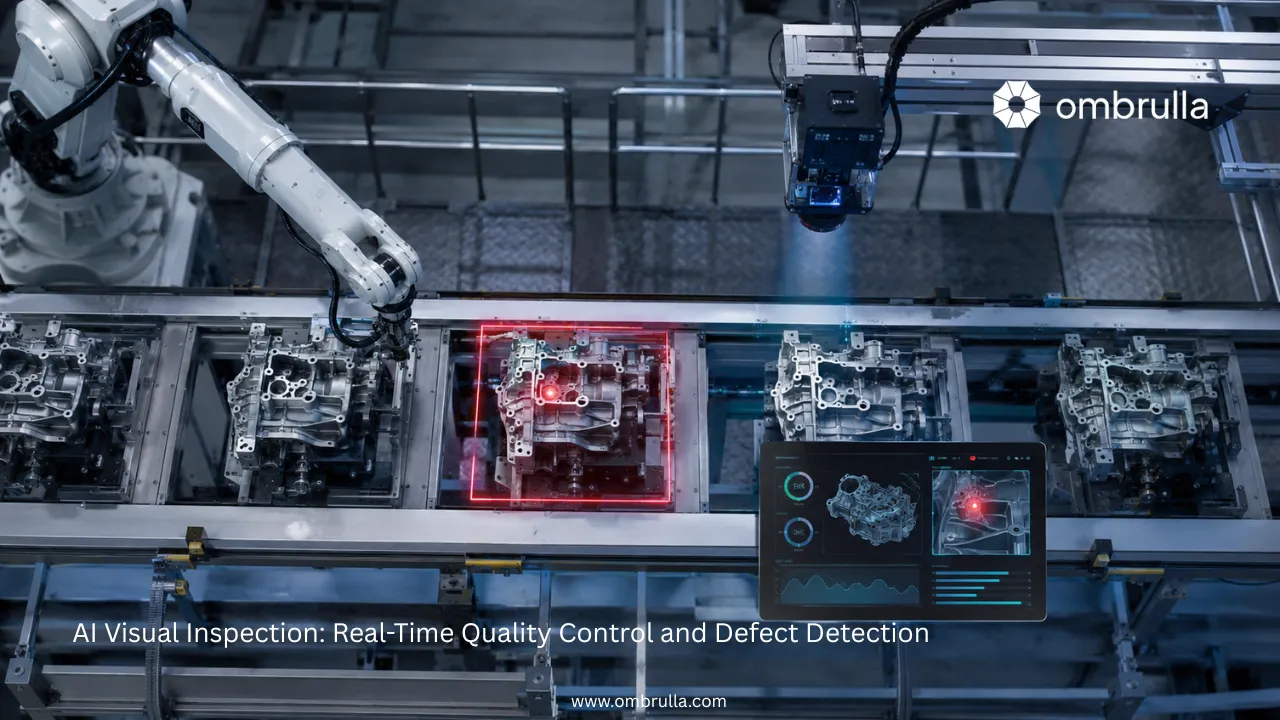
AI Visual Inspection: Real-Time Quality Control and Defect Detection
What Is AI Visual Inspection?
AI visual inspection uses high-resolution cameras, sensors, drones, and computer vision models to examine products, materials, welds, pipelines, and structures, identifying defects, anomalies, and quality deviations as they occur, rather than at a downstream checkpoint or during a periodic manual inspection.
Manual visual inspection has three structural limitations: it is slow relative to modern production speeds, it is inconsistent (fatigue, lighting, experience level all affect results), and it often happens too late, after a defective part has already moved several stations down the line, or after a structural issue has progressed for months between scheduled inspections.
How It Works
A platform like Ombrulla's TRITVA deploys AI-powered visual inspection across multiple capture points: fixed cameras on production lines, drones for aerial and underwater inspection, rovers for confined or hazardous spaces, and even mobile phones for field technicians. Computer vision and deep learning models trained on real-world defect data identify:
- - Surface defects (cracks, corrosion, scratches, discoloration)
- - Dimensional and assembly errors (misalignment, missing components, incorrect torque marks)
- - Packaging and labeling issues
- - Structural anomalies on pipelines, storage tanks, ship hulls, and towers
A Practical Example
Consider a smart factory producing machine-tooled metal parts. An AI visual inspection system detects microscopic cracks in a component before it reaches packaging. Instead of stopping there, the system feeds this finding into a digital twin, a virtual replica of the part-which simulates how that crack would behave under operating stress. The result: the defective part is flagged and removed before it ships, and the same defect pattern is automatically checked against the rest of the batch and shared across the production network so other plants can watch for the same issue.
In offshore and infrastructure-heavy industries, the same approach applies to underwater ship hull inspections. AI analyzes drone footage, flags areas of concern (corrosion, hull damage, marine growth affecting structural integrity), and generates a structured report, reducing the time, cost, and risk associated with traditional diver-based inspections.
Why It Matters for Senior Leaders
AI visual inspection directly affects three numbers executives track closely: defect escape rate (how many defects reach the customer), scrap and rework cost, and inspection labor cost. Organizations adopting AI visual inspection commonly report meaningful reductions in customer-reported defects and material waste, alongside near-instant detection that keeps pace with high-speed production, with measurable payback often achieved within the first year.
Asset Performance Management (APM): The Real-Time Command Center
What Is Asset Performance Management?
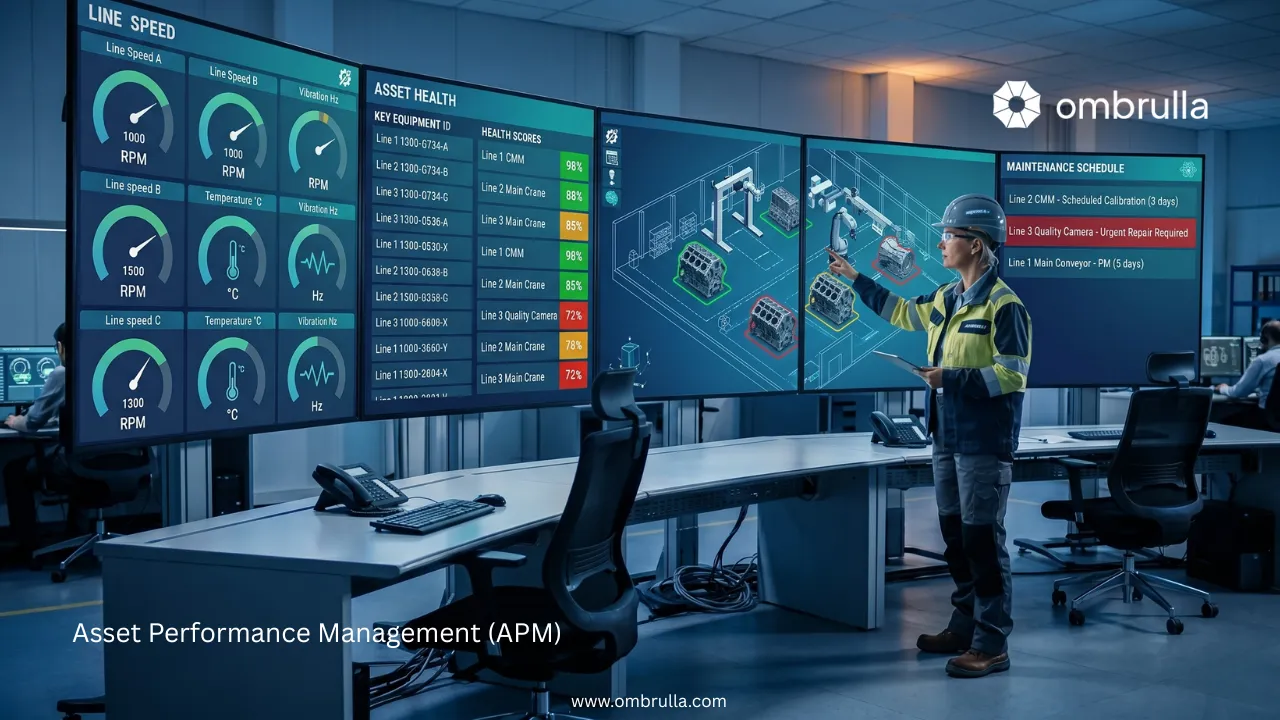
Asset Performance Management (APM) is a category of AI- and IoT-enabled software that unifies data from sensors, cameras, PLCs, SCADA systems, and enterprise maintenance platforms (CMMS/EAM) into a single, real-time view of asset health across an operation, and uses that view to predict failures, prioritize maintenance, and document performance.
Where predictive maintenance is the capability, APM is the platform, the system of record that turns scattered signals into a coherent operational picture for plant managers, reliability engineers, and executives alike.
Core Capabilities of a Modern APM Platform
- - Failure prediction, Machine learning models compare live asset behavior against learned baselines and historical failure patterns to flag developing issues
- - Remaining Useful Life (RUL) estimation, Instead of a binary “working / not working” status, APM platforms estimate how much operating life remains before intervention is needed
- - Unified data fabric, Sensor data, vision-based defect intelligence, and operational data from historians and CMMS/EAM systems are brought into one model
- - Guided, risk-scored work orders, Recommendations are evidence-backed, prioritized by risk, and continuously refined using technician feedback
- - Cross-site benchmarking, Asset health, MTBF (Mean Time Between Failures), MTTR (Mean Time to Repair), OEE (Overall Equipment Effectiveness), and avoided-downtime metrics can be compared across plants or sites
How This Plays Out Operationally
A platform such as PETRAN connects wired and wireless sensors that stream vibration, temperature, power, pressure, and vision data to the edge for instant anomaly screening, then to the cloud for fleet-wide context. When PETRAN's models detect that a compressor or generator is trending toward a known failure mode, it doesn't just send an alert, it can generate a guided work order in the existing CMMS, prioritized by the estimated risk and urgency, with the supporting evidence attached for the technician.
Crucially, this closes the loop between quality and maintenance. Visual inspection data from a platform like TRITVA can feed directly into PETRAN, so that emerging defect patterns on the production line, which often precede a sensor-detectable anomaly, are factored into asset health scoring before a vibration or temperature threshold is even breached.
What Senior Leaders Should Expect
A well-implemented APM program typically targets:
- - 30–50% reduction in unplanned downtime in the first year
- - 10–25% reduction in unnecessary preventive maintenance costs
- - 2–4 percentage point improvement in OEE
- - Production value realized within 2–4 weeks of hardware installation, when pre-built integrations and edge auto-discovery are used
These figures vary by asset criticality, data quality, and organizational readiness, but they represent realistic, commonly cited benchmarks for mature predictive maintenance programs in manufacturing, oil and gas, and utilities.
Connected Worker Safety: Real-Time Location Systems (RTLS)
What Is RTLS, and Why Does It Matter?
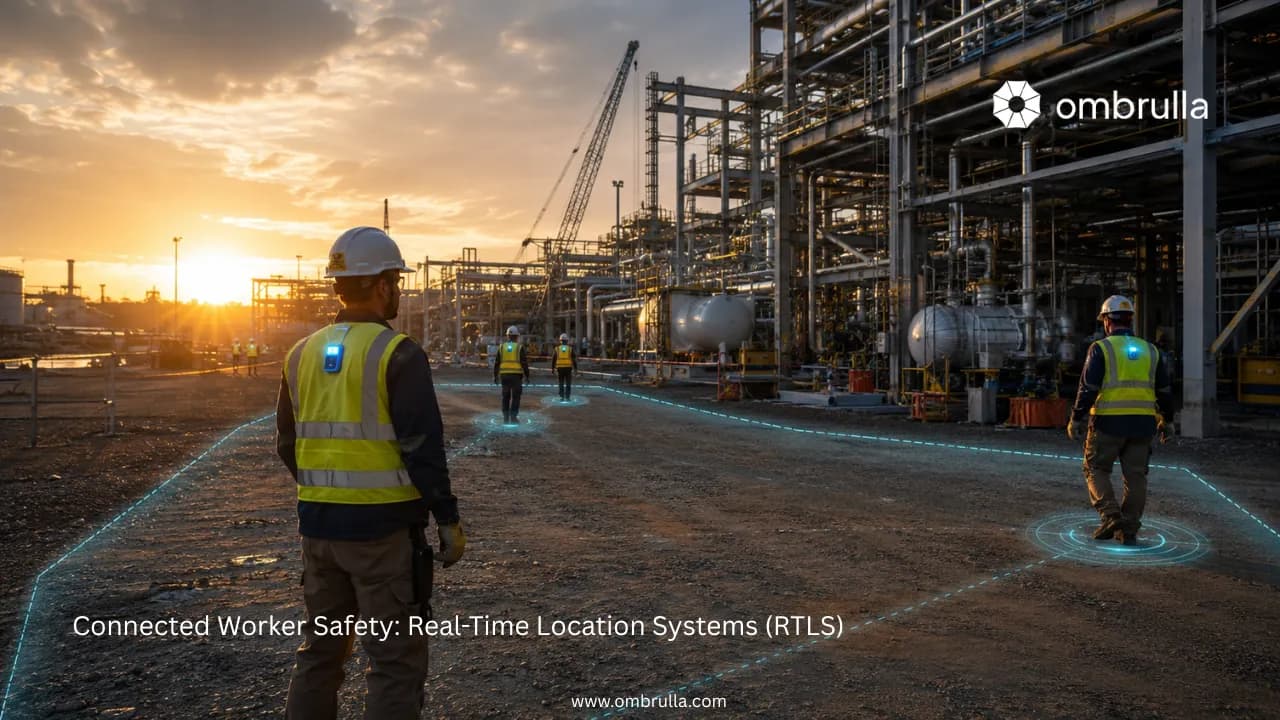
A Real-Time Location System (RTLS) uses a combination of wireless technologies-UWB (Ultra-Wideband), BLE (Bluetooth Low Energy), GPS, and LoRaWAN-to track the location and movement of people, vehicles, and equipment across a site, indoors and outdoors, with seamless handoff between zones.
In high-risk operations-oil and gas facilities, chemical plants, construction sites, and large manufacturing campuses-safety has traditionally relied on clipboards, sign-in sheets, and periodic supervisor checks. These methods cannot answer, in real time, questions like:
- - Is anyone currently inside a confined space or a permit-controlled zone without an active permit?
- - Has a worker been stationary in a hazardous area for an unusual length of time (a possible fall or medical event)?
- - During an emergency, where is everyone, and has everyone reached the muster point?
- - Is a worker approaching a zone with elevated gas readings or moving machinery?
How AI + RTLS Changes the Picture
A platform such as Ombrulla's PETRAN-powered RTLS solution unifies location data, motion sensors, and environmental readings (such as gas detection) into a single safety layer. Rather than producing more raw data for someone to review later, the system converts location, motion, and gas data into timely alerts and audit-ready evidence:
- - Location-verified permits, Work permits are tied to a worker's actual location, so a permit can be automatically validated (or flagged) based on real-time position
- - Near-miss capture, Unusual movement patterns (sudden stops, falls, prolonged immobility) trigger alerts and are logged for review
- - Emergency muster, During an evacuation, a live command-center view shows who has reached the muster point and who hasn't, critical for both safety and regulatory reporting
- - Geofencing and proximity alerts, Workers approaching hazardous zones, moving vehicles, or energized equipment receive real-time warnings
- - Role-based dashboards, Leading indicators (not just lagging ones like incident counts) help safety leaders target corrective actions before incidents occur, supporting TRIR (Total Recordable Incident Rate) improvement
Deployment Considerations
RTLS deployments are typically connectivity-layered: UWB or BLE for high-precision indoor tracking, GPS for outdoor areas, and mesh networking, LTE-M/5G, or satellite fallback for remote sites. Edge processing supports sub-second alerts with supervisor escalation, while the broader system integrates with HRIS, LMS, and CMMS platforms to tie location data to training records, certifications, and maintenance permits.
For senior leaders, the business case for RTLS-based safety extends beyond compliance. Real-time tracking and faster incident response reduce medical, insurance, and downtime costs; location-verified permits and digital audit trails simplify both internal and external audits; and a documented, continuously improving safety program supports ESG reporting and stakeholder confidence.
Digital Twins and Agentic AI: Simulating Before You Act
What Is a Digital Twin?
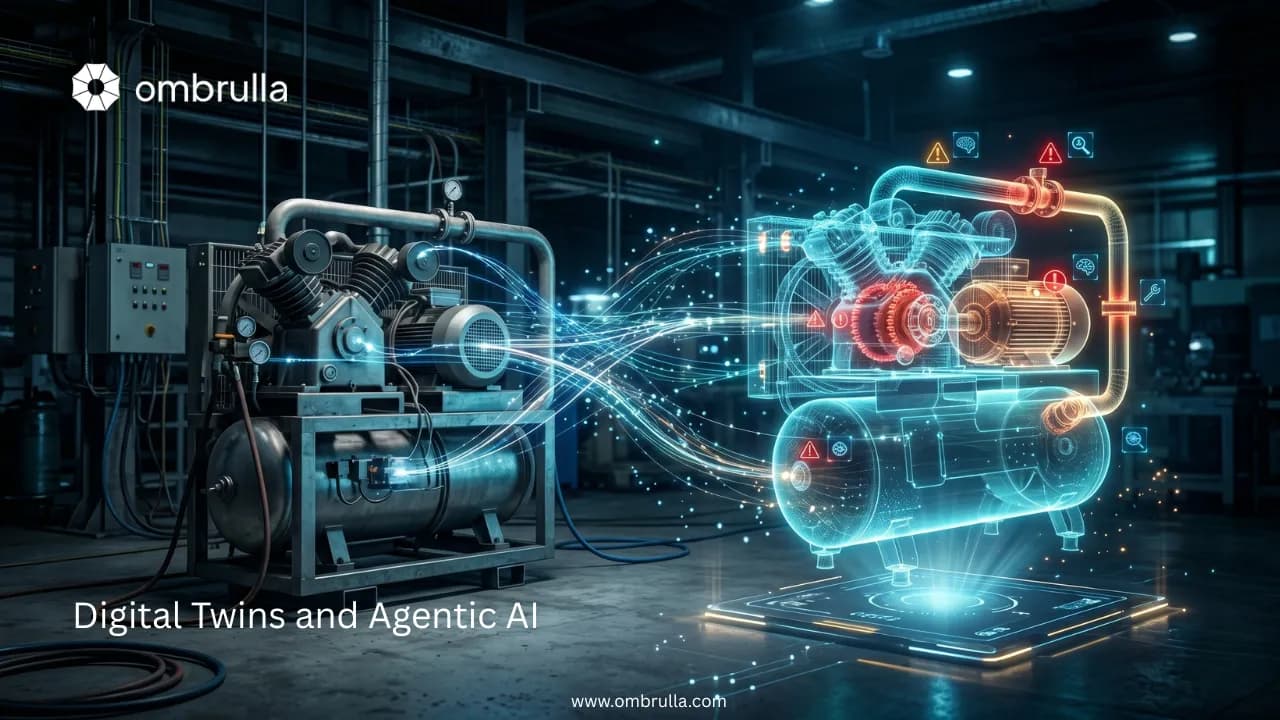
A digital twin is a real-time virtual replica of a physical asset, process, or system, continuously updated with live sensor data, inspection results, and operational history. Unlike a static 3D model or design drawing, a digital twin reflects the current condition of the asset and can be used to simulate "what if" scenarios before committing to a real-world action.
What Is Agentic AI?
Agentic AI refers to AI systems capable of carrying out multi-step workflows, evaluating a situation, considering options against defined rules, recommending (or with approval, executing) a course of action, and monitoring the outcome. The key distinction from traditional automation is that agentic AI can reason across multiple data sources and steps, not just trigger a single fixed rule.
Why These Two Technologies Are Often Discussed Together
Digital twins provide the context, a continuously updated model of how an asset or process behaves. Agentic AI provides the decision logic, what to do when that model indicates a developing issue. Together, they enable a "simulate before you act" approach to industrial decision-making.
Illustrative Example: In an electronics manufacturing plant, an AI system notices rising defect rates in a batch of circuit boards. Rather than simply alerting a supervisor, an agentic AI system:
- - Identifies the likely root cause (a drift in a soldering robot’s calibration)
- - Recommends slowing the affected line by a specific percentage to reduce defect propagation
- - Dispatches a maintenance crew to recalibrate the equipment
- - Runs a defect-impact simulation using the digital twin to estimate the cost of inaction versus the cost of the recommended slowdown
- - Presents this complete plan to a human supervisor for one-click approval, and, once approved, executes it automatically
This kind of workflow shortens reaction time from hours to minutes, reduces the chance of human oversight errors, and, importantly, keeps a human decision-maker in the loop for consequential actions while automating the analysis and coordination that would otherwise take significant time.
Where This Is Headed
Natural language interfaces are increasingly layered on top of digital twins and agentic AI systems, allowing engineers and operators to ask questions ("Which compressors are at elevated risk this week?") or request reports in plain language, reducing reliance on dashboards and spreadsheets and making advanced AI capability accessible without specialized data science skills.
Operational Sustainability: Real-Time ESG and Energy Optimization
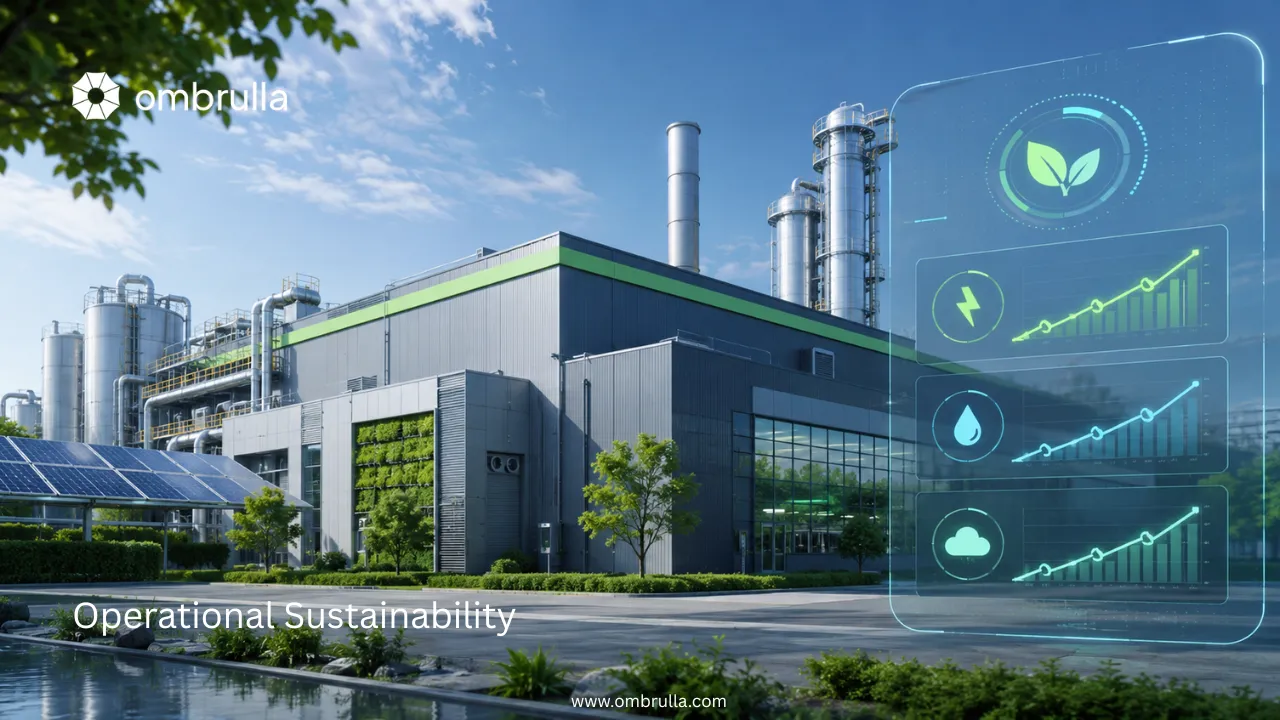
Sustainability and operational performance are often treated as competing priorities. In practice, the same real-time data layer that reduces downtime and improves safety also generates the data needed for credible ESG and energy reporting, and increasingly, for automated optimization.
What "Operational Sustainability" Looks Like in Practice
A platform such as Ombrulla's operational sustainability solution captures real-time data across utilities, processes, and assets, then:
- - Detects waste anomalies, Identifying when energy, water, or material consumption deviates from expected baselines for a given production rate
- - Automates setpoint control, Continuously optimizing equipment setpoints to reduce kWh, m³, and tonnes of CO₂e consumed per unit produced, without compromising throughput or quality
- - Automates GHG accounting, Producing audit-ready evidence for internal sustainability reporting and external disclosure requirements
- - Standardizes best practice across sites, Replicating successful energy or water-saving configurations from one plant to others in weeks rather than quarters
Realistic Benchmarks
Well-run operational sustainability programs commonly achieve:
- - Roughly 10–15% reduction in site energy use and CO₂e per unit within the first 12–18 months, normalized for weather, utilization, and product mix
- - Roughly 30–36% reduction in unplanned downtime through the same predictive maintenance and condition-based workflows that underpin sustainability gains, demonstrating that efficiency and sustainability are linked, not opposed, objectives
Why Senior Leaders Should Care Now
ESG reporting requirements are tightening across jurisdictions, and many large customers now require suppliers to demonstrate emissions data with auditable evidence, not estimates. A real-time data layer that already exists for safety and asset performance can, with the right platform, be extended to produce this evidence as a byproduct of normal operations, rather than as a separate, manual reporting exercise.
Building the Real-Time Enterprise: How Ombrulla Supports Industrial Leaders
Ombrulla is a global provider of AI- and IoT-powered solutions designed specifically for industrial enterprises, covering the full asset lifecycle from real-time condition monitoring and predictive failure prevention to autonomous visual inspection, connected worker safety, and agentic decision-making.
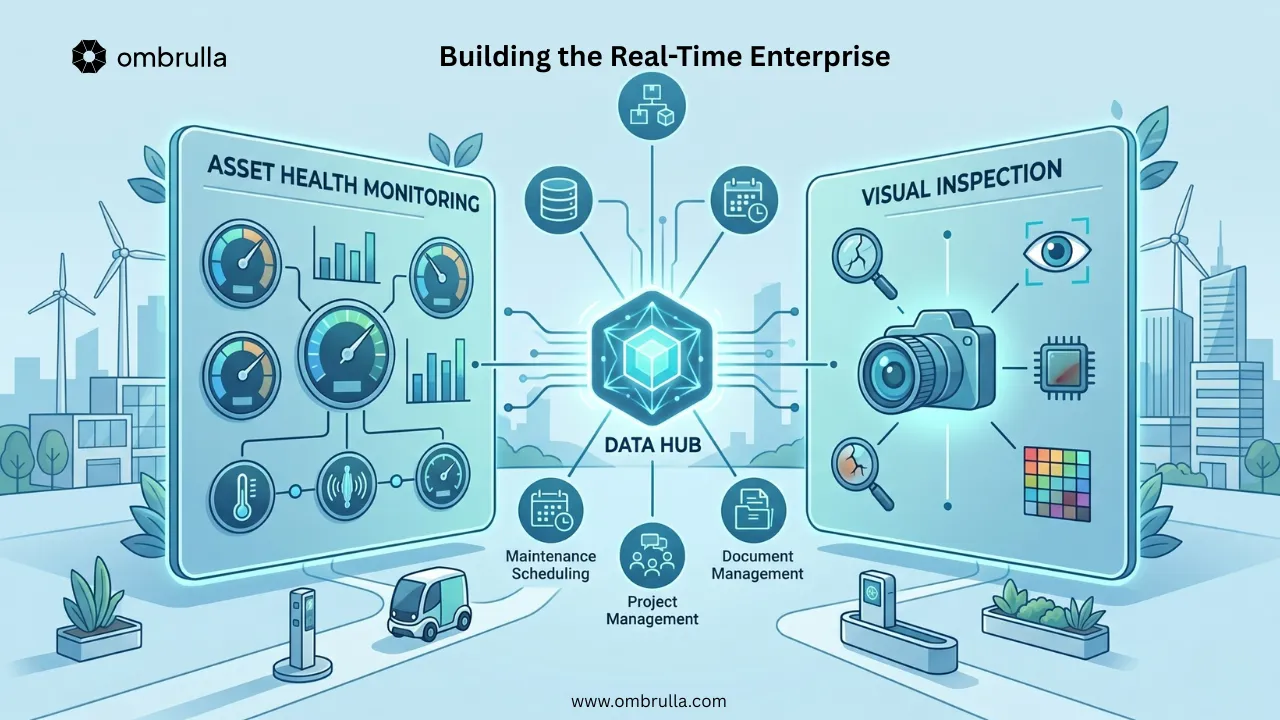
The core of Ombrulla's platform consists of two complementary products:
- - PETRANan AI- and IoT-enabled Asset Performance Management (APM) platform that unifies sensor, camera, PLC, and SCADA data into real-time asset health insights, predictive maintenance recommendations, and RTLS-based worker safety monitoring.
- - TRITVAan AI visual inspection platform that uses cameras, drones, rovers, cobots, and mobile devices to automate defect detection and infrastructure inspection across production lines, pipelines, ships, and industrial assets.
Together, these platforms create the closed loop described throughout this article: visual inspection findings inform asset health scoring, asset health data informs maintenance priorities, and RTLS data adds a real-time safety layer across the same operational footprint.
For organizations with more specific or unusual requirements, Ombrulla also delivers custom AI solutions, including generative AI and large language model (LLM) applications, retrieval-augmented generation (RAG) knowledge assistants, computer vision systems, predictive analytics, document AI, edge AI, and model fine-tuning, tailored to a company's existing data, tools, and workflows.
What distinguishes this approach is that it's built around real industrial environments, designed for deployment on edge, on-premises, or in the cloud, with integrations that work alongside existing CMMS/EAM, SCADA, and historian systems rather than requiring their replacement. For senior leaders evaluating where to start, the most common entry points are a focused predictive maintenance pilot on critical assets, an AI visual inspection deployment on a high-defect-rate line, or an RTLS-based safety layer for a high-risk site, each designed to demonstrate measurable results within weeks, before expanding across the broader operation.