


APM vs CMMS vs EAM: A 2026 Decision Guide for Operations Executives
Unplanned downtime cost the world's largest manufacturers roughly $1.4 trillion last year — about 11% of their combined annual revenue, according to Siemens' 2024 True Cost of Downtime research. For an operations executive staring at a budget request for new asset management software, that number is the whole argument in one sentence: the tools you choose to monitor, maintain, and manage your physical assets are not a back-office IT decision. They are a direct lever on revenue, safety, and capital efficiency.
Yet ask five vendors to explain the difference between APM, CMMS, and EAM, and you'll likely get five overlapping, self-serving answers. The acronyms get used interchangeably in sales decks, bundled together in RFPs, and blurred further as platforms add features that used to belong to a different category entirely. That confusion has a cost of its own: buying the wrong tool, in the wrong sequence, is one of the most common — and most expensive — mistakes reliability and operations leaders make.
This guide cuts through that noise. We'll define Asset Performance Management (APM), Computerized Maintenance Management Systems (CMMS), and Enterprise Asset Management (EAM) in plain terms, show exactly where each one fits, and give you a practical framework for deciding what your organization actually needs heading into 2026 — a year in which AI-driven, agentic maintenance tools are moving from pilot projects to production systems across asset-intensive industries.
None of these three categories is inherently “better” than the others — they solve different problems for different owners inside the business. The executives who get this decision right aren't the ones who pick a winner; they're the ones who understand exactly what each layer does, what it costs to get wrong, and in what order to build them out.
What Is Asset Performance Management (APM)?
QUICK ANSWER
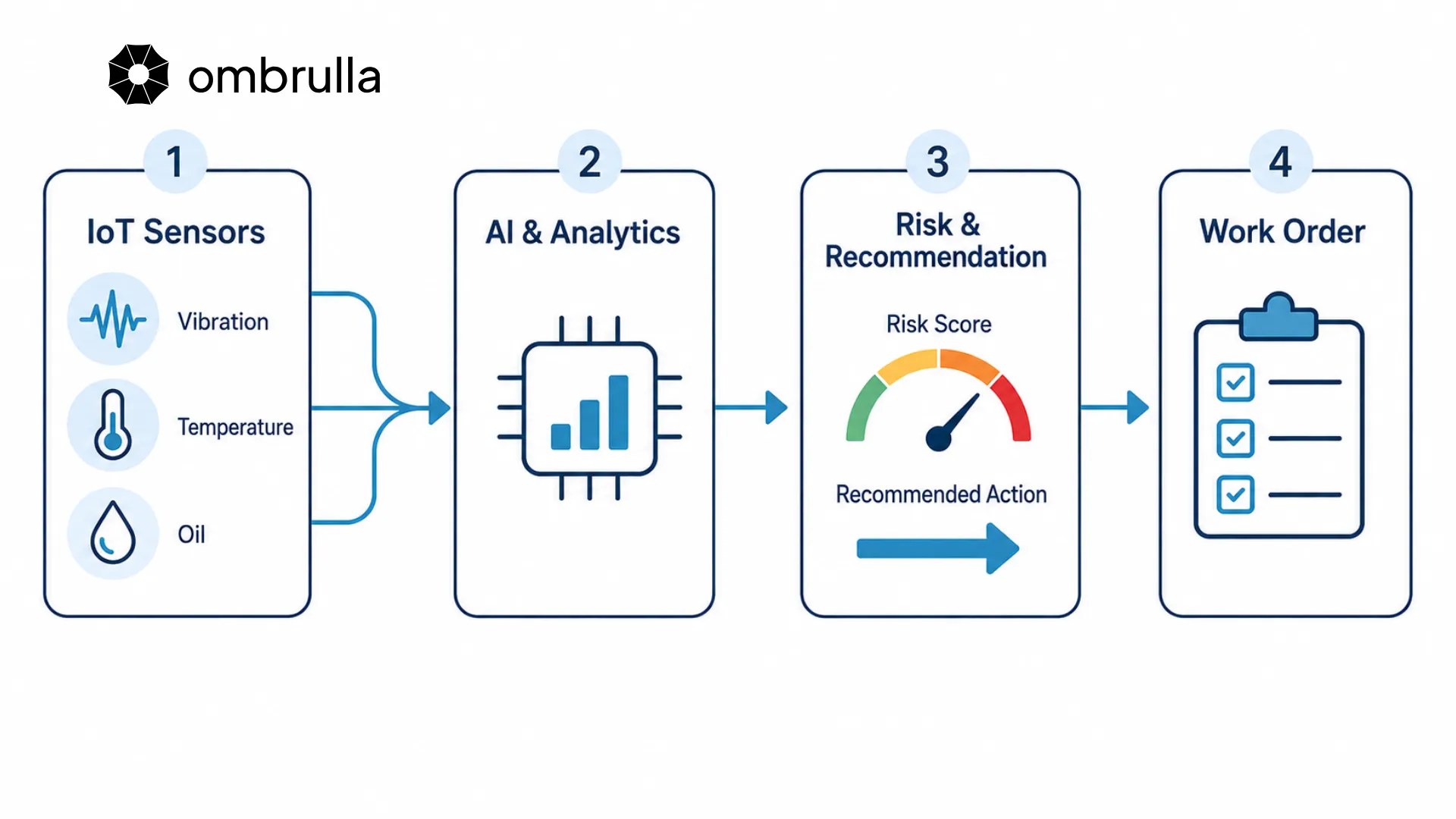
Asset Performance Management (APM) is a strategy and software category that uses condition data, analytics, and machine learning to predict when critical assets are likely to fail and to recommend the specific action needed to prevent that failure. It is the layer that turns raw sensor data into a reliability decision.
Where older maintenance approaches ask “is it time to service this asset?”, APM asks a fundamentally different question: “based on how this asset is actually behaving right now, what is its real risk of failure, and what should we do about it?”
A modern APM platform typically combines:
- - Condition monitoring integrationvibration, temperature/thermal, oil analysis, acoustic, electrical signature, and pressure data pulled from IoT sensors, PLCs, and DCS/SCADA systems
- - Failure prediction and Remaining Useful Life (RUL) modelingstatistical and machine learning models that estimate how much operating life an asset has left before a specific failure mode occurs
- - Risk and criticality scoringranking assets by consequence of failure (safety, production, cost) so teams focus attention where it matters most
- - Prescriptive recommendationsspecific, actionable guidance (reduce load by 15%, replace a bearing within 10 days, schedule an inspection) rather than a generic alert
- - Work orchestrationpushing validated recommendations into a CMMS or EAM system as work orders, closing the loop between insight and action
Industry analysts sometimes call APM the “reliability intelligence layer” or, as one industry explainer puts it, a “system of decisions” rather than a system of record. It doesn't replace your maintenance execution tools — it tells them what to do and when.
What Is a CMMS (Computerised Maintenance Management System)?

QUICK ANSWER
A CMMS is software focused specifically on the day-to-day execution of maintenance work: creating and tracking work orders, scheduling preventive maintenance, logging asset history, and managing spare parts inventory. It is the operational backbone that most maintenance teams touch every single shift.
Core CMMS capabilities include:
- - Work order managementcreating, assigning, prioritizing, and closing out maintenance tasks
- - Preventive maintenance schedulingautomating recurring, calendar- or usage-based maintenance tasks
- - Asset and equipment historya running log of what work has been done, by whom, and when
- - Spare parts and inventory trackingensuring the right part is on hand when a technician needs it
- - Mobile accessletting technicians log work, pull manuals, and close tickets from the plant floor
- - Compliance documentationthe audit trail regulators and insurers ask for
A CMMS answers a narrower, more immediate question: “What work needs to happen, and has it actually been done?” It is typically the fastest and least expensive of the three categories to implement, which is why it's the most common starting point for organizations formalizing their maintenance program — particularly single-site operations, facilities teams, and mid-sized manufacturers.
What Is EAM (Enterprise Asset Management)?
QUICK ANSWER
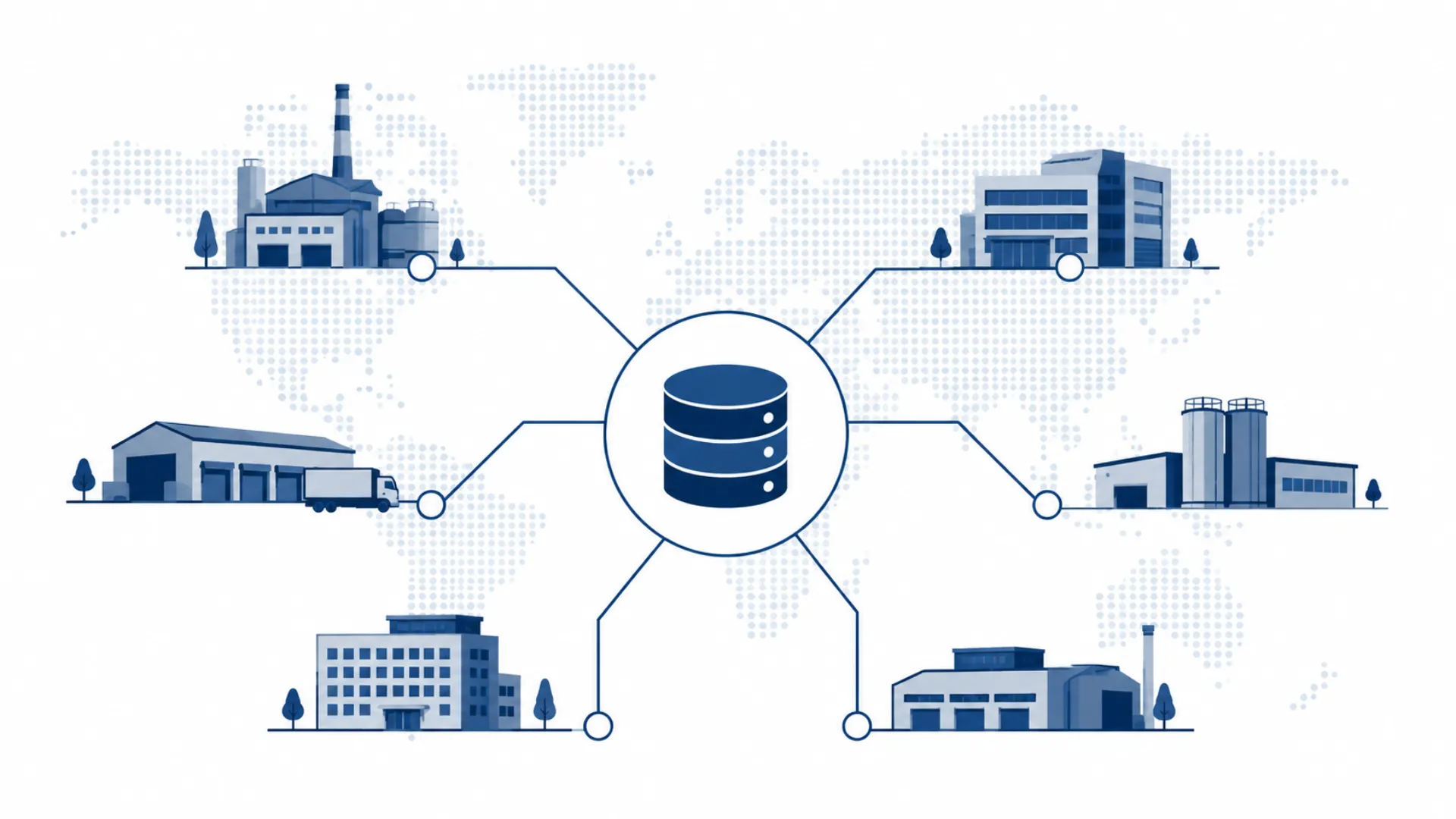
Enterprise Asset Management (EAM) is a broader discipline — and software category — for managing the entire lifecycle of physical assets across an organization, from acquisition and commissioning through operation, maintenance, and eventual disposal. IBM describes EAM as being focused on optimizing the overall lifetime performance of assets, and that lifecycle scope is exactly what separates it from CMMS.
EAM includes everything a CMMS does, and adds:
- - Full lifecycle asset trackingfrom capital planning and procurement through decommissioning
- - Financial and depreciation managementasset value, total cost of ownership, and capital expenditure planning, often integrated with ERP and finance systems
- - Multi-site, multi-entity governancea single asset register and standardized processes across plants, regions, or business units
- - Regulatory and compliance managementsafety, environmental, and industry-specific standards tracked at an enterprise level
- - Procurement and vendor/contract managementsourcing, warranties, and service-level agreements tied to specific assets
EAM answers a bigger-picture question than CMMS: “What do we own across the enterprise, what is it worth, what condition is it in, and how do we plan capital, compliance, and risk around it?”
Historically, EAM grew directly out of CMMS in the 1990s, as organizations realized that asset data had value well beyond scheduling maintenance — depreciation, compliance, and capital planning all touch the same physical assets that maintenance teams were already tracking. That lineage is why EAM platforms (IBM Maximo, SAP EAM, Hexagon EAM, Infor EAM, among others) almost always include CMMS-level functionality as a subset of a much larger system.
APM vs CMMS vs EAM: Key Differences at a Glance
The fastest way to separate these three categories is by the question each one is built to answer, and the time horizon it operates on.
| Dimension | CMMS | EAM | APM |
|---|---|---|---|
| Primary purpose | Execute and track maintenance work | Manage the full asset lifecycle enterprise-wide | Predict failures and prescribe interventions |
| Core question | What work needs to be done — and was it done? | What do we own, what's it worth, and how do we plan around it? | What's likely to fail, when, and what should we do? |
| Time horizon | Days to weeks | Full asset life (years to decades) | Weeks to months (via predictive models) |
| Core data | Work orders, PM schedules, parts inventory | Asset register, financials, contracts, compliance | Sensor/condition data, failure models, risk scores |
| Typical owner | Maintenance manager or supervisor | VP Operations, Asset Management, or Finance | Reliability engineer or plant/ops executive |
| Scope | Single site or department | Multi-site, multi-entity, enterprise-wide | Critical assets, layered on top of CMMS/EAM |
| System type | System of execution | System of record | System of decisions |
| Example platforms | UpKeep, Fiix, eMaint, MaintainX, Limble | IBM Maximo, SAP EAM, Hexagon EAM, Infor EAM | GE Vernova APM, AVEVA APM, AspenTech, Bentley AssetWise, Siemens Senseye, Ombrulla PETRAN |
| Best fit | Smaller teams building maintenance discipline | Large or multi-site enterprises with complex compliance/financial needs | Capital-intensive operations with high-cost, high-consequence critical assets |
In Summary
CMMS tells you what maintenance work happened, EAM tells you what you own and what it's worth over its full life, and APM tells you what's about to go wrong before it does.
Related Terms and Concepts in Modern Asset Management
APM, CMMS, and EAM don't exist in isolation — they sit inside a broader vocabulary of reliability and asset management concepts. Understanding these related terms makes vendor conversations, analyst reports, and internal business cases far easier to navigate:
- - OEE (Overall Equipment Effectiveness)a composite metric combining availability, performance, and quality to measure how effectively an asset is used against its full potential. Often the scoreboard that APM and CMMS investments are ultimately judged against.
- - RUL (Remaining Useful Life)the estimated operating time left before an asset or component is likely to fail, calculated from condition data and predictive models. This is one of the core outputs an APM platform generates.
- - RCM (Reliability-Centered Maintenance)a structured methodology for choosing the right maintenance strategy for each asset based on its specific failure modes and consequences, rather than applying a blanket schedule to everything.
- - MTTR and MTBFMean Time to Repair and Mean Time Between Failures — standard reliability metrics that track how quickly failures get resolved and how often they occur, typically reported straight out of CMMS work order data.
- - Digital Twina live virtual model of a physical asset, continuously updated with real-time sensor data, used to simulate performance and test maintenance scenarios without touching the physical equipment.
- - IIoT (Industrial Internet of Things)the network of connected sensors, gateways, and edge devices that generate the condition data APM platforms depend on.
- - Condition-Based Maintenancemaintenance triggered by real-time asset condition signals rather than a fixed calendar — the practical bridge between preventive maintenance and full predictive maintenance.
- - ISO 55000the international standard defining vocabulary, principles, and requirements for asset management systems, updated in 2024. It's a useful independent benchmark when structuring an EAM program or justifying an asset management strategy to a board or auditor.
How APM, CMMS, and EAM Work Together (Not Either/Or)
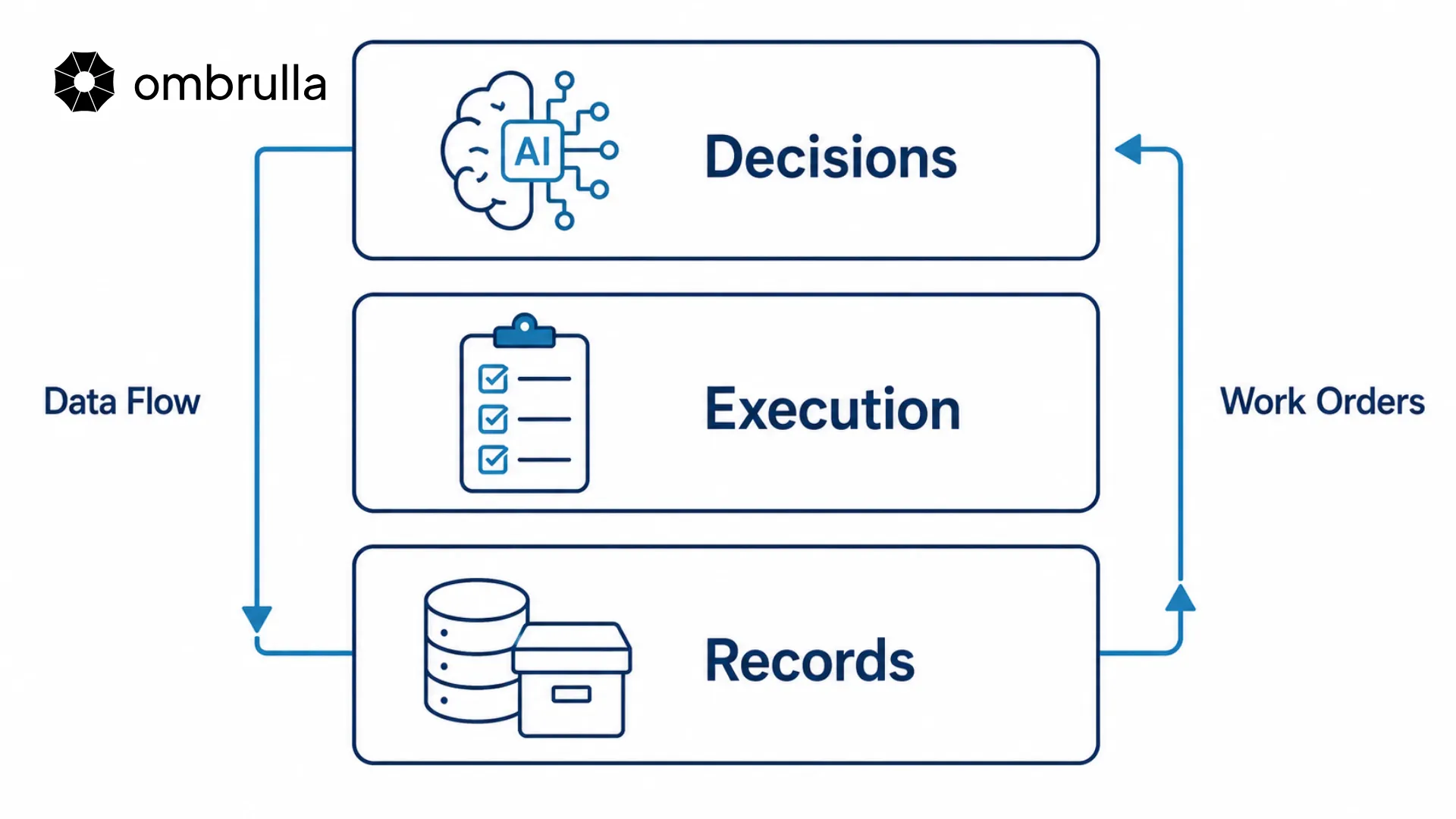
Here is the single most important thing to understand before you buy any of these systems: APM, CMMS, and EAM are not competing options. They are complementary layers of the same asset management stack, and the strongest reliability programs run all three in some combination.
Think of it as three layers working together:
- - EAM (system of record)holds the master data — what assets you own, their specifications, their financial value, their compliance history, and their place in a multi-site portfolio.
- - CMMS (system of execution)turns maintenance decisions into completed work — the work order, the technician, the parts, the sign-off.
- - APM (system of decisions)sits on top of both, watching real-time asset condition and telling the other two systems what to prioritize and when.
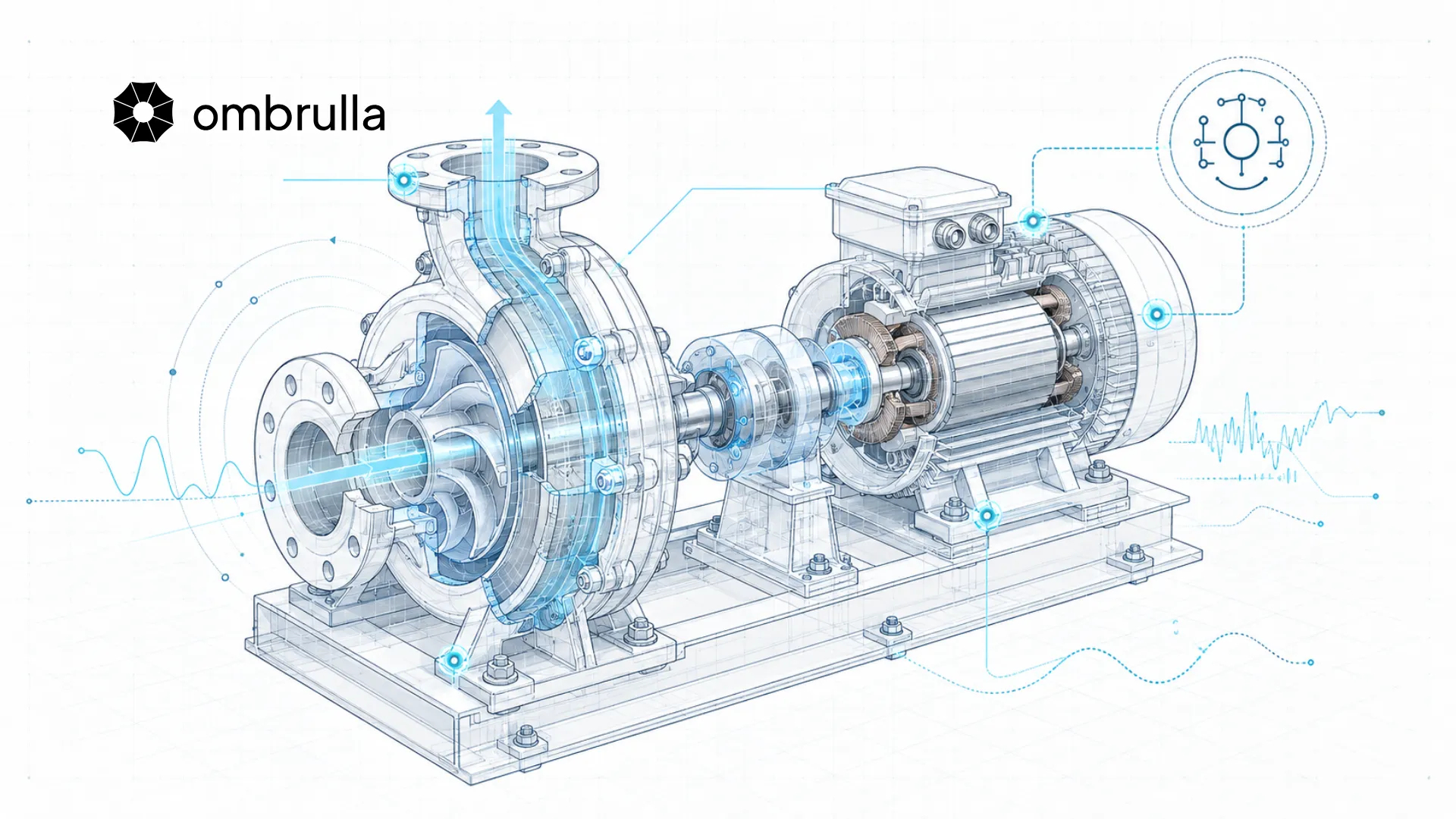
A concrete example makes this easier to picture. A vibration sensor on a critical pump starts reading outside its normal range. An APM platform ingests that signal, compares it against the pump's failure history and model, and calculates that the bearing has an estimated 15–20 days of remaining useful life. Instead of just sounding an alarm, the system generates a specific recommendation — replace the bearing within the next scheduled shutdown window — and pushes that recommendation directly into the CMMS or EAM as a prioritized work order. A technician executes the repair, logs the parts and labor, and the EAM captures the full lifecycle and cost record for that asset.
That orchestration is exactly the design goal behind modern AI- and IoT-native APM platforms. Ombrulla's PETRAN platform, for example, is built specifically to plug into existing CMMS and EAM systems — using standard industrial protocols like Modbus, OPC-UA, and MQTT — rather than asking an organization to rip and replace its maintenance execution tools. That's an important distinction when evaluating APM vendors: the goal isn't to add a fourth disconnected system to your stack, it's to make the systems you already have smarter.
It's also worth noting that the lines between these categories are blurring at the vendor level. IBM's Maximo Application Suite, for instance, bundles EAM, APM, reliability-centered maintenance (RCM), and mobility into a single platform. Some CMMS vendors now market built-in predictive analytics. That convergence is convenient for some buyers and confusing for others — which is exactly why understanding the underlying functions, not just the product names, matters more than ever.
Which One Does Your Organization Actually Need? A 2026 Decision Framework
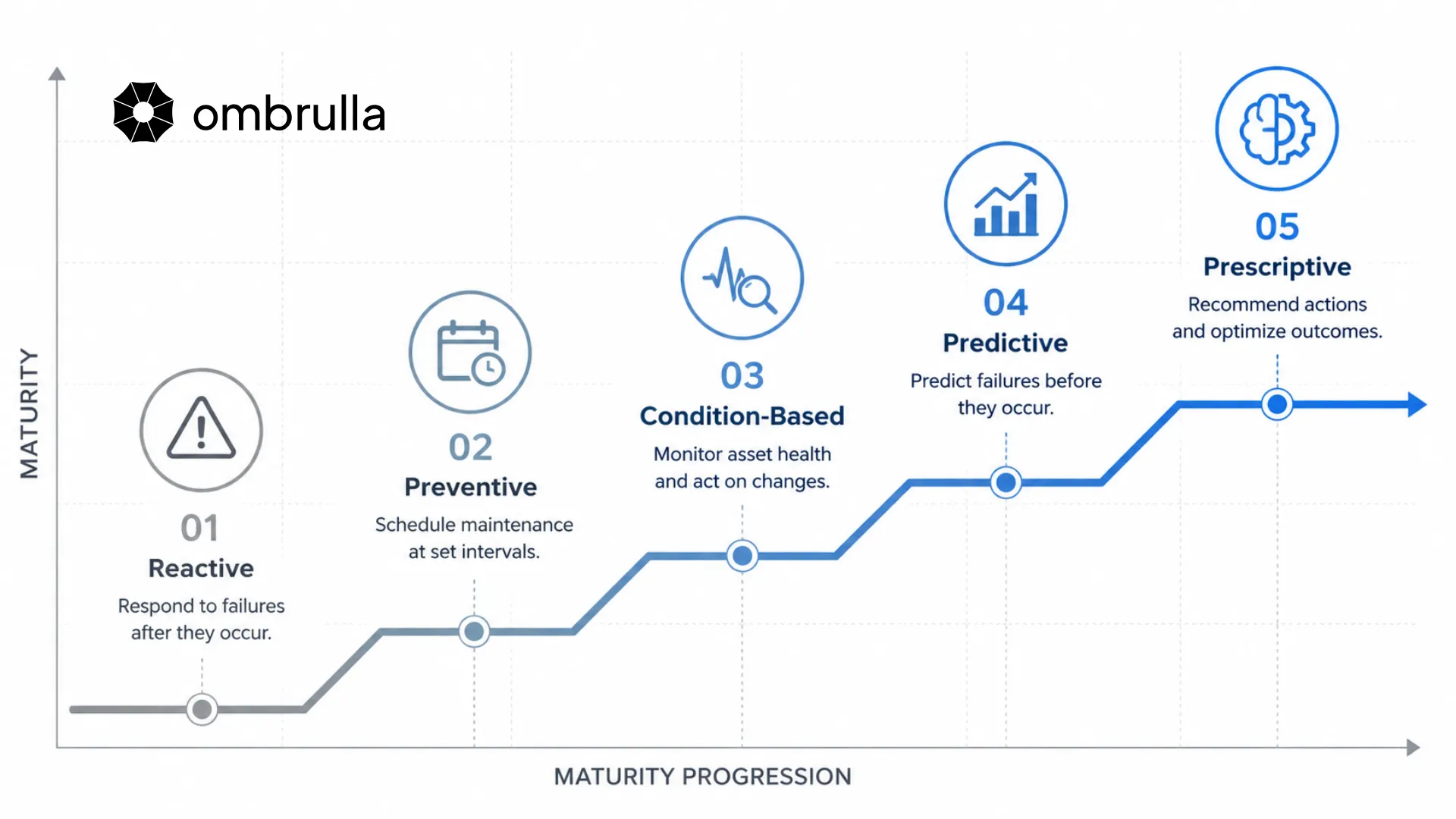
There's no universal right answer here — the correct choice depends on your maintenance maturity, asset criticality, and organizational scale. Start by placing your operation on the maintenance maturity curve most reliability programs move through:
- - Reactive (run-to-failure)fix it when it breaks. No formal system required, but the most expensive strategy long-term.
- - Preventivescheduled, calendar- or usage-based maintenance. This is where a CMMS delivers most of its value.
- - Condition-basedmaintenance triggered by real-time asset condition rather than a fixed schedule.
- - Predictivestatistical and machine learning models forecast failure before it happens. This is core APM territory.
- - Prescriptivethe system doesn't just predict failure — it recommends or automates the specific corrective action.
Recent industry surveys suggest most organizations still have real ground to cover here: roughly 38% of manufacturers report reactive/run-to-failure as their primary maintenance approach, versus 27% predictive, 18% condition-based, and 16% reliability-centered maintenance. That gap between where most operations sit today and where AI-driven maintenance is heading is precisely why this decision matters so much right now.
Weigh these factors when deciding where to invest first:
- - Asset criticality and risk profilehigh-consequence assets (where failure threatens safety, causes major production loss, or triggers regulatory exposure) justify APM investment faster than low-criticality equipment.
- - Current maintenance maturitypredictive tools deliver poor ROI on top of inconsistent preventive maintenance data — fix the foundation first.
- - Organizational scalesingle-site operations rarely need full EAM; multi-site or multi-entity enterprises usually do.
- - Existing technology stacklegacy ERP, SCADA, or historian systems affect integration cost and vendor fit.
- - Budget and procurement cycleCMMS deployments are typically measured in weeks; EAM and APM rollouts in months.
- - In-house reliability and data capabilityAPM value depends on someone acting on its recommendations — the tooling alone doesn't create reliability culture.
When to Invest: Simple Rules of Thumb
- - Start with a CMMS if:you're formalizing maintenance discipline for the first time, operate a single site or a small number of facilities, and need fast time-to-value on a constrained budget.
- - Invest in EAM if:you manage assets across multiple sites or business units, need to tie maintenance to financial and capital planning, or face enterprise-level compliance requirements a departmental tool can't satisfy.
- - Add APM if:you already have reasonably clean CMMS or EAM data, operate assets where unplanned failure is expensive or dangerous, and are organizationally ready to act on predictive recommendations — not just receive alerts.
- - Build an integrated stack if:you operate in a capital-intensive, asset-heavy industry — oil and gas, utilities, heavy manufacturing, mining, or infrastructure — where reliability is a genuine competitive differentiator rather than a cost center.
Industry Use Cases: APM, CMMS, and EAM in Action
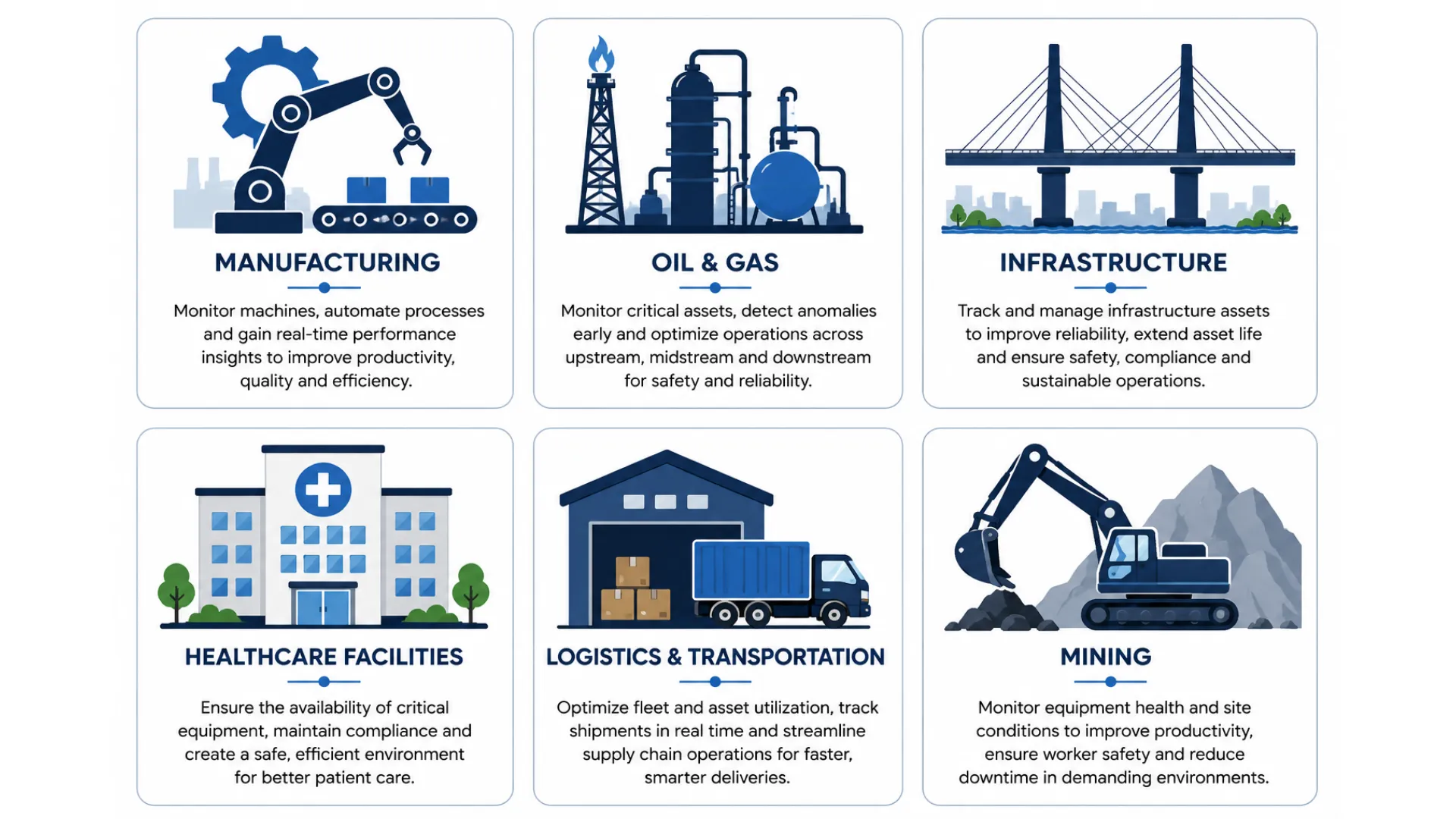
- - ManufacturingA CMMS keeps preventive maintenance on schedule and work orders moving across shifts. Layer in APM on the assets that actually stop the line — CNC spindles, conveyors, compressors — and Overall Equipment Effectiveness (OEE) becomes a leading indicator instead of a monthly report card.
- - Oil and gas and energyAssets here are remote, hazardous, and extraordinarily expensive to fail. In one published example, Ombrulla describes a refinery that installed APM sensor pods on a set of critical pump arrays; one pod flagged an abnormal vibration pattern weeks before it would have caused a failure, giving the site time to schedule the repair instead of absorbing an unplanned shutdown and a six-figure emergency repair bill. Whether or not every deployment hits that exact outcome, it illustrates precisely the scenario APM is designed for: high consequence-of-failure assets where a few weeks of early warning is worth real money.
- - Infrastructure and utilitiesBridges, substations, water networks, and construction equipment combine long asset lifecycles (EAM's specialty) with safety-critical condition monitoring (APM's specialty) — which is why this sector increasingly runs both side by side.
- - Healthcare and facilitiesRegulatory compliance and asset audit trails make EAM valuable for tracking medical equipment and building systems, while a CMMS handles the daily work order volume across a large facilities footprint.
- - Logistics and transportationFleet and warehouse equipment benefit from EAM's lifecycle and depreciation tracking, paired with condition monitoring on high-utilization assets to avoid mid-route failures.
- - Mining and heavy industryCrushers, conveyors, and haul equipment operate in harsh, remote conditions where a single unplanned failure can halt an entire production chain. These operations tend to be the earliest and heaviest APM adopters, since the cost-of-failure math is rarely ambiguous.
2026 Trends Reshaping APM, CMMS, and EAM
A few shifts are changing how operations executives should think about this decision this year:
- - Agentic AI is moving from pilot to productionrather than simply flagging an anomaly, AI agents are beginning to schedule work orders, trigger parts reordering, and adjust operating parameters with limited human intervention. This shifts the practical difference between “predictive” and “prescriptive” from a marketing term into an operational reality.
- - Predictive and prescriptive maintenance are convergingthe valuable output is no longer just “this will fail in 23 days” — it's “reduce load by 15% or replace this specific component,” delivered automatically to the team that needs to act on it.
- - Digital twins are becoming standard architecturefor larger APM deployments, giving reliability teams a live virtual model of critical assets rather than a spreadsheet of sensor readings.
- - Vendor consolidation is acceleratingenterprise suites increasingly bundle EAM, APM, and CMMS-level functionality together (IBM's Maximo Application Suite is the clearest example), which simplifies procurement for some buyers but makes careful functional evaluation more important, not less.
- - Data quality remains the real bottleneckindustry surveys show roughly two-thirds of maintenance teams plan to adopt AI-driven tools by the end of 2026, yet fewer than a third have actually implemented them. The gap isn't algorithms — it's clean asset data, consistent work order discipline, and integration between systems that don't talk to each other by default.
Common Mistakes Operations Executives Make When Choosing
- - Buying predictive tools before basic maintenance discipline existsAPM models are only as good as the data feeding them. Deploying sensors and AI on top of an inconsistent preventive maintenance program is a fast way to fund a failed pilot.
- - Treating EAM as “a bigger CMMS”Organizations that select EAM purely for maintenance features and ignore the financial, compliance, and capital planning modules leave most of the platform's value — and much of its cost justification — on the table.
- - Underestimating integration requirementsPoint solutions that don't share data recreate the exact problem they were meant to solve: technicians re-entering the same information across three systems, and reliability engineers working from three different versions of the truth.
- - Skipping the maturity assessmentJumping straight to predictive or prescriptive maintenance without first stabilizing preventive maintenance compliance rates almost always produces disappointing early results — and can sour executive appetite for further investment.
- - Underinvesting in change managementThe best APM recommendation is worthless if technicians don't trust it or workflows aren't redesigned to act on it quickly. Software adoption, not software capability, is usually the real constraint.
Signs Your Organization Has Outgrown Its Current Asset Management Approach
Before evaluating vendors, it's worth honestly checking whether your current setup — even if it “works” — has quietly become the bottleneck. Common warning signs include:
- - Your team keeps reacting to failures that your own CMMS data already shows a clear, repeating pattern for.
- - The same failure mode shows up on work orders quarter after quarter, with no root-cause fix ever implemented.
- - Maintenance and finance can't agree on what an asset is actually worth, or what it's really costing the business.
- - Technicians and engineers maintain shadow spreadsheets alongside your official system to answer basic asset questions.
- - Downtime cost per hour has climbed, but the systems used to manage it haven't changed in years.
- - Field staff spend more time re-entering the same data across disconnected tools than actually fixing equipment.
If two or more of these sound familiar, the question isn't really whether to upgrade your asset management stack — it's which layer, CMMS, EAM, or APM, deserves investment first.
Building the Business Case: ROI Expectations for 2026
The numbers behind this decision are compelling when the deployment is scoped correctly. Industry benchmarks suggest predictive maintenance programs can reduce maintenance costs by up to 25% and improve equipment uptime by 10–20%. At the aggregate level, analysts estimate that broader adoption of condition monitoring and predictive maintenance could save Fortune 500-scale organizations millions of hours of downtime and hundreds of billions of dollars annually across the economy — a scale of opportunity that explains why the APM software market itself is growing quickly. MarketsandMarkets projects the global APM software market expanding from roughly $2.4 billion in 2026 to $4.32 billion by 2032 (a 10.3% CAGR), while broader market definitions that include services push estimates considerably higher. Virtually every analyst agrees on the direction: sustained double-digit growth through the early 2030s.
A practical way to build your internal business case:
- - Baseline your current downtime costhours of unplanned downtime per year × cost per hour, by asset or production line.
- - Estimate a realistic reduction percentagebased on your starting maturity level (organizations moving from reactive to condition-based typically see larger early gains than those already running mature preventive programs).
- - Compare that savings estimate against full total cost of ownershipsoftware licensing, sensors and hardware, integration work, and change management — not just the subscription price.
- - Phase the rolloutstarting with your highest-criticality, highest-cost-of-failure assets, and expand once the model proves out.
Set realistic timelines: CMMS deployments typically show operational value within weeks; APM programs on critical assets more commonly show payback within 12–24 months, depending on asset complexity and data readiness.
How to Evaluate Vendors and Build Your Shortlist
Once you know which category — or combination — fits your organization, evaluate vendors against criteria that actually predict long-term success, not just feature checklists:
- - Integration depthdoes the platform support open APIs and standard industrial protocols (OPC-UA, MQTT, Modbus) so it can talk to your existing CMMS, EAM, ERP, and historian systems?
- - Deployment flexibilitycloud, on-premises, and hybrid options matter for organizations balancing IT infrastructure, data sovereignty, and security requirements.
- - Scalabilitycan the platform grow from a pilot on a handful of critical assets to enterprise-wide deployment across sites?
- - AI/ML maturity and explainabilitycan the vendor show you why a model made a given recommendation, not just that it made one?
- - Industry fita platform built for discrete manufacturing may not translate cleanly to oil and gas or utility infrastructure.
- - Total cost of ownershipsensors, integration services, training, and change management typically outweigh the software license itself.
The vendor landscape spans established enterprise suites and newer AI-native platforms. On the EAM side, IBM Maximo, SAP EAM, Hexagon EAM, and Infor EAM dominate large enterprise deployments. In CMMS, UpKeep, Fiix, eMaint, MaintainX, and Limble serve the fast-growing mid-market. In APM specifically, legacy industrial players like GE Vernova, AVEVA, AspenTech, and Bentley Systems compete alongside newer AI- and IoT-native entrants such as Ombrulla, whose PETRAN platform combines real-time condition monitoring, RUL prediction, digital twin integration, and increasingly agentic recommendations, with flexible cloud, on-premises, or hybrid deployment designed to sit on top of — rather than replace — the CMMS or EAM you already run.
Frequently Asked Questions
1. What is the difference between APM, CMMS, and EAM?
CMMS focuses on executing and tracking maintenance work (work orders, schedules, parts). EAM manages the full lifecycle of assets across an enterprise, including financial and compliance data. APM uses condition data and analytics to predict failures and recommend action before they happen. They address different questions — execution, ownership, and prediction — and are typically used together rather than as substitutes for one another.
2. Can a CMMS system replace an EAM system?
For a single site with straightforward compliance needs, a robust CMMS can cover most day-to-day requirements. But a CMMS generally can't replace EAM for organizations that need multi-site asset governance, financial/depreciation tracking, or enterprise-level compliance reporting — that lifecycle and financial scope is what defines EAM.
3. Do I need Asset Performance Management if I already use a CMMS or EAM?
It depends on your asset criticality and maintenance maturity. If your CMMS or EAM data is clean and your team consistently executes preventive maintenance, but you still experience costly unplanned failures on critical equipment, APM is typically the next investment that delivers measurable ROI — it adds the predictive layer that execution-focused systems don't provide on their own.
4. Which industries benefit most from Asset Performance Management?
Capital-intensive, asset-heavy industries see the fastest returns: oil and gas, energy and utilities, manufacturing, mining, and infrastructure. These sectors combine high consequence-of-failure assets with expensive, hard-to-schedule unplanned downtime — exactly the conditions where predictive and prescriptive maintenance pay for themselves quickly.
5. What does Asset Performance Management software cost, and what ROI should I expect?
Costs vary widely based on sensor hardware, number of monitored assets, deployment model, and integration complexity. Rather than fixating on license price alone, budget for total cost of ownership and benchmark against realistic outcomes: industry data suggests predictive maintenance programs can cut maintenance costs by up to 25% and lift uptime by 10–20%, typically within a 12–24 month window on critical assets.
6. Is APM the same as predictive maintenance?
Not exactly. Predictive maintenance is a maintenance strategy — using data to anticipate failure. APM is the broader software and strategic layer that enables predictive (and increasingly prescriptive) maintenance, alongside risk scoring, asset criticality analysis, and work orchestration into CMMS/EAM systems. Predictive maintenance is a capability within APM, not a synonym for it.
7. How is AI changing the APM vs CMMS vs EAM decision in 2026?
AI is compressing the gap between prediction and action. Agentic AI capabilities are beginning to let APM platforms not just flag risk but automatically generate work orders, request parts, or adjust operating parameters — with CMMS and EAM as the execution and record-keeping layers underneath. That makes integration between all three systems a bigger priority in 2026 than it's ever been; buying disconnected point solutions increasingly means leaving AI-driven value on the table.
8. What's the first step to modernizing an asset management strategy in 2026?
Start with an honest maturity assessment, not a software purchase. Audit how much of your maintenance is still reactive, how clean your asset and work order data actually is, and which assets carry the highest cost of failure. That assessment tells you whether the highest-leverage next step is tightening CMMS discipline, extending into EAM for enterprise-wide governance, or layering APM onto your most critical assets — and it helps you avoid the common mistake of buying predictive tools before the operational foundation is ready to support them.
Final Thoughts
APM, CMMS, and EAM solve different problems, on different timelines, for different owners inside your organization — and the operations executives who get the most value from asset management technology stop treating this as an either/or decision. The real question isn't “which one should we buy,” it's “what sequence, and what combination, matches where our maintenance program actually is today.”
Start by being honest about your maintenance maturity. Build the execution foundation with a CMMS if it isn't there yet. Extend into EAM if your organization's scale demands enterprise-wide asset governance. And once your data and processes are ready, add Asset Performance Management to shift your most critical, most expensive-to-fail assets from reactive firefighting to predictive — and increasingly prescriptive — control.
→ NEXT STEP
If you're evaluating the APM layer specifically, Ombrulla's AI- and IoT-powered PETRAN platform is built to integrate with the CMMS and EAM systems you already run, turning real-time condition data into prioritized, actionable recommendations rather than another disconnected dashboard. Explore how Ombrulla approaches Asset Performance Management, or talk to the team about what a predictive maintenance pilot could look like for your highest-criticality assets.

